
In the villages of Teso South, Teso North, Samia, Bunyala, Butula, Nambale, and Matayos, the people of Busia County share roads, markets, schools, health facilities, water resources, and economic opportunities. They also share a government established under the Constitution of Kenya, 2010.
But an important governance question deserves serious investigation: does every community in this culturally diverse county enjoy a meaningful opportunity to participate in political leadership, public appointments, decision-making, and the distribution of development resources?
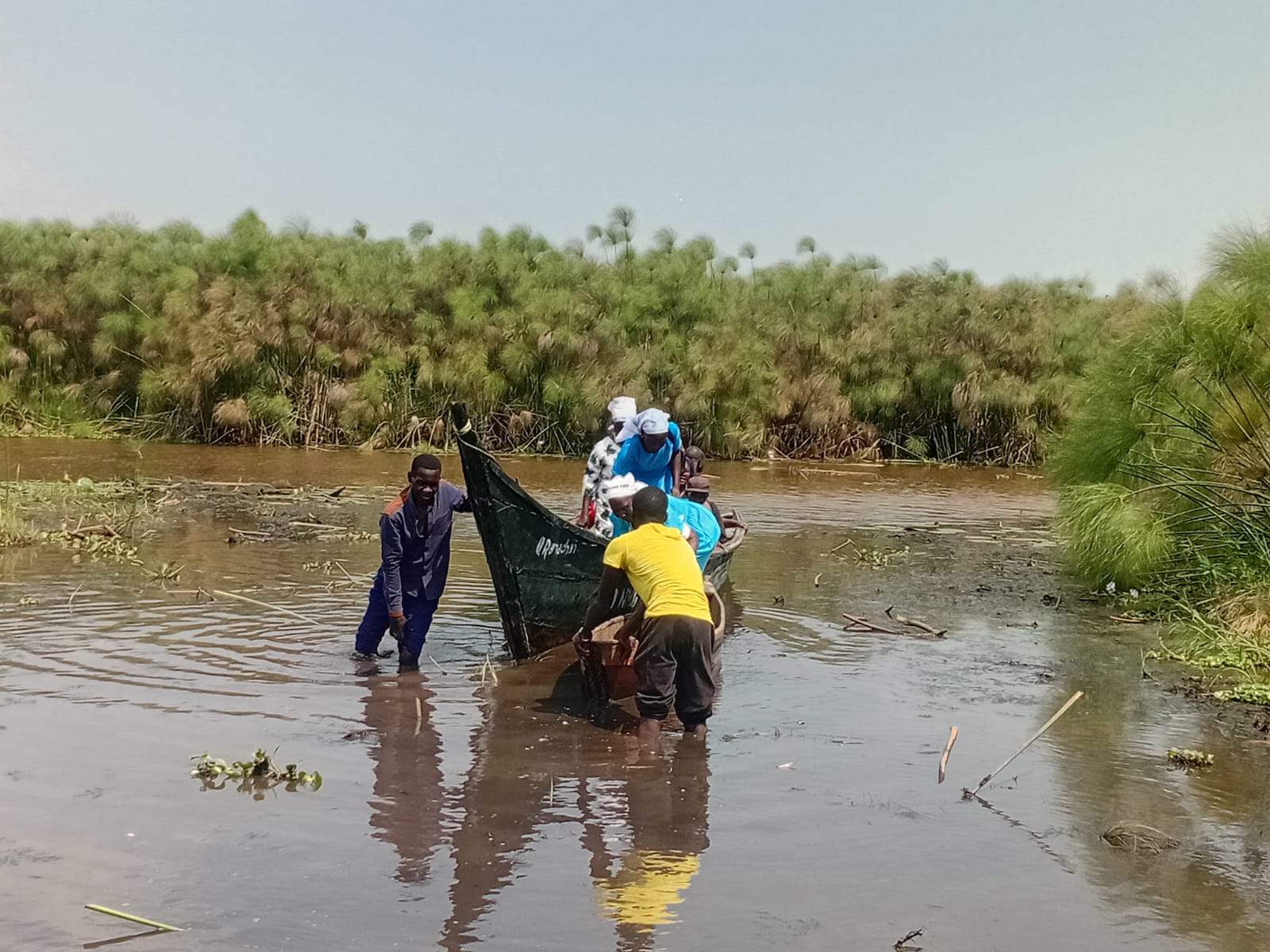
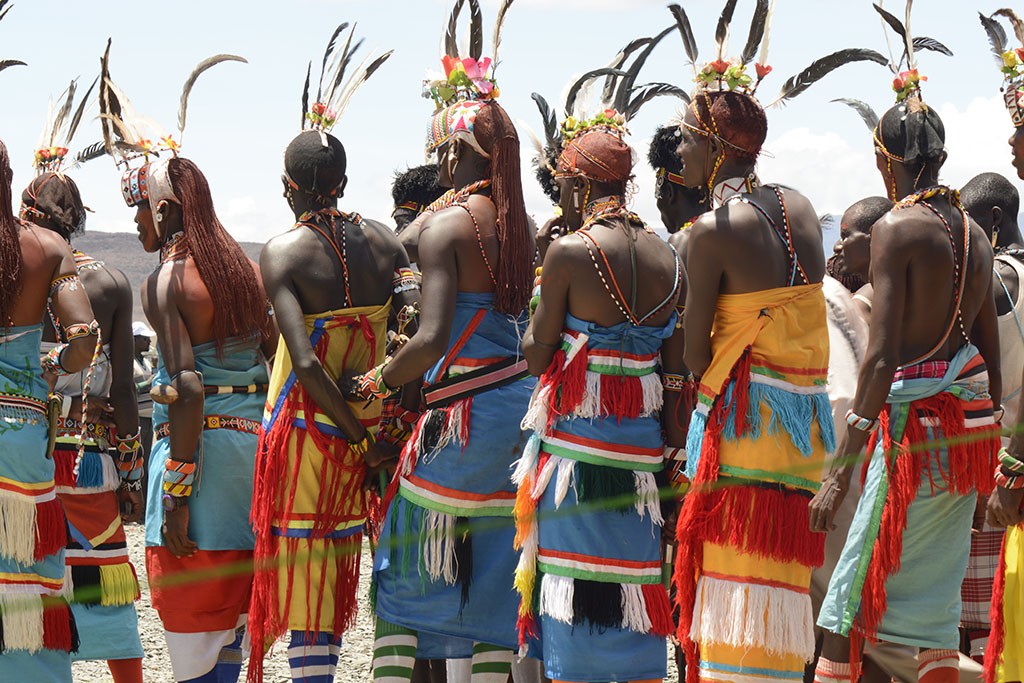
The question concerns the Iteso, commonly referred to as the Teso community, and the Luhya communities of Samia, Marachi, Manyala, and Bakhayo, among others.
It is not a question of determining which community deserves to rule over another. Nor should it be reduced to a contest over ethnic numbers, historical grievances, or political entitlement.
It is a question of constitutional equality, equitable inclusion, democratic representation, and the practical meaning of devolution.
The Constitution promises every Kenyan equal protection of the law. It also requires public institutions to embrace inclusiveness, equity, non-discrimination, accountability, and protection of minorities.
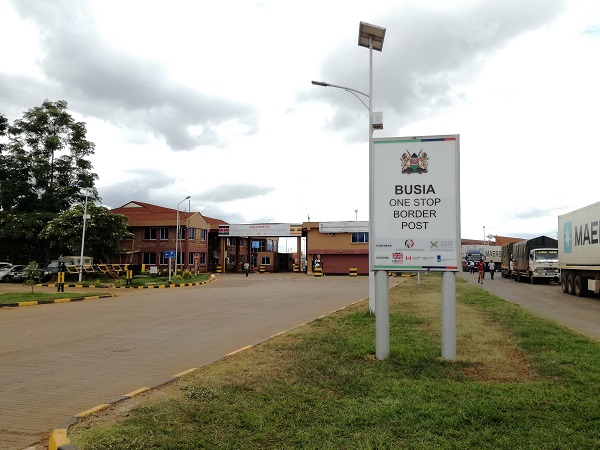
The challenge is determining whether those promises are reflected in the composition and operations of Busia County's political and administrative institutions.
The evidence must be established through public records, appointment data, electoral results, budget allocations, and interviews with representatives of the communities concerned.
The central question is straightforward: Can Busia build lasting unity if sections of its population believe they are politically invisible, economically neglected, or insufficiently represented in decisions affecting their future?
THE CONSTITUTIONAL FOUNDATION: EQUALITY IS NOT A FAVOR
Article 10 of the Constitution of Kenya establishes national values and principles of governance binding on state organs, state officers, public officers, and all persons whenever they apply or interpret the Constitution, implement laws, or make public policy decisions.
These values include patriotism, national unity, sharing and devolution of power, democracy, participation of the people, human dignity, equity, social justice, inclusiveness, equality, non-discrimination, and protection of the marginalized.
These are not merely attractive words for political speeches.
They are constitutional standards against which public decisions must be considered.
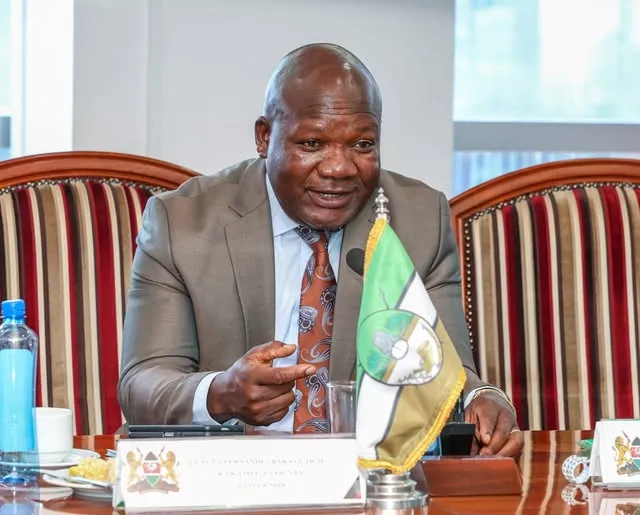
For Busia County, Article 10 raises practical questions.
When the county government appoints chief officers, members of public boards, departmental heads, and other public officials, are the applicable principles of fairness, merit, inclusiveness, and non-discrimination being observed?
When development projects are selected, are the needs of all sub-counties and communities considered using transparent criteria?
When political leaders consult the public, are all communities given a meaningful opportunity to contribute?

When public resources are allocated, can the government demonstrate that its decisions are based on lawful priorities and equitable development rather than favoritism?
These questions should be answered with evidence rather than ethnic accusations.
Article 10 does not prescribe a fixed percentage of county leadership positions for each ethnic community. However, it establishes values that must guide public policy and the exercise of public authority.
The constitutional test is therefore not whether every community occupies precisely the same number of offices. It is whether the government acts lawfully, fairly, and inclusively while respecting the rights of all residents.
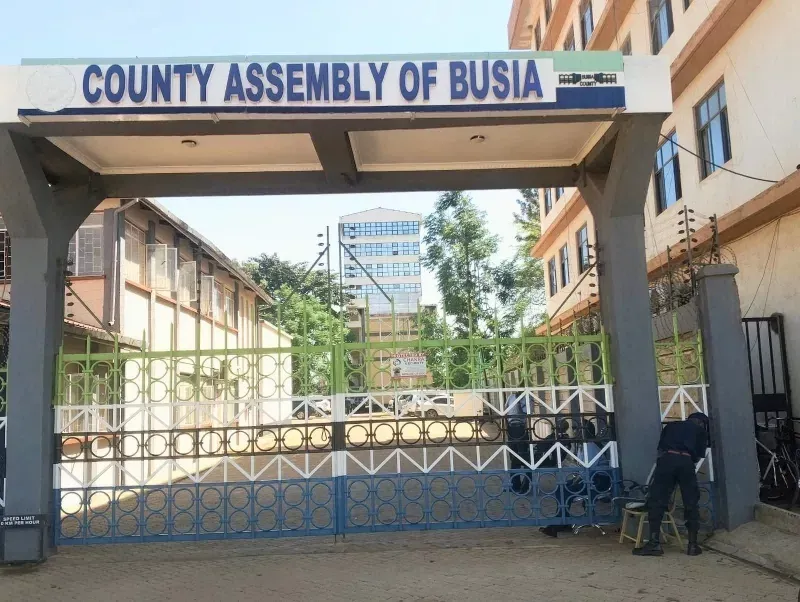
ARTICLE 27: EVERY PERSON IS EQUAL BEFORE THE LAW
Article 27 is central to any serious investigation into allegations of ethnic exclusion.
Article 27(1) guarantees every person equality before the law and the right to equal protection and equal benefit of the law.
Article 27(2) provides that equality includes the full and equal enjoyment of all rights and fundamental freedoms.
Article 27(4) prohibits direct or indirect discrimination by the State on grounds including race, ethnic or social origin, colour, language and birth, among other protected characteristics.
For Busia, this raises an important distinction between political competition and discriminatory exclusion.
A community does not automatically suffer unconstitutional discrimination simply because its preferred candidate loses an election. Elections must remain competitive, and voters retain the freedom to choose candidates according to their judgment.
Likewise, the fact that a person belongs to a particular ethnic community does not automatically entitle that person to a public appointment.
However, where evidence establishes that public opportunities are denied, restricted, or distributed through unlawful ethnic discrimination, Article 27 becomes directly relevant.
The investigative task is to establish whether such discrimination exists, how it operates, who is affected, and what documentary evidence supports the allegation.
Relevant evidence would include recruitment advertisements, shortlisting records, appointment letters, establishment lists, declarations of ethnic diversity, complaints to oversight institutions, and the criteria used to select successful candidates.
Without such evidence, accusations of ethnic favoritism remain allegations requiring verification.
With credible evidence, the public can assess whether the county's practices comply with constitutional requirements.
ARTICLE 56: THE PROTECTION OF MINORITIES AND MARGINALIZED COMMUNITIES
Article 56 requires the State to put in place affirmative-action programs designed to ensure that minorities and marginalized groups participate and are represented in governance and other spheres of life.
It also addresses opportunities for economic and social development, access to employment, development of cultural values and languages, and reasonable access to water, health services, and infrastructure.
This provision is especially relevant to a county containing several communities with different demographic sizes, histories, geographical concentrations, and economic circumstances.
The Iteso, Samia, Marachi, Manyala, and Bakhayo cannot simply be treated as interchangeable political units. Their circumstances must be examined individually and in the wider context of Busia County.
The constitutional question is whether any community or other legally recognized marginalized group faces identifiable barriers to participation, representation, or access to opportunities.
Article 56 does not automatically classify every smaller ethnic community as marginalized. Nor does it prescribe an equal ethnic quota for all county offices.
Its significance lies in the obligation to address genuine marginalization through appropriate affirmative-action programs.
A serious investigation should therefore establish which groups face demonstrable barriers, what measures the county has adopted to address them, and whether those measures are producing meaningful results.
If a community is underrepresented, that fact alone may justify further inquiry. It does not, without more evidence, prove discrimination.
The county government should be able to explain its approach to inclusion and demonstrate how it complies with the applicable constitutional and statutory framework.
ARTICLE 174: DEVOLUTION WAS DESIGNED TO BRING GOVERNMENT CLOSER TO THE PEOPLE
Article 174 sets out the objects of devolution.
Among other purposes, devolution is intended to promote democratic and accountable exercise of power, foster national unity by recognizing diversity, give people greater opportunities to participate in the exercise of state power, protect and promote the interests and rights of minorities and marginalized communities, and ensure equitable sharing of national and local resources.
These objectives go to the heart of the Busia debate.
Devolution was not intended merely to transfer offices from Nairobi to county headquarters.
It was designed to bring decision-making closer to citizens, improve accountability, and enable communities to participate more meaningfully in determining their social and economic priorities.
The constitutional promise is therefore broader than the identity of the governor.
It includes the composition of the county executive, representation in the county assembly, access to public employment, consultation in budgeting, distribution of development projects, and opportunities to participate in county decision-making.
A community may have an elected representative but still raise legitimate questions about its access to public services or participation in county programs.
Conversely, a community may have relatively few senior political officeholders while benefiting from fair public recruitment, effective representation, and equitable development.
These possibilities demonstrate why a proper investigation must examine the entire governance system rather than focus exclusively on the ethnicity of one officeholder.
The critical issue is whether devolution is working for all residents.
ARTICLE 175: COUNTY GOVERNMENTS MUST OBSERVE DEMOCRATIC PRINCIPLES
Article 175 requires county governments to be based on democratic principles and the separation of powers. It also establishes other principles governing county governments, including the constitutional gender requirement for representative bodies.
The provision does not establish ethnic rotation for county governorships.
Nevertheless, it reinforces the importance of democratic governance and constitutional compliance.
Any proposal for sharing political power in Busia must therefore respect the electorate's constitutional right to choose its leaders.
A negotiated arrangement among political communities may be considered as a voluntary political compact. But it cannot lawfully remove the electorate's power to select candidates through a constitutionally compliant electoral process.
Nor can a community agreement override constitutional requirements, statutory qualifications for office or the rights of other citizens.
The distinction matters because political inclusion and electoral competition are not necessarily opposing principles.
Busia can encourage cooperation among communities while allowing candidates to compete freely and voters to make their own decisions.
ARTICLE 177: REPRESENTATION IN THE COUNTY ASSEMBLY
Article 177 provides for the composition of county assemblies, including elected ward representatives and special-seat members, as prescribed by the Constitution.
The assembly is an important institution through which residents participate in county governance.
Its members debate legislation, scrutinise county expenditure, consider development priorities and exercise oversight over the county executive.
For that reason, an investigation into equity in Busia must examine representation in the county assembly alongside the composition of the executive.
The investigation should establish which wards are represented by elected members, the composition of nominated membership, the distribution of leadership responsibilities within the assembly and whether legally applicable inclusion requirements are being met.
However, the Constitution does not prescribe a fixed ethnic allocation of elected ward seats.
Each elected ward seat is determined through the applicable electoral process. Special-seat arrangements must also comply with the constitutional and statutory framework governing those positions.
The relevant question is whether the electoral and nomination processes operate lawfully and whether the county's institutions adequately protect the rights of minorities and marginalised groups.
ARTICLE 232: PUBLIC SERVICE MUST BE FAIR, MERIT-BASED AND REPRESENTATIVE
The debate cannot stop at elected politicians.
Article 232 establishes values and principles of public service, including high standards of professional ethics, efficient and effective use of resources, impartiality, accountability, transparency, fair competition and merit in appointments and promotions.
It also requires adequate and equal opportunities for appointment, training and advancement at all levels of the public service for men and women, members of all ethnic groups and persons with disabilities.
This is particularly important because public employment influences household incomes, professional development and access to public-sector opportunities.
The county's recruitment records should therefore be examined to establish whether appointments and promotions reflect merit, fair competition and the constitutional requirement to provide adequate and equal opportunities to members of all ethnic groups.
The investigation should also establish whether the county has reliable data on its workforce and whether recruitment decisions are supported by documented procedures.
It would be inappropriate to conclude that an appointment is unlawful simply because the successful candidate belongs to a numerically larger community.
Equally, the county should not dismiss credible allegations of systematic exclusion without examining the evidence.
A transparent public service should be able to explain its recruitment procedures, demonstrate compliance with the law and correct any established shortcomings.
SECTION 65 OF THE COUNTY GOVERNMENTS ACT: THE 30 PER CENT QUESTION
The constitutional debate is reinforced by section 65 of the County Governments Act, which provides requirements concerning diversity in county public-service recruitment.
The provision addresses recruitment in counties where one ethnic community is dominant and requires that at least 30 per cent of vacant public positions at entry level be filled by candidates who are not from the dominant ethnic community, subject to the statutory framework and applicable requirements.
This is a specific legal consideration in examining county recruitment. It should not be confused with a requirement that 30 per cent of all political or senior leadership positions must belong to smaller ethnic communities.
The distinction is essential.
The law's requirements must be applied to the relevant recruitment categories and circumstances, not converted into a general ethnic formula for every public office.
A report published by The Star on 17 October 2021 cited an audit by the Busia County Public Service Board that examined the county workforce at that time.
According to the report, Luhya employees accounted for 51 per cent of the 3,504 county employees, while Teso employees accounted for 37 per cent. Other communities also had employees in the county workforce.
The report said the audit had cleared then-Governor Sospeter Ojaamong of allegations that he had favoured his own community in county employment. It also reported calls from a Senate committee for continued efforts to improve opportunities for minority communities.
These figures are historical, not a description of the county's workforce in October 2026.
They also aggregate the Luhya community rather than provide a complete breakdown for Samia, Marachi, Manyala and Bakhayo individually.
Consequently, they cannot establish the current position of any one of those communities.
The county should publish updated, appropriately disaggregated workforce information so that residents can examine recruitment patterns against the applicable legal requirements.
The investigation must also distinguish between the total workforce, entry-level vacancies, senior appointments and political offices, since different rules and considerations may apply.
THE POLITICAL QUESTION: WAS THERE A TESO-LUHYA POWER-SHARING AGREEMENT?
Busia's debate over the governorship has previously revolved around claims of an understanding between the Teso and Luhya communities.
On 12 February 2025, the Kenya News Agency reported disagreement among political leaders over claims that the two communities had an agreement governing gubernatorial succession.
The report quoted former governor Sospeter Ojaamong disputing the claim and maintaining that Busia governors had been elected on merit rather than through a community-based arrangement. It also reported comments by other leaders rejecting the alleged agreement.
A subsequent report published by The Star on 19 August 2026 revisited the issue.
According to that report, Budalang'i MP Raphael Wanjala said an arrangement under which a Teso would serve as governor for ten years before the office passed to a Luhya had collapsed in 2017.
The report described how the debate had reopened as political leaders positioned themselves ahead of the 2027 General Election.
These reports establish that the existence, nature and political status of the alleged arrangement have been contested.
They do not, by themselves, establish that a binding agreement existed, that all communities consented to it or that any such agreement had constitutional force.
A proper investigation should seek the original document, if one exists; identify its signatories; establish when it was negotiated; determine which communities and political organisations participated; and establish whether it was ever formally adopted.
If no written agreement exists, the investigation should distinguish between a documented compact and an informal political understanding described by individual leaders.
Even if an agreement is authenticated, it would not automatically create a constitutional entitlement to the governorship.
Political cooperation can encourage inclusion, but the electorate's constitutional right to choose its leaders remains fundamental.
WHY THE FIVE-COMMUNITY QUESTION DESERVES SEPARATE ATTENTION
The Teso, Samia, Marachi, Manyala and Bakhayo communities have distinct identities and political constituencies.
The official Busia County website identifies the county as predominantly Luhya and Teso and lists Abakhayo, Abamarachi, Abasamia and Abanyala among its major Luhya sub-tribes.
This description provides a starting point for examining the county's diversity. It does not establish the precise population, political influence or level of representation of each community.
Those questions require reliable, current data.
A countywide total for the Luhya community cannot answer whether Samia, Marachi, Manyala and Bakhayo are each adequately represented.
Likewise, the existence of a Teso-majority area or a concentration of one community in a particular ward does not, by itself, determine whether that community enjoys fair access to countywide leadership.
The investigation should therefore avoid treating the five communities as a single political bloc or assuming that they share identical interests.
Instead, it should examine the evidence community by community.
Who holds elected positions? Who serves in the county executive? Who sits on county boards and statutory committees? Who occupies senior public-service positions? Which communities participate in budget consultations? And how are development projects distributed across the county?
These questions can be answered through records rather than speculation.
A COUNTYWIDE AUDIT: FOLLOW THE APPOINTMENTS, THE MONEY AND THE DECISIONS
The proposed investigation should examine five areas of governance.
First: political representation.
Compile the elected and nominated membership of the county assembly, the county executive and other relevant county institutions. Establish the constitutional or statutory rules governing each category of office.
Ethnic identity should be recorded only where reliable, lawful and appropriately sourced information is available. It should not be guessed from a person's name, home area or political association.
Second: public appointments.
Obtain the county workforce establishment, recruitment and promotion records, board appointments and relevant diversity reports from the County Public Service Board and county government.
Compare the evidence with Article 232, section 65 of the County Governments Act and any other applicable requirements.
Where a disparity appears, seek an explanation from the responsible institution before drawing conclusions.
Third: development spending.
Compare approved budgets, supplementary budgets, implementation reports and completed projects across the seven sub-counties.
Examine expenditure on roads, health facilities, water, agricultural extension, markets, education-related county functions and other devolved services.
The investigation must distinguish between budget allocations, actual expenditure and completed projects.
Differences in spending do not automatically prove ethnic discrimination. Population, infrastructure gaps, project costs, statutory responsibilities and other legitimate factors may explain variations.
The purpose is to establish whether resource allocation is transparent, justified and consistent with equitable development.
Fourth: public participation.
Examine notices of public meetings, attendance records, submissions, minutes and evidence showing how residents' proposals influenced decisions.
Ask whether consultation arrangements enable residents from remote areas, minority communities, women, young people and persons with disabilities to participate meaningfully.
Fifth: complaints and accountability.
Review documented complaints relating to discrimination, recruitment, development allocation and exclusion from decision-making.
Seek responses from the county government, the County Public Service Board, the county assembly and any relevant oversight institution.
Any allegation of unlawful conduct must be tested against documentary evidence and the response of the institution or individual concerned.
This is how an investigative story moves beyond political rhetoric to verifiable public-interest reporting.
WHAT WOULD FAIR POWER-SHARING LOOK LIKE?
If the communities of Busia wish to establish a voluntary framework for inclusive leadership, they can initiate an open, consultative process.
Such a framework could set out principles for consultation, transparency, fair recruitment, inclusion in county boards, equitable development and cooperation across political and community lines.
It could also encourage political parties to identify and address barriers that prevent qualified candidates from underrepresented communities from participating effectively in politics.
Any proposed arrangement should be publicly discussed, documented and assessed for compatibility with the Constitution and applicable laws.
It should not impose an unlawful ethnic quota on offices where the law prescribes a different method of selection.
Nor should it deny a qualified person the opportunity to compete for office because of their ethnic identity.
The governorship is an elective constitutional office, and the electorate must remain free to choose among qualified candidates.
At the same time, the constitutional right to compete does not remove the responsibility of public institutions to observe non-discrimination, inclusion and the applicable requirements governing public appointments.
A voluntary political compact could therefore complement constitutional democracy, provided it does not undermine electoral freedom or legal requirements.
The objective should be to make every community a participant in governance, not to create permanent ethnic ownership of public offices.
QUESTIONS THE COUNTY LEADERSHIP MUST ANSWER
For an evidence-based public accountability process, the county government and its institutions should be asked to address the following questions:
What is the current composition of the county executive, county boards and senior public service, and what transparent criteria guide appointments?
What updated data does the County Public Service Board hold on ethnic diversity in the county workforce, including entry-level recruitment and senior appointments?
How does the county demonstrate compliance with Article 232 and section 65 of the County Governments Act?
What measures are in place to ensure that minorities and marginalised groups participate in governance in accordance with Article 56?
How are development projects and public resources distributed among Busia's seven sub-counties, and what evidence supports the criteria used?
What arrangements ensure meaningful participation by residents from Samia, Marachi, Manyala, Bakhayo and Teso communities in public consultations and county decision-making?
Is there an authenticated agreement concerning political power-sharing between Teso and Luhya communities? If so, who negotiated it, who signed it and what is its current status?
What mechanisms exist for addressing complaints of ethnic discrimination or exclusion, and how are their outcomes reported to the public?
The responses should be documented and independently checked.
A failure to provide particular information should not automatically be treated as proof of discrimination. Where access to public records is refused, the reasons should be established and the available lawful procedures for obtaining the information considered.
CONCLUSION: EQUITY MUST BE DEMONSTRATED, NOT MERELY DECLARED
Busia County belongs to all its residents.
Its future cannot be secured by assuming that one community has a permanent right to govern, nor by dismissing every concern about representation as an attempt to divide the electorate.
The Constitution provides a framework for reconciling democratic competition with equality, inclusion and the protection of minorities.
Article 27 guarantees equality and freedom from discrimination. Article 56 addresses the participation and representation of minorities and marginalised groups. Article 174 identifies the protection of minority interests and equitable sharing of resources among the objectives of devolution. Article 232 requires public-service appointments and promotions to be guided by merit, fair competition and adequate and equal opportunities for members of all ethnic groups.
Together, these provisions make equity a serious governance issue.
They do not, however, establish an automatic entitlement for the Teso, Samia, Marachi, Manyala or Bakhayo communities to hold the governorship in a predetermined sequence.
What they require is a lawful, inclusive system in which all communities can participate, compete for public office, access opportunities and receive public services without unlawful discrimination.
Busia's leaders have an opportunity to pursue a voluntary, transparent and constitutionally compliant framework for cooperation among the county's communities.
Such a framework should be based on evidence, public consultation and respect for the democratic choices of every resident.
The question is not simply who should occupy the governor's office next.
It is whether Busia can demonstrate that its government is serving the whole county, that its appointments comply with the law, that its resources are distributed on defensible grounds and that no community is excluded from participation through unlawful discrimination.
The ultimate test of equity is not the ethnic identity of the person at the top. It is whether the institutions beneath that office work fairly, transparently and accountably for every resident of Busia County.
No comments yet. Be the first to share your thoughts.