
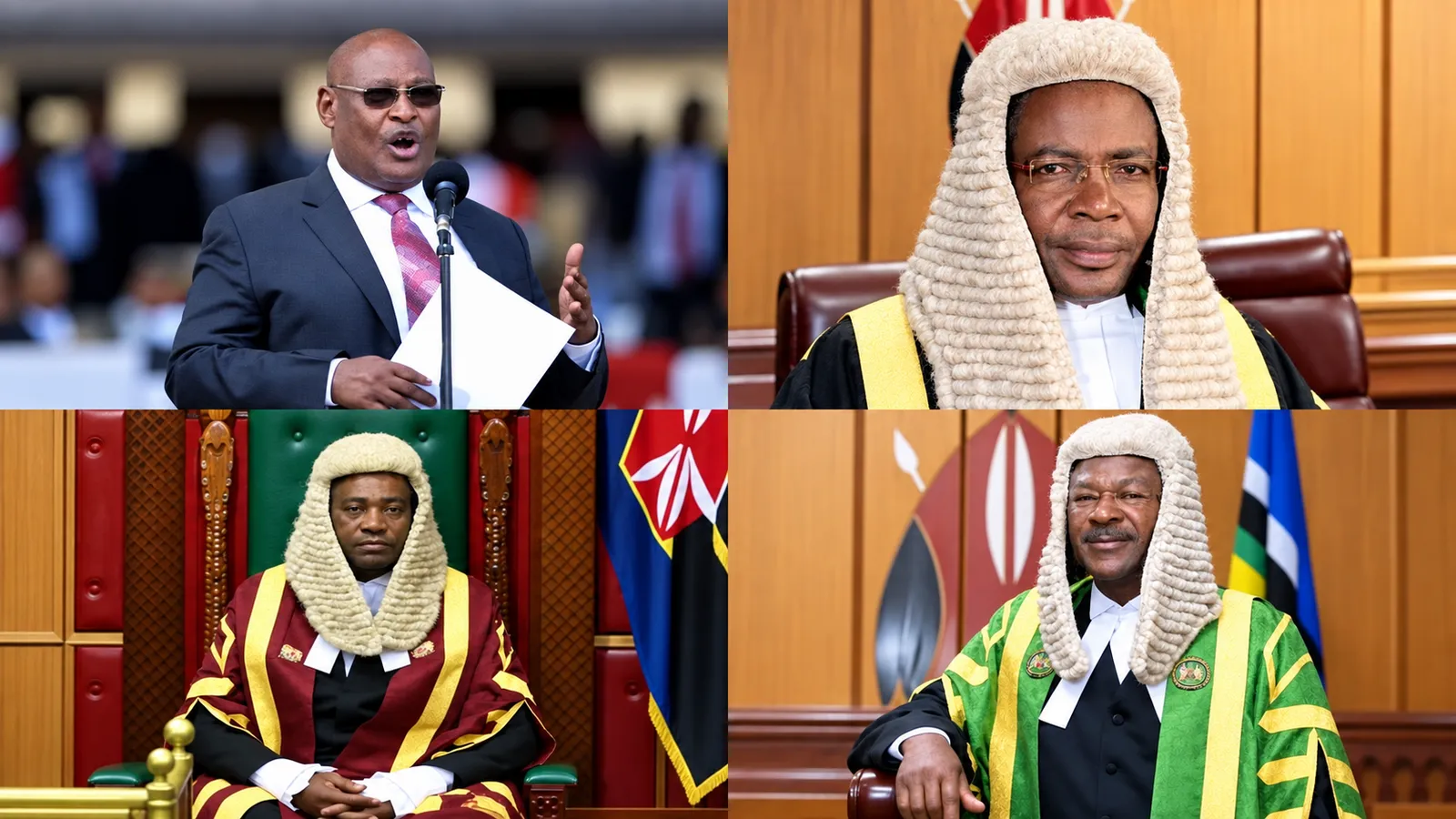
But there is a more useful way of approaching it: what did each Speaker bring to the institution, and what legacy did he leave behind?
The four presided over very different political eras. Kaparo served from 1993 to 2008, Marende from 2008 to 2013, Muturi from 2013 to 2022, while Wetang’ula became Speaker in September 2022. Parliament itself identifies these as successive leadership eras.
KAPARO: THE LONG-SERVING INSTITUTIONALIST
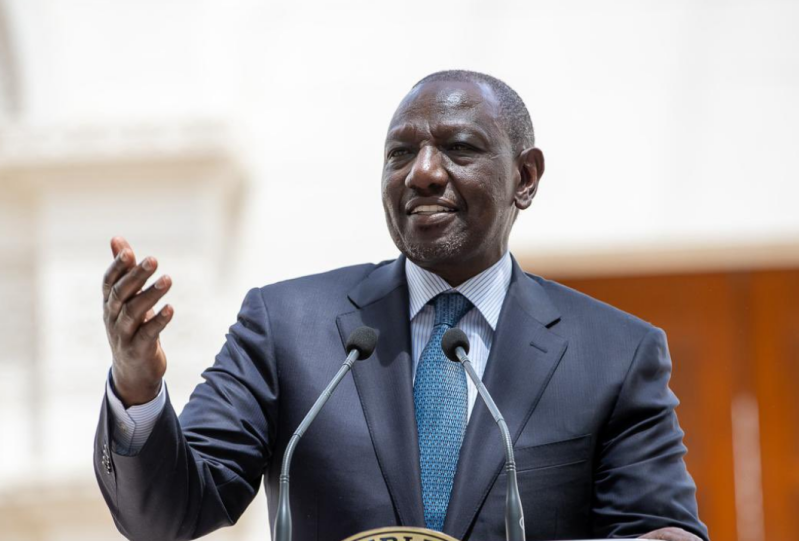
Francis Ole Kaparo's tenure stands out primarily because of its length and continuity.
He served for about 15 years, spanning the Seventh, Eighth and Ninth Parliaments.
That period covered the turbulent transition from one-party dominance to multiparty politics and the increasingly competitive politics of the 1990s and early 2000s.
Kaparo therefore operated in a Parliament where the Speaker had to balance strong executive influence, an increasingly assertive opposition and an evolving multiparty system.
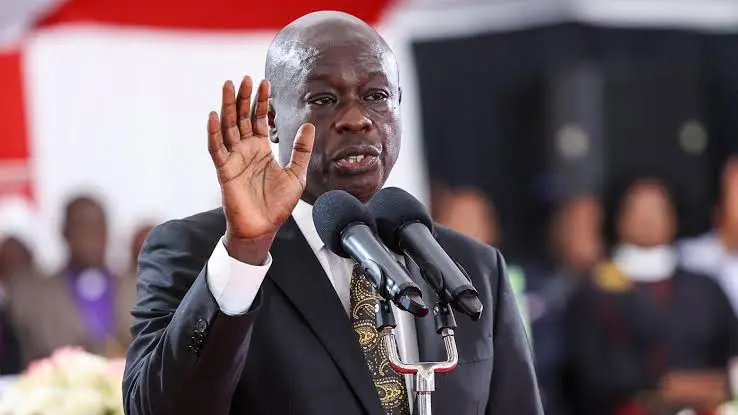
His legacy is particularly visible in the parliamentary rulings and procedures that have subsequently become part of Kenya's parliamentary institutional memory. Parliament's own compendium of Speakers' considered rulings includes Kaparo's decisions between 1963 and 2007.
But his long tenure also makes his record inseparable from the political environment of the Moi and Kibaki transition years.
MARENDE: THE SPEAKER WHO FACED A CONSTITUTIONAL STORM
Kenneth Marende inherited Parliament at one of the most politically sensitive moments in Kenya's history.
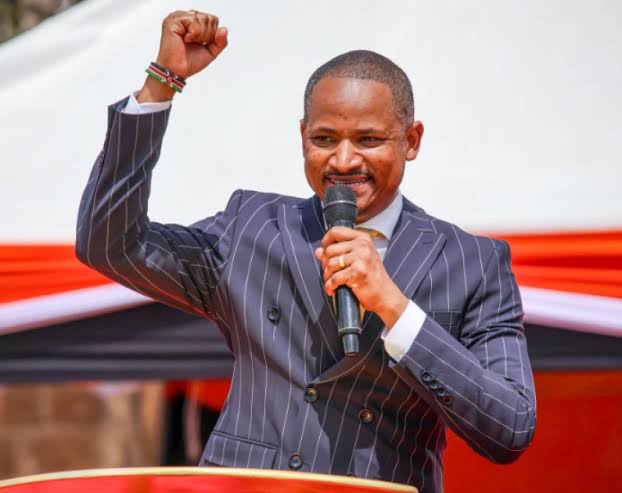
He became Speaker in January 2008, immediately after the disputed 2007 election and the formation of the Grand Coalition Government.
His Speakership became particularly significant during the constitutional and political struggles that eventually produced the 2010 Constitution.
Parliament records that during his 2008–2013 tenure, he presided over parliamentary business that contributed to the Constitution-making process, initiated live broadcasting of parliamentary proceedings, oversaw revisions of the Standing Orders, established the Centre for Parliamentary Studies and Training and supervised major institutional changes within Parliament.
Perhaps his most politically consequential moment came in 2009 when Parliament was caught in an institutional confrontation over the leadership of government business between President Mwai Kibaki and Prime Minister Raila Odinga.
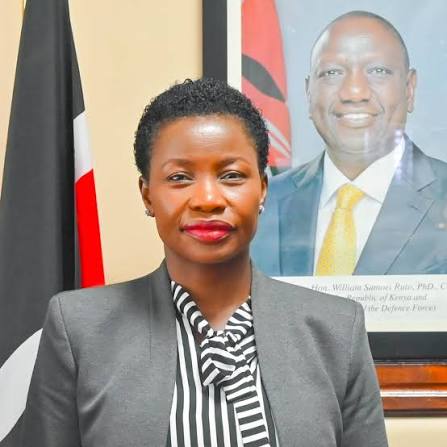
Marende issued a controversial but historic ruling during the impasse. His tenure consequently became associated with the idea of the Speaker as an independent constitutional referee, rather than merely the person occupying the chair.
MUTURI: THE ERA OF THE NEW CONSTITUTION
Justin Muturi presided over Parliament for the longest period among the four after Kaparo, serving from March 2013 to August 2022
His tenure was therefore largely a constitutional implementation era.

He entered the Speakership with extensive parliamentary and judicial experience. Before becoming Speaker, he had served as Opposition Chief Whip, chaired the Public Investments Committee and participated in the constitutional review process.
The Muturi era saw Parliament operating under the new constitutional architecture, including stronger committee structures, expanded oversight responsibilities and the coexistence of the National Assembly and Senate.
His tenure was not without controversy. In 2015, for example, he survived a censure motion, with MPs divided over questions concerning his conduct and the management of the House. Some legislators defended his reforms while others criticised his approach.
That disagreement is important because it demonstrates that judging a Speaker cannot simply be based on longevity or the number of parliamentary rulings.
WETANG’ULA: THE EXPERIENCED POLITICALIST WITH OPERATOR
Moses Masika Wetang’ula brought a different profile to the office.
He had served as a magistrate, MP, Cabinet minister, Senator and Senate Minority Leader before becoming Speaker in September 2022. Parliament describes him as an advocate of the High Court with extensive experience in parliamentary procedure and diplomacy.
His Speakership therefore combines legal experience, parliamentary experience and executive experience.
Unlike Marende, he did not enter the office as a newcomer to national parliamentary politics. He had already spent decades inside Kenya's political and legislative system.
His challenge has been to preside over a highly competitive National Assembly in the era of coalition politics, while also managing the constitutional relationship between the National Assembly and Senate.
SO, HOW SHOULD THEY BE COMPARED?
The answer depends heavily on what one considers the defining duty of a Speaker.
Speaker
Period
Defining feature of tenure
Francis Ole Kaparo
1993–2008
Long institutional continuity and parliamentary procedural legacy
Kenneth Marende
2008–2013
Constitutional transition, institutional reforms and high-profile rulings
Justin Muturi
2013–2022
Long stewardship under the 2010 constitutional order
Moses Wetang’ula
2022–present
Extensive prior experience across the Judiciary, Parliament and Executive
The crucial point is that “best” is not a single measurable category.
If the test is longevity and continuity, Kaparo's record is distinctive.
If the test is the Speaker's role during a major constitutional and political crisis, Marende's 2008–2013 period provides a particularly important case study.
If the test is long-term management of Parliament under the 2010 Constitution, Muturi's nine-year tenure provides the largest period for examination.
If the test is breadth of prior public-service and parliamentary experience, Wetang'ula's career offers a particularly broad record.
THE REAL QUESTION
Perhaps the more important question for Kenyans is not “Who was the best?”
It is:
Which Speaker most successfully protected the independence of Parliament, enforced the Standing Orders consistently, protected minority rights, facilitated quality debate, strengthened parliamentary oversight and left the institution stronger than he found it?
That provides a much more rigorous yardstick than personality, political affiliation or the Speaker's popularity.
And it opens an interesting national debate: 'Should a Speaker be remembered for how loudly he controlled the House—or for how fairly he allowed Parliament to exercise its constitutional mandate?'
No comments yet. Be the first to share your thoughts.