
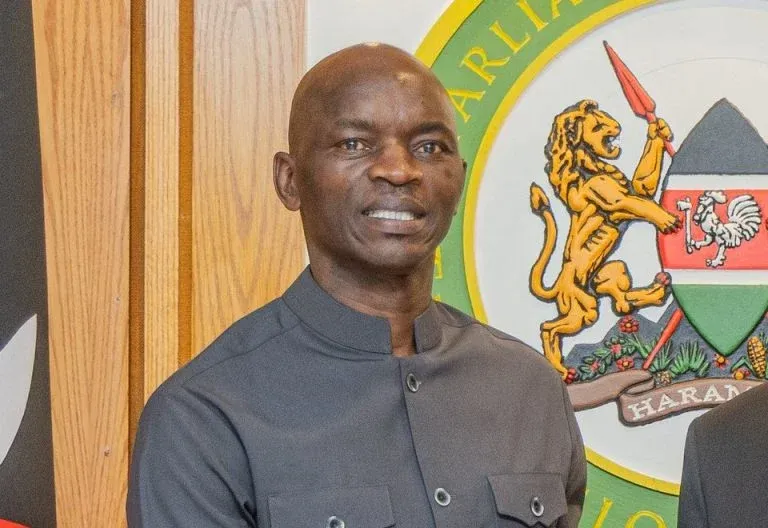
For nearly three decades, Maurice Ogeta occupied a position that offered him an unusual view of one of Kenya’s most influential political figures. He was close enough to witness the moments when Raila Odinga was vulnerable, the occasions when political tension threatened his safety, and the private routines that rarely featured in public speeches.
Ogeta’s recent television interviews have opened a window into that relationship. His account begins with an extraordinary incident at Nairobi Safari Club in 1997 and ends, almost 29 years later, with the former bodyguard describing the final moments of Raila’s life in India.
Between those two events lies a story of security scares, political demonstrations, personal trust, alleged attacks, and the emotional consequences of spending much of one’s adult life protecting another person.
But the relationship also raises questions that go beyond loyalty.
How does a bodyguard become one of a politician’s most trusted companions? What happens when the boundaries between professional duty and personal attachment begin to disappear? And what does Ogeta’s account reveal about the risks faced by those who stand closest to powerful political figures?
These questions form the heart of a story that is as much about the hidden costs of political power as it is about the man Kenyans knew as Baba.
THE 1997 INCIDENT THAT CHANGED EVERYTHING
The relationship began before Ogeta became a familiar face in Raila’s security detail.
In 1997, Ogeta was working as a fitness instructor and health club manager at Nairobi Safari Club. Raila, then the Lang’ata MP and a prominent opposition politician, was a regular visitor to the facility.
According to Ogeta’s account, an ordinary workout took an alarming turn when a group of men dressed in suits arrived and asked to see Raila.
Ogeta said the receptionist alerted him to the visitors. When he went to investigate, he found several men whose presence immediately raised suspicions.
He returned to Raila to ask whether he was expecting anyone.
The reaction, he recalled, was enough to convince him that something was wrong.
The number of visitors reportedly grew to between six and ten. Ogeta suspected that Raila could be in danger, although the men’s identities, intentions, and alleged connection to a possible assassination plot have not been independently established in the published accounts.
What followed was an improvised escape.
Ogeta said he helped Raila change into a tracksuit and cap to make him less recognizable. With assistance from hotel staff, he guided him towards an emergency exit.
Then came the diversion.
Ogeta directed the men to Room 1607, which he said did not exist. While they searched for the fictitious room, Raila was escorted out of the building.
Ogeta subsequently put him in a taxi bound for Parliament.
It was a remarkable decision for a man who was not yet serving as Raila’s formal bodyguard.
The incident, as Ogeta recounts it, became the foundation of a relationship that would last until Raila’s death in October 2025.
Yet an important investigative question remains: what exactly happened at Nairobi Safari Club that evening, and who were the men whose arrival prompted the escape?
Ogeta’s account provides a vivid description of the incident, but a definitive reconstruction would require corroboration from the hotel staff involved, the driver, contemporaneous records, and any available security reports.
Without those independent accounts, the episode should be understood as Ogeta’s recollection of a suspected threat rather than a conclusively established assassination attempt.
That distinction does not diminish the significance of his account. It identifies where the available evidence ends and where further investigation would begin.
FROM AN EMERGENCY ESCAPE TO 29 YEARS OF TRUST
The 1997 incident was the beginning of something much larger.
Ogeta eventually became one of Raila’s closest aides, accompanying him through years of political campaigning, opposition mobilization, and public demonstrations.
His responsibilities expanded beyond conventional bodyguard duties.
In interviews with Kenyan media, he has described serving as a personal assistant, driver, and caregiver, roles that placed him at the intersection of Raila’s professional obligations and private life.
He also described the trust placed in him by Raila’s family.
That trust was particularly important because protecting a prominent politician requires more than physical proximity. It involves anticipating risks, understanding movements, coordinating with other security personnel, and making decisions under pressure.
For a politician whose public life involved large crowds, political rallies, and contentious demonstrations, those responsibilities could become especially demanding.
Ogeta’s position gave him access to the practical details of Raila’s life that ordinary supporters would rarely see.
He knew the travel routines, the daily schedules, and the demands that came with maintaining the security of a politician whose movements attracted national attention.
But access alone does not explain a relationship lasting almost three decades.
Trust is built through repeated encounters in which one person becomes confident that another will act in their interests, particularly when circumstances become unpredictable.
Ogeta’s account suggests that the relationship developed from an initial emergency into a long-term working partnership.
The precise terms of that relationship, including how responsibilities were formalized, how the security team operated, and how decisions were made during periods of heightened danger, remain subjects that a fuller account of his career could illuminate.
THE BODYGUARD WHO BECAME MORE THAN A BODYGUARD
One of the most revealing aspects of Ogeta’s interviews is his description of how the job expanded.
He has said that Raila’s family trusted him to perform duties extending beyond personal protection, including assisting with medical needs and driving.
Such responsibilities suggest a relationship in which reliability and discretion were valued alongside conventional security skills.
They also illustrate a less visible feature of political life: powerful public figures often depend on a small circle of people whose work rarely attracts attention unless something goes wrong.
A politician may have advisers who explain policy, strategists who manage political alliances, and spokespeople who communicate public positions.
But the person responsible for physical protection occupies a different position. That individual must often respond to immediate danger without the luxury of extended consultation.
During a chaotic demonstration, a security aide may have seconds to decide whether a vehicle should proceed, reverse, or leave through an alternative route.
During a suspected threat, the aide must assess what is known, what remains uncertain, and how to reduce the possibility of harm.
And during travel, the responsibility extends to managing risks in unfamiliar environments while ensuring that the principal can continue with planned activities.
Ogeta’s account provides a personal perspective on those demands.
It also raises a question about the human cost of such work: what happens when a professional responsibility becomes so deeply embedded in everyday life that the loss of the person being protected also disrupts the protector’s identity and routine?
For Ogeta, that question became painfully real after October 15, 2025.
WHEN POLITICAL PROTESTS BECAME A SECURITY NIGHTMARE
Some of the most troubling episodes in Ogeta’s recollections concern the anti-government demonstrations that swept parts of Kenya in 2023.
Raila was then a leading opposition figure, and demonstrations associated with the Azimio coalition brought confrontations between protesters and security officers into sharp public focus.
Ogeta has described incidents in which he feared that he and Raila might not escape alive.
In one account of a confrontation involving Raila’s vehicle, he recalled the windscreen being struck repeatedly and eventually cracking as shots were fired.
He also recounted a moment when a security commander believed Raila might have been killed.
These are grave allegations. They should not be treated as independently verified descriptions of every detail of the incident without corroborating footage, medical evidence, security records, or testimony from other people present.
Nevertheless, the account highlights the extreme uncertainty that can surround the protection of political figures during violent confrontations.
A bodyguard must assess the immediate threat while also considering the safety of the driver, other security personnel, and bystanders.
The danger is not necessarily limited to a direct attack on the principal. A vehicle can become trapped, visibility can deteriorate, communications can fail, and the movement of a crowd can make an exit route impossible to use.
Ogeta’s recollections suggest that some of the most difficult moments in his career occurred when these risks converged.
They also offer a different perspective on political demonstrations.
Public debate often focuses on political speeches, police operations, injuries, and arrests. Less attention is paid to the people tasked with moving political leaders through those volatile environments.
For them, a demonstration is not merely a public event. It is a rapidly changing security situation in which the consequences of a wrong decision may be irreversible.
THE 2023 ABDUCTION: WHEN THE PROTECTOR BECAME THE VICTIM
Ogeta has also recounted being abducted during the period of opposition demonstrations in 2023.
The incident marked a disturbing reversal of roles.
The man whose professional responsibility was to protect Raila from danger found himself facing a threat he could not necessarily control.
In an interview reported by the Daily Nation, Ogeta said the experience had serious personal and financial consequences. He described losing money that he said was being transported on Raila’s behalf, with the loss setting back his savings by years.
He also rejected accusations that he had staged the abduction or stolen the money.
Those accusations and his response illustrate another risk faced by people working inside politically charged environments: events can become the subject of public speculation, competing narratives and allegations that are difficult to resolve without independent evidence.
Ogeta said Raila understood what had happened and did not treat the loss as proof of wrongdoing on his part.
He also recalled Raila making a joke about the experience, asking whether the abductors had given him a kind of baptism.
According to Ogeta, the humour was consistent with Raila’s way of easing the emotional weight of difficult experiences.
The episode is significant for another reason.
It shows that the relationship between the two men was tested not only when Raila faced danger, but also when Ogeta himself became vulnerable.
A bodyguard’s professional value is often measured by whether the principal remains safe. Much less attention is paid to what happens when the protector is injured, abducted or left to absorb the financial and psychological consequences of a security incident.
Ogeta’s recollection suggests that, in this instance, personal trust mattered beyond the immediate question of physical protection.
A complete account of the incident would nevertheless require further examination of the circumstances of the abduction, the handling of the missing money and any available official investigations.
THE PRIVATE RAILA: A MAN HIS AIDE SAYS MANY KENYANS NEVER KNEW
One of the most striking themes in Ogeta’s interviews is his insistence that the public image of Raila did not tell the whole story.
For decades, Raila was known for his political determination, combative rhetoric, mass mobilisation and prolonged struggles with successive administrations.
To supporters, he represented resistance and the pursuit of political reform. To critics, his strategies and political alliances were often subjects of sharp disagreement.
But Ogeta says the man he knew privately could be markedly different from the public figure.
He described Raila as someone who was sometimes reluctant to refuse requests and who could go out of his way to comfort people dealing with bereavement.
That portrayal complicates the familiar image of a politician whose public life was dominated by political battles.
It also raises a question about the relationship between public reputation and private character.
People who work closely with politicians have access to experiences that are unavailable to most citizens. They may witness moments of generosity, irritation, humour, vulnerability and indecision that never appear in public statements.
But such proximity does not make any single account definitive.
Ogeta’s memories are valuable because of the length and closeness of his association with Raila. They are also personal recollections, shaped by his particular position in the former prime minister’s life.
A fuller portrait would require comparing his account with those of family members, colleagues, political opponents and other people who interacted with Raila in different settings.
What Ogeta offers is one important perspective: the private experiences of a man who spent nearly three decades close to a politician whose public identity often overshadowed his personal life.
THE FINAL MORNING IN INDIA: WHEN YEARS OF ROUTINE ENDED
On October 15, 2025, the relationship reached its most painful moment.
Raila was in Kerala, India, where he had travelled for medical care.
According to Ogeta’s account, the morning began with an ordinary routine. The two prepared for a walk around the grounds of the facility where Raila was staying.
They discussed everyday matters, including a woman tending her farm in Kerala. Raila began walking, completing the first circuit before deciding to continue.
Then something changed.
Ogeta said Raila suddenly stopped and made a sound that prompted him to ask whether he was experiencing pain in his back or leg.
Raila did not respond as expected.
When Ogeta tried to help him, he realised that Raila could no longer support himself properly. He attempted to lower him to the ground, called for assistance and tried to position him safely while medical personnel were summoned.
In interviews with Citizen TV and NTV, Ogeta described those final moments as unfolding with frightening speed.
Raila was taken for emergency medical treatment but died that day, aged 80.
For Ogeta, the loss was not simply that of an employer.
It was the sudden end of a daily routine that had structured nearly three decades of his life.
The person he had accompanied through political campaigns, security scares and ordinary journeys was gone.
The finality of that moment is difficult to separate from the length of the relationship that preceded it.
When two people work together for a few months, the end of the professional arrangement may require adjustment.
When they spend almost 29 years together, the relationship can become embedded in the rhythms of daily existence: the phone calls, the journeys, the familiar instructions and the expectation that tomorrow will begin much as today did.
Ogeta’s account suggests that this was the scale of the disruption he experienced.
AFTER BABA: THE EMPTY SPACE LEFT BEHIND
In interviews after Raila’s death, Ogeta has described moments when he instinctively reaches for his phone, expecting a call that will never come.
He has also spoken about starting to prepare for work before remembering that the routine he shared with Raila has ended.
The recollections reveal the emotional consequences of a relationship that had become part of his everyday life.
They also draw attention to a question that receives little consideration in discussions about political succession and public mourning: what happens to the people whose professional and personal lives were organised around a prominent leader?
When a political figure dies, public attention naturally turns to the family, the political movement, the succession questions and the historical legacy.
The people who maintained the leader’s daily operations must also find a way forward.
Some may return to other professional roles. Others may remain closely connected to the family or political organisation. Still others may struggle with the loss of the routines, relationships and sense of purpose that shaped their working lives.
Ogeta has indicated that he has received support from some people who knew him through his work with Raila, while expressing disappointment that others have not reached out.
He has also spoken about plans to share more of his experiences in a book.
Such a publication could provide a more detailed account of the relationship, including the events that shaped it, the people involved in the security operation and the challenges that arose over the years.
For now, his interviews provide an initial glimpse into a world that remained largely outside public view.
THE UNANSWERED QUESTIONS BEHIND A REMARKABLE RELATIONSHIP
Ogeta’s story is compelling, but its significance goes beyond the drama of the 1997 hotel escape or the tragedy of Raila’s final morning.
It opens several avenues for deeper investigation.
First, the 1997 incident. Who were the men who arrived at Nairobi Safari Club? Were their identities ever established? Did the hotel record the incident, and can the staff members involved corroborate the escape?
Second, the evolution of the security arrangement. How did Ogeta move from working at a hotel health club to becoming one of Raila’s closest aides? What formal security structures surrounded the politician, and how were responsibilities divided among the people assigned to protect him?
Third, the dangers of political demonstrations. What records, footage and independent witness accounts are available to corroborate the security incidents Ogeta describes, including the reported gunfire involving Raila’s vehicle?
Fourth, the 2023 abduction. What was established about the circumstances of Ogeta’s abduction and the money he said was lost? Were the allegations investigated, and what evidence exists beyond the competing public accounts?
Finally, the personal relationship. How did Raila and Ogeta manage the boundaries between employment, trust and friendship? How did that relationship evolve as Raila moved between opposition politics, government and national political negotiations?
These questions should not be treated as allegations of wrongdoing. They are the natural starting points for a fuller historical investigation into a relationship that spanned nearly three decades of Kenya’s political life.
They also demonstrate why personal testimony, however vivid, is only one part of investigative journalism. Documents, independent witnesses, corroboration and the opportunity for people named in disputed accounts to respond are necessary to establish what happened.
THE MAN WHO STOOD BEHIND THE POLITICAL GIANT
Maurice Ogeta’s account offers an unusual perspective on Raila Odinga.
It begins with a suspected threat at a Nairobi hotel, develops through years of political turbulence and ends with the death of a man whose daily life had become inseparable from that of his aide.
The tracksuit, the fictitious hotel room and the piece of fruit Raila reportedly picked up while escaping have become memorable details in the story of how the two first met.
But the deeper significance lies in what followed.
For almost three decades, Ogeta occupied a position defined by proximity, responsibility and trust. He saw Raila not only as the political figure who addressed crowds and contested elections, but also as the person who travelled, worked, exercised, joked and depended on the people around him.
His recollections cannot, on their own, answer every question about the threats Raila faced or establish every detail of the incidents described. They do, however, provide a starting point for examining the hidden world surrounding a major political figure.
And they reveal a dimension of political life that is often overlooked.
Behind every powerful leader is a network of people whose work makes public appearances, political journeys and everyday routines possible. Some become trusted confidants. Some face risks that remain largely invisible. And when the leader dies, those who spent years in his immediate orbit must confront a loss that is both professional and deeply personal.
For Ogeta, the relationship began with an unexpected group of men in suits and a decision to act quickly.
Nearly three decades later, it ended on a morning walk in India.
Between those two moments lies the story of a bodyguard who became a trusted aide, a political leader who depended on the people around him, and a relationship whose full history has yet to be told.
The tracksuit may have helped Raila escape that evening in 1997. The more enduring story is how an improvised act of protection became a bond that lasted almost 29 years—and what Maurice Ogeta’s memories can now reveal about the private life, security and human cost of Kenya’s political history.
:::
No comments yet. Be the first to share your thoughts.