
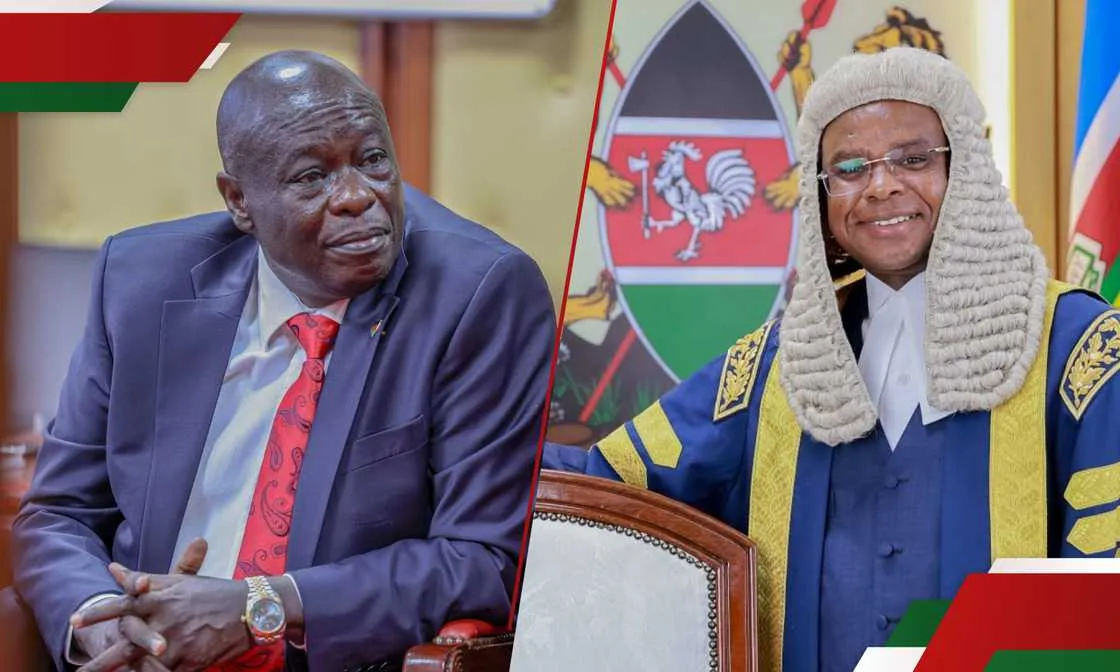
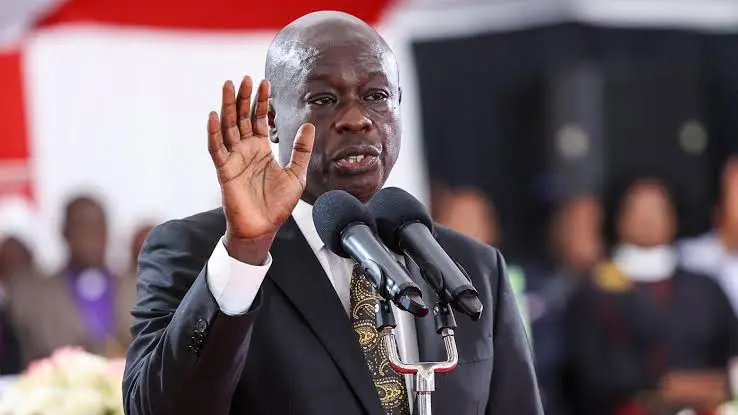
On October 18, 2024, Kenya witnessed something unprecedented. Deputy President Rigathi Gachagua was removed from office by the Senate after an impeachment process in which he faced 11 allegations. The Senate found him guilty on five grounds and acquitted him on six.
But beneath the parliamentary arithmetic lies a larger political question—one that reaches beyond Gachagua, William Ruto, Parliament and the Senate. Was the impeachment merely the removal of a Deputy President, or was it part of a larger political realignment designed to protect the presidency and preserve an old establishment under new management?
There is no established evidence that colonial authorities—or a contemporary colonial network—wrote the Gachagua impeachment script. That is an interpretation, not a documented fact. But the argument deserves examination because Kenya's political history has repeatedly demonstrated the extraordinary durability of ethnic mobilisation, elite bargains and competition for control of the State. And that history did not begin with Ruto. It began much earlier.
THE YOUTH WHO INTERRUPTED THE SCRIPT
Then came June 25, 2024. The streets of Nairobi and other parts of Kenya filled with young protesters opposing the Finance Bill. Parliament was stormed, several people were killed and the demonstrations developed into a broad rejection of taxation, political privilege and the conduct of government. President Ruto eventually withdrew the Finance Bill.
For decades, Kenya's political competition had largely been organised around parties, personalities and ethnic coalitions. The Gen Z uprising disrupted that grammar. There was no traditional presidential candidate commanding the crowds. No tribal kingpin was leading from the front. No established opposition party owned the movement. The mobilisation was decentralised and heavily driven by social media. That was potentially more disruptive to the traditional political establishment than an ordinary election.
The old political equation—ethnic bloc + political kingpin + negotiated elite coalition = electoral power—was suddenly being challenged by a generation that could mobilise outside the established party system. And that is where the Gachagua question becomes politically intriguing.
THE COLONIAL GHOST IN THE POLITICAL MACHINE
Academic literature provides substantial evidence that colonial rule shaped ethnic and political divisions in Kenya.
Research on Kenya's political history describes how colonial administrative structures and divide-and-rule practices contributed to ethnicised political organisation. One Oxford study notes that colonial legacies continued to influence political power, state formation and ethnic competition after independence.
Another study traces how restrictions on nationwide African political organisation helped institutionalise ethnically based political associationsThe result was not simply that Kenyans belonged to different communities.It was that political competition increasingly became organised around those identities. Kikuyu. Luo. Kalenjin. Luhya. Kamba. And the many other communities that make up Kenya. The tragedy was that ethnicity could become a political instrument. The deeper tragedy was that ordinary citizens could be persuaded to defend political elites because those elites appeared to represent their communities. That pattern survived independence.
THE KIKUYU–LUO AXIS
The political history of Kenya repeatedly returned to the relationship between Kikuyu and Luo political elites. The confrontation between Jomo Kenyatta and Jaramogi Oginga Odinga eventually became intertwined with ideological and ethnic divisions. The Kenya People's Union, associated with the Luo-led opposition and a more left-leaning political orientation, was banned in 1969, while the political dominance of the Kenyatta era became increasingly consolidated.
Under Daniel arap Moi, the architecture changed but the principle of coalition-building through ethnic blocs remained important. Moi constructed shifting alliances involving Kalenjin, Luhya, coastal and other communities, while political opposition increasingly challenged the one-party system. By the 1990s, multi-party politics had returned. But the ethnic arithmetic had not disappeared. It had simply become more sophisticated.
2002: THE UNEXPECTED “KIBAKI TOSHA”
Then came 2002. Moi had settled on Uhuru Kenyatta as his preferred successor. But the opposition coalition was assembling. Raila Odinga surprised many when he declared: “Kibaki Tosha.” Mwai Kibaki became the opposition coalition's presidential candidate, and the National Rainbow Coalition defeated KANU.
The political earthquake of 2002 demonstrated something important: ethnic blocs could be rearranged. The Kikuyu vote did not necessarily have to remain with KANU. The Luo vote did not necessarily have to remain with one political formation.
Communities could be assembled into coalitions around personalities, interests and political bargains. But the coalition soon fractured. Raila and his allies became increasingly alienated from the Kibaki administration. By 2005, the constitutional referendum had transformed the political landscape again. Then came 2007. And Kenya paid a devastating price.

THE 2007 LESSON
The 2007–08 post-election violence demonstrated how dangerous the combination of political competition, ethnic mobilisation, historical grievances and perceptions of State power could become. Scholars have documented how ethnic political mobilisation and land grievances intersected in the violence.
The lesson should have been obvious: A nation cannot permanently build its political system around ethnic fear. Yet Kenya repeatedly returned to the same political grammar.
ENTER GACHAGUA

Against that historical backdrop, Gachagua's rise as Ruto's Deputy President carried enormous political significance. He came from the Mount Kenya region. Ruto came from the Rift Valley. Their 2022 alliance was itself a remarkable rearrangement of Kenya's political geography. But the partnership deteriorated.
By 2024, Gachagua was facing an impeachment Motion containing 11 grounds, including allegations concerning gross constitutional violations, undermining the President and Cabinet, devolution, ethnic division, alleged economic crimes, misleading statements and attacks on security institutions. Gachagua denied all the allegations.
The National Assembly ultimately approved the Motion, sending the matter to the Senate. Then came the decisive vote. Gachagua was gone.
THE QUESTION THAT REFUSES TO DIE
This is where the “script” theory emerges. Its proponents would argue that Gachagua's removal did more than eliminate a difficult Deputy President. It removed a powerful political centre of gravity within the government's own coalition at a moment when the presidency was facing unprecedented public anger.
That interpretation, however, remains an allegation unless supported by evidence of coordination. The documented record establishes the impeachment process and its allegations. It does not, by itself, establish that colonialists, foreign capitalists or a hidden establishment designed the process. That distinction matters. Because journalism must separate what can be demonstrated from what can be inferred.
THE BIGGER TARGET: THE POLITICAL MACHINE
Perhaps the more important question is therefore not: “Who wrote Gachagua's impeachment script?” It is: “What political system made such a script possible?”
Kenya's problem may be bigger than any one president or deputy president. It may be the persistence of a political architecture in which communities become electoral markets, politicians become ethnic brokers and State resources become currency in political competition.
Research has documented the continuing influence of colonial-era ethnic divisions and post-independence patronage structures on Kenyan politics That does not mean every political event is secretly controlled by an invisible colonial hand.
It means the institutional inheritance of colonialism can survive without colonial administrators remaining in the country. That is the essence of the neocolonial argument. The administrator disappears. The structure remains.
AND THEN CAME GEN Z
The June 2024 protests introduced something potentially different. Young Kenyans were not necessarily asking which tribe should occupy State House. They were asking: Where is the money? Why are taxes rising? Why are young people unemployed? Why should political leaders live differently from ordinary citizens? Who owns the government?
That shift from identity politics to accountability politics is arguably one of the most significant developments in Kenya's recent political history. The traditional political establishment understands elections. It understands tribes. It understands political parties. It understands negotiations between elites. But a politically conscious generation operating through phones, social media and decentralised networks presents a different challenge. It cannot easily be summoned to a political rally and instructed how to vote. This may therefore be the real meaning of the Gachagua episode. Not necessarily that somebody secretly wrote his impeachment. But that Kenyan politics has repeatedly demonstrated an extraordinary capacity to absorb political shocks, remove individual actors and reproduce the underlying system. A politician falls. Another rises. A coalition collapses. Another is created. One ethnic alliance becomes another. An opposition movement enters government. A revolutionary slogan becomes an establishment slogan. And the machinery continues.
That is why the question of Gachagua's impeachment cannot be isolated from Kenya's longer political history. The constitutional process was real. The allegations were real. The parliamentary votes were real. The political consequences were real. But whether the episode represented simply constitutional accountability, an internal power struggle, or a broader establishment realignment remains a matter for evidence and historical interpretation.
One thing, however, is difficult to dispute: Kenya's old political architecture was shaken by the youth uprising of 2024. The unanswered question is whether the architecture itself changed—or merely rearranged its furniture. And that is where the Gachagua story becomes bigger than Gachagua.
No comments yet. Be the first to share your thoughts.