

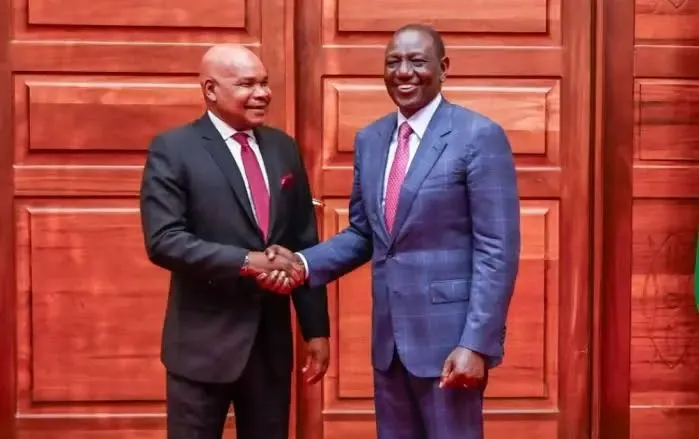
Nearly three years after the turbulent 2023 Azimio protests, Maurice Ogeta, the long-serving bodyguard of the late opposition leader Raila Odinga, is still wrestling with questions of trust, loyalty, and security. At the center of his unresolved anger is Professor Makau Mutua and a livestream from inside Raila’s vehicle that Ogeta believes exposed sensitive information at a dangerous moment.
Some political wounds refuse to heal. Others deepen with time, especially when those involved believe that the people entrusted with their safety may have compromised it.
For Maurice Ogeta, the former bodyguard of the late Raila Odinga, one such wound remains painfully open.
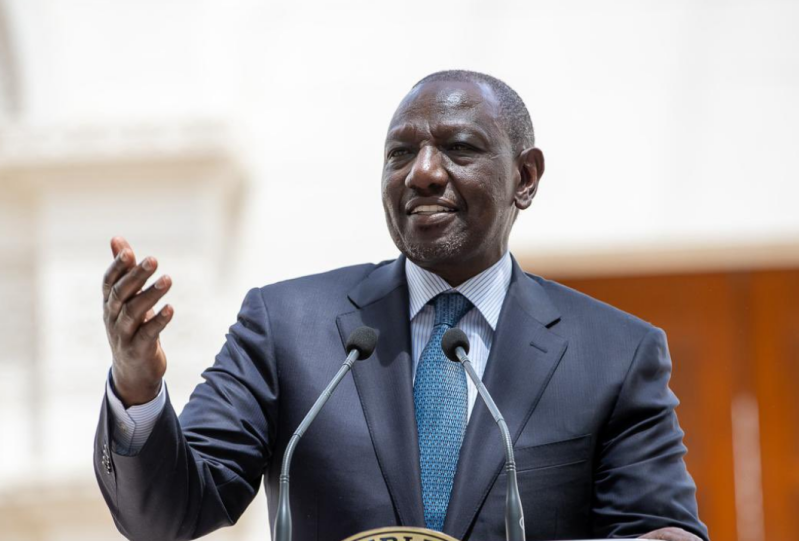
In a revealing interview on NTV Kenya’s Unmasking Raila’s Shadow, Ogeta expressed deep resentment towards Professor Makau Mutua over an incident during the 2023 anti-government demonstrations, when Mutua reportedly livestreamed events from inside Raila’s vehicle.
Ogeta’s words were unequivocal: he was not sure he would ever forgive Mutua.
But beneath the anger lies a bigger question that deserves public scrutiny: when political leaders are operating under pressure, where should the line be drawn between documenting history and exposing the security arrangements of those at its center?
THE LIVESTREAM THAT TRIGGERED SUSPICION
The 2023 Azimio protests were among the most politically charged episodes of the period, marked by street demonstrations, confrontations with security agencies, and intense public debate over the direction of the country.
Raila, then the leading opposition figure, was at the center of the political storm.
According to Ogeta’s recollection, Mutua was inside Raila’s vehicle, livestreaming events as they unfolded.
For Ogeta, the decision to broadcast from within the vehicle was troubling.
His concern was that live footage could reach not only supporters and sympathizers but also adversaries who might use the information to their advantage.
In politically volatile circumstances, the location of a prominent leader, the movement of a convoy, and the activities surrounding a vehicle can become sensitive security information.
A livestream may last only minutes, but its implications can extend far beyond the broadcast itself.
Ogeta recalled receiving telephone calls from contacts in the United States and South Africa who wanted to know what was happening. He said he tried to establish who was broadcasting from inside the vehicle and discovered that it was Mutua.
That discovery, as Ogeta tells it, became a turning point in his perception of the people around Raila.
What may have appeared to others as documentation of a historic political moment was, in Ogeta’s eyes, a potential breach of trust.
Yet an important distinction must be made: livestreaming from a political leader’s vehicle does not, by itself, establish that anyone intended to expose the occupants to danger. Nor is there evidence in Ogeta’s account proving that Mutua’s broadcast caused the events that followed.
The allegation nevertheless raises legitimate questions about security protocols, consent, and the responsibilities of people operating within a political leader’s immediate circle.
THE ABDUCTION THAT CHANGED EVERYTHING
Days after the incident, Ogeta says, he was abducted.
The experience appears to have profoundly affected how he viewed his personal security and relationships within Raila’s inner circle.
He subsequently described the ordeal as a “blessing in disguise,” a striking characterization of an experience that would ordinarily be associated with fear, trauma, and uncertainty.
Ogeta also recalled that the period coincided with the eventual end of the demonstrations and the cancellation of a planned trip by Raila to London.
He further claimed that Sh14.7 million was stolen from him, with part of the money allegedly belonging to Raila.
These recollections introduce another troubling dimension to his account: the vulnerability of people entrusted with the personal security and sensitive affairs of powerful political figures.
However, the sequence of events must not be mistaken for proof of causation.
Ogeta’s abduction, the reported livestream and the alleged theft of money are separate matters unless evidence establishes a direct connection between them.
His account does not establish that Mutua orchestrated, facilitated, or had prior knowledge of the abduction. Neither does it demonstrate that the livestream directly contributed to it.
Those are serious questions requiring evidence, not conclusions that can be drawn from suspicion alone.
WHEN THE INNER CIRCLE BECOMES A SOURCE OF FEAR
Perhaps the most revealing aspect of Ogeta’s account is not his anger towards Mutua but his apparent loss of confidence in people he believed he could trust.
Ogeta suggested that some individuals within his own circle may have exposed him.
For a bodyguard, trust is not merely a personal virtue. It is an occupational necessity.
Those responsible for protecting political leaders often operate close to the center of power, where they may become privy to movements, meetings, travel arrangements, and other sensitive information.
Their effectiveness depends on discipline, discretion, and confidence in the people with whom they work.
When that confidence collapses, every decision becomes suspect. A seemingly innocent action can acquire a darker meaning, and old events can be reconsidered through the lens of later misfortune.
This is the human dimension of Ogeta’s story.
His continued anger suggests that, for him, the events of 2023 were not simply a political episode that ended when demonstrations stopped. They became a personal experience that continues to shape his understanding of loyalty and betrayal.
But suspicion, however understandable, is not a substitute for proof.
The public deserves to know whether established security procedures were breached, whether any investigation connected the livestream to subsequent events, and whether the alleged theft was reported and pursued.
Equally, those accused deserve an opportunity to respond to the allegations.
MAKAU MUTUA AND THE QUESTION OF RESPONSIBILITY
Mutua's name now sits at the center of Ogeta's grievance, but the fundamental issue extends beyond one individual.
What responsibilities should lawyers, advisers, political allies, journalists, and other individuals have when they find themselves inside the security perimeter of a prominent political leader during a confrontation?
Should live broadcasting be restricted in certain circumstances? Who decides what information is safe to publish? And how should political organizations balance transparency with the need to protect the people at the center of volatile events?
These questions are particularly important in an era when smartphones can turn private moments into public spectacles within seconds.
A person livestreaming from a political convoy may believe they are preserving history or informing supporters. Yet the same broadcast may reveal information that organizers would ordinarily prefer to keep confidential.
That does not automatically make the broadcaster culpable for any subsequent harm. It does, however, make the question of judgment worth examining.
Political loyalty should never be used to silence legitimate scrutiny. Equally, accusations of betrayal should not be accepted as established fact simply because they come from someone who has endured a frightening experience.
The appropriate response is to establish what happened, what information was disclosed, who could access it, and whether there is evidence linking that disclosure to any subsequent security incident.
THE BIGGER LESSON: TRUST IS A SECURITY ASSET.
Raila Odinga's political career was built around mass mobilization, political alliances, and a close network of advisers, organizers, and loyalists.
But political movements are not immune to the tensions that arise when power, access, and personal interests intersect.
Ogeta's account offers a glimpse into the pressures that may exist behind the public image of a political leader's inner circle.
The people closest to power can also be the most exposed when political temperatures rise. Their access makes them valuable, but it can also make them vulnerable.
That is why security cannot depend entirely on personal loyalty or individual judgment. It requires clear procedures governing access, communications, broadcasting, and the handling of sensitive information.
If Ogeta's concerns point to weaknesses in those procedures, the appropriate lesson is institutional: political organizations must ensure that publicity never casually overrides security.
There is also a lesson about accountability. When serious allegations emerge, political connections should neither shield anyone from scrutiny nor become grounds for premature condemnation.
VERDICT: AN UNFINISHED STORY
Ogeta's declaration that he may never forgive Mutua is more than an expression of personal anger. It is a window into an unresolved grievance involving trust, political security, and the painful consequences of believing that those closest to you may have let you down.
But the central question remains unanswered: Was the livestream merely an ill-judged act of broadcasting, or was there a demonstrable connection between the disclosure of sensitive information and the dangers Ogeta later faced?
On the account available, that connection has not been established.
What is clear is that Ogeta continues to question the conduct of people within Raila's inner circle during a turbulent period in Kenya's political history.
Mutua's response, if available, would be important in assessing the dispute fairly. Evidence relating to the livestream, the reported abduction, and the alleged loss of money would also be necessary to determine whether the events were connected.
Until then, the story remains one of serious allegations, unresolved suspicions, and a former bodyguard's lingering sense of betrayal.
In politics, trust can take years to build and seconds to destroy. But when reputations and questions of personal safety are involved, the search for truth must be guided by evidence rather than anger.
For Ogeta, forgiveness remains uncertain.
For the public, the more important task is to establish what actually happened.
No comments yet. Be the first to share your thoughts.