
Wicknell Chivayo did not become one of Africa’s most recognisable businessmen merely by accumulating money.
He became a phenomenon by putting wealth, power, access and generosity on public display.
For years, the Zimbabwean businessman—better known by the self-styled title “Sir Wicknell”—turned Instagram into something resembling a rolling documentary of his life: luxury cars, private aircraft, expensive watches, huge cash gifts, churches, celebrities, football, politicians and, perhaps most significantly, photographs with presidents and royalty.
Then, on September 30, 2026, the extraordinary story came to an abrupt end.
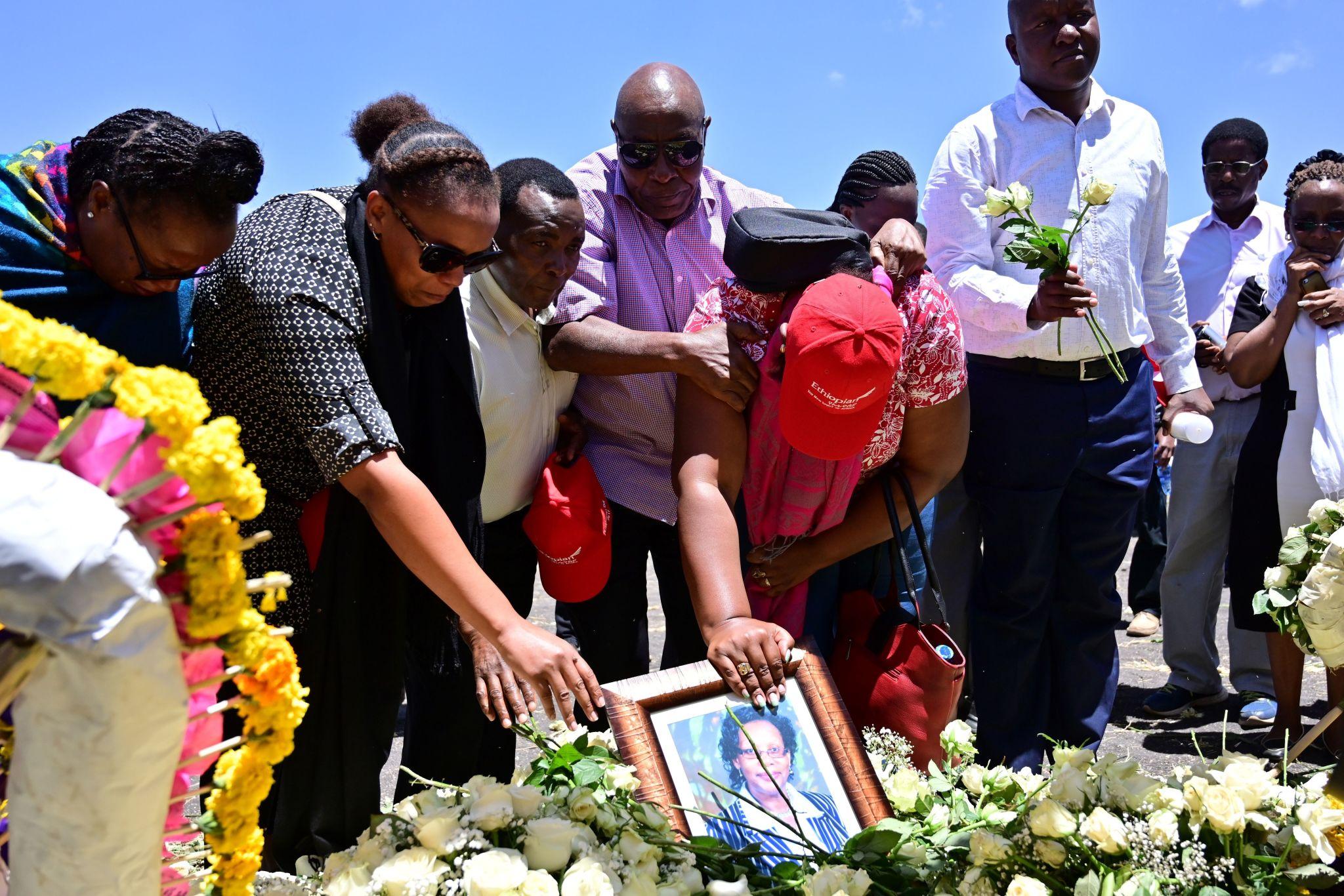
Chivayo and his wife, Lucy “Lulu” Muteke, were among six people killed when a helicopter crashed in rural Marondera, east of Harare. Authorities said there were no survivors.
His death has therefore transformed the question surrounding his life.
It is no longer simply: How did Wicknell Chivayo become so rich?
It is also:
How did a businessman with a criminal conviction, controversial government contracts and a spectacular appetite for philanthropy acquire extraordinary access to some of Africa’s most powerful political leaders?
And perhaps the most difficult question:
Where exactly did business end and political influence begin?
The businessman who made his wealth impossible to ignore
Chivayo understood something that many wealthy people do not.
Money can buy luxury.
But publicly demonstrated money can buy attention.
His social-media presence became an essential part of his identity. Rolls-Royces, Range Rovers, Bentleys, private jets, helicopters and expensive watches became props in a carefully visible lifestyle.
He did not appear interested in quietly being wealthy.
He wanted the world to see it.
Business Daily described him as unusually transparent about how he spent his money, even as questions persisted about the origins of his fortune.
That distinction became central to the Chivayo phenomenon.
His spending was visible.
His business structures were considerably less transparent to the ordinary public.
And that contrast created the fascination.
From prison to the boardroom
There was another chapter in Chivayo's life that could not be erased by luxury.
As a young man, he encountered the criminal justice system.
Reports indicate that he was convicted in a fraud-related case and served a prison sentence at Chikurubi Maximum Security Prison. The conviction subsequently became an important part of the public narrative surrounding him.
Yet Chivayo's story did not end at the prison gates.
It was there, in many respects, that the second and more spectacular chapter began.
He entered the energy and infrastructure business and established Intratrek Zimbabwe, eventually becoming involved in some of Zimbabwe's most closely watched public infrastructure projects.
His greatest opportunity—and one of the biggest controversies of his career—was the proposed 100-megawatt Gwanda solar project.
Intratrek was awarded a contract connected to the project, valued at more than US$170 million in contemporary reporting. An advance payment was made, but the project became embroiled in years of controversy, legal proceedings and questions over implementation.
Chivayo was subsequently prosecuted over allegations connected to the project.
But there is an important distinction between being accused and being convicted.
The criminal proceedings ultimately resulted in his acquittal, while the legal history surrounding the project remained contested.
That distinction matters.
A responsible examination of Chivayo's life cannot turn allegations into established facts simply because they make a more dramatic story.
The politics of proximity
If his business career made him wealthy, his proximity to political power made him famous across borders.
Chivayo seemed remarkably comfortable in presidential environments.
He was photographed with Zimbabwean President Emmerson Mnangagwa and later cultivated relationships with leaders elsewhere on the continent, including Kenya's William Ruto, Tanzania's Samia Suluhu Hassan, South Africa's Cyril Ramaphosa, Nigeria's Bola Tinubu, Zambia's Hakainde Hichilema and other African political figures.
His access was extraordinary.
For an ordinary businessman, securing a meeting with one president can require weeks or months of protocol, security clearance and diplomatic arrangements.
Chivayo appeared to move through that world with unusual ease.
That became part of his brand.
His photographs with presidents were not hidden away in private albums.
They became part of the public record.
And once the photographs were public, they generated another question:
What does a businessman gain—or potentially risk—by being so close to political power?
That question is legitimate.
But it is equally important not to turn photographs into proof of wrongdoing.
A photograph with a president establishes proximity.
It does not, by itself, establish a corrupt transaction, political favour or illegal influence.
The Ruto connection
Kenya became one of the most visible chapters of Chivayo's African journey.
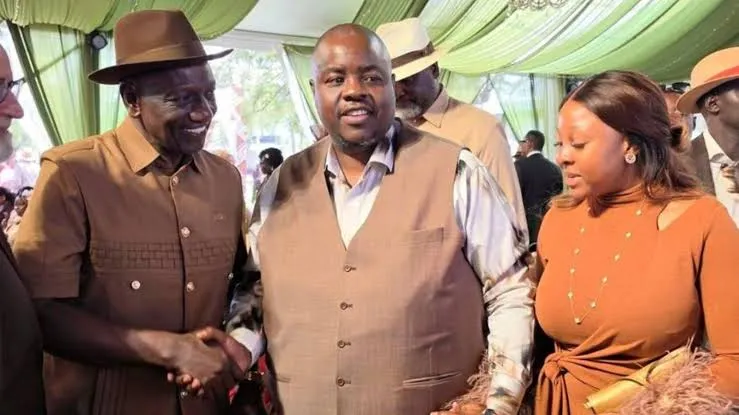
He developed a public relationship with President William Ruto and appeared with him on several occasions.
One of the most striking moments came in 2026 when Chivayo was filmed with President Ruto around the time of the traditional engagement ceremony of Ruto's daughter, Charlene.
Footage showing the Kenyan President personally driving Chivayo towards his helicopter generated significant public discussion.
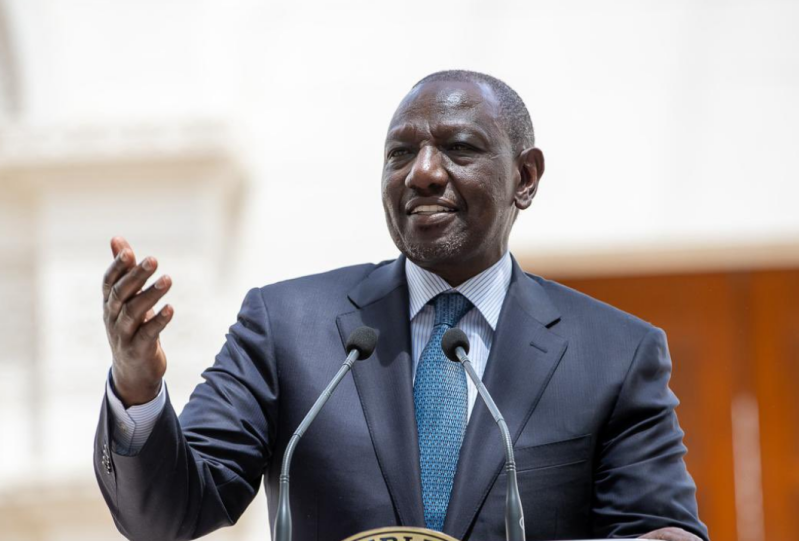
After Chivayo's death, President Ruto described him as a friend while expressing condolences to his family.
The relationship attracted scrutiny partly because Chivayo was not merely a social celebrity.
He was a businessman involved in major infrastructure ambitions.
That distinction is important.
Whenever a businessman with substantial government-linked commercial interests develops unusually visible relationships with political leaders, the public naturally asks questions about access, influence, procurement and conflicts of interest.
Those questions deserve evidence, not speculation.
The JKIA controversy
Chivayo's Kenyan interests also attracted attention around the proposed expansion of Jomo Kenyatta International Airport.
Reports in 2026 linked his Kenyan company, IMC Construction Kenya, to the proposed multi-billion-dollar airport expansion.
The controversy was significant enough that the Kenyan government publicly distanced itself from him in relation to the matter.
This was another illustration of the complicated Chivayo phenomenon.
His name was becoming bigger than Zimbabwe.
He was positioning himself as a continental businessman.
But continental ambition also meant continental scrutiny.
Philanthropy: generosity or influence?
Perhaps nothing made Chivayo more popular than his giving.
He gave cars to musicians.
He supported churches.
He donated to sports.
He supported individuals.
He provided ambulances.
He gave money to religious organisations.
He supported schools and educational initiatives.
He could announce the handing over of a luxury vehicle worth hundreds of thousands of dollars with the same ease with which another person might announce the purchase of a television.
His philanthropic activity became so extensive that financial publications and media outlets attempted to estimate its value, although such estimates should not be confused with audited accounts.
One particularly visible example was his pledge of ambulances to Zimbabwe's provincial hospitals.
He also became known for supporting churches and sports organisations.
For beneficiaries, the calculation was simple.
Someone was helping.
For critics, however, another question emerged:
Can extraordinary private generosity become a form of influence?
That is a more complicated question.
Philanthropy is not automatically political patronage.
Nor is every gift evidence of corruption.
But when enormous gifts coexist with government contracts and close political relationships, the public is entitled to ask how those relationships interact.
Chivayo himself maintained that his generosity was motivated by faith, relationships and a desire to help others.
His critics interpreted some of the same actions differently.
Those interpretations should remain attributed to their respective sources rather than presented as established fact.
The man behind the spectacle
There is another side of Chivayo's personality that can easily disappear beneath the Rolls-Royces and presidential photographs.
People who interacted with him privately have described a man considerably quieter than his social-media persona.
The public Wicknell was extravagant.
The private Wicknell, according to accounts published after his death, could be soft-spoken, courteous and generous without cameras.
That contradiction may be one of the most interesting aspects of his story.
He appeared to understand that visibility itself was an asset.
In today's digital economy, a businessman is no longer selling only products or services.
He can also sell a narrative.
Chivayo's narrative was powerful: From prison to prosperity.
From a humble background to luxury.
From Zimbabwe to African State Houses.
From businessman to philanthropist.
It was a story designed for the social-media age.
The controversies that followed him
Chivayo's extraordinary rise inevitably attracted scrutiny.
There were questions surrounding government tenders, election-related procurement, the Gwanda solar project and the sources of his wealth.
In 2024, allegations surrounding election-material procurement brought renewed attention to his business relationships. Chivayo and companies associated with the transactions denied wrongdoing, while Zimbabwe's anti-corruption authorities later said they had found no evidence directly implicating him in the particular transaction.
That episode illustrates the danger of reducing the Chivayo story to either of two extremes.
One version says:
He was simply a brilliant businessman and philanthropist.
The other says:
Everything about his wealth must have been illegitimate.
Neither position adequately captures the documentary record.
The reality is more complicated.
There were legitimate businesses.
There were major government contracts.
There were criminal allegations.
There were court cases.
There were acquittals.
There were enormous gifts.
There were presidential relationships.
There were unanswered public questions.
And there was a man who deliberately placed much of his life before millions of social-media followers.
The extraordinary Eswatini chapter
Perhaps one of the most remarkable developments came in Eswatini.
Reports said that in June 2026 Chivayo received Eswatini citizenship and a diplomatic passport after an audience with King Mswati III.
He subsequently announced plans involving a major solar investment in the kingdom.
Again, the sequence was quintessentially Chivayo:
Political access.
Business ambition.
A huge financial announcement.
Publicity.
It was also a demonstration of how far his influence had travelled beyond Zimbabwe.
He was no longer simply a Zimbabwean businessman.
He had become a continental personality.
The price of being spectacular
Chivayo's life also demonstrated an uncomfortable reality of modern wealth.
The richer and more visible a person becomes, the more difficult it becomes to separate private success from public interest.
A private citizen can spend money without explanation.
But when the same person becomes associated with government contracts worth hundreds of millions of dollars, political leaders, diplomatic privileges and public institutions, scrutiny inevitably follows.
This does not mean every allegation is true.
It means that transparency becomes more important as influence expands.
That may ultimately be the most important lesson from the Chivayo story.
A life built around access
There was a recurring architecture to Chivayo's public life.
At one end was business.
At another was politics.
Between them was philanthropy.
And holding everything together was visibility.
He used social media to show the cars.
He showed the planes.
He showed the gifts.
He showed the churches.
He showed the celebrities.
And he showed the presidents.
The photographs became a kind of alternative balance sheet—not of financial assets, but of relationships.
Every presidential handshake communicated something.
Every State House photograph communicated something.
Every luxury vehicle communicated something.
Every donation communicated something.
Chivayo understood the language of spectacle.
The final flight
On September 30, the spectacle stopped.
The helicopter carrying Chivayo, his wife Lucy Muteke and other passengers crashed in the Marondera area.
There were no survivors.
Hours before his death, Chivayo had reportedly continued doing what he had done throughout his public life—announcing extraordinary gifts.
Among the final announcements were luxury vehicles and substantial cash gifts to longtime associates.
Then came the helicopter crash.
The businessman who had built a public identity around movement—between countries, State Houses, boardrooms, churches, airports and luxury hotels—was suddenly gone.
What remains after Sir Wicknell?
Wicknell Chivayo's story will not easily fit into the conventional biography of a businessman.
He was a convicted criminal whose conviction was later overturned.
He became an entrepreneur.
He obtained major government-linked contracts.
He became involved in controversies surrounding public procurement.
He became a philanthropist.
He became a social-media celebrity.
He developed relationships with presidents.
He received recognition and access at the highest levels of African society.
He became one of Zimbabwe's most recognisable wealthy figures.
And eventually, he became one of its most debated.
The temptation after his death will be to choose one version of Wicknell Chivayo and discard the others.
The hero.
The villain.
The philanthropist.
The political insider.
The businessman.
The controversial tycoon.
The social-media celebrity.
But history rarely behaves so neatly.
The available record points instead to a profoundly complicated figure whose life sat at the intersection of money, politics, entrepreneurship, philanthropy, celebrity and power.
His story raises questions larger than the man himself.
How much access should money buy?
Where should the boundary between political leaders and private businessmen lie?
Can philanthropy coexist comfortably with enormous government contracts?
How should societies distinguish allegations from proven wrongdoing?
And perhaps most importantly:
When private wealth becomes powerful enough to operate alongside political power, who watches the people who have access to both?
Chivayo spent much of his life showing the world the fruits of his success.
His death leaves behind a different task for journalists, investigators, regulators and historians:
to understand the system that made such extraordinary access, wealth and influence possible.
Because the real Chivayo story may not be about one man.
It may be about the increasingly blurred boundary between African business, political power and public influence.
And that story is far from over.
No comments yet. Be the first to share your thoughts.