
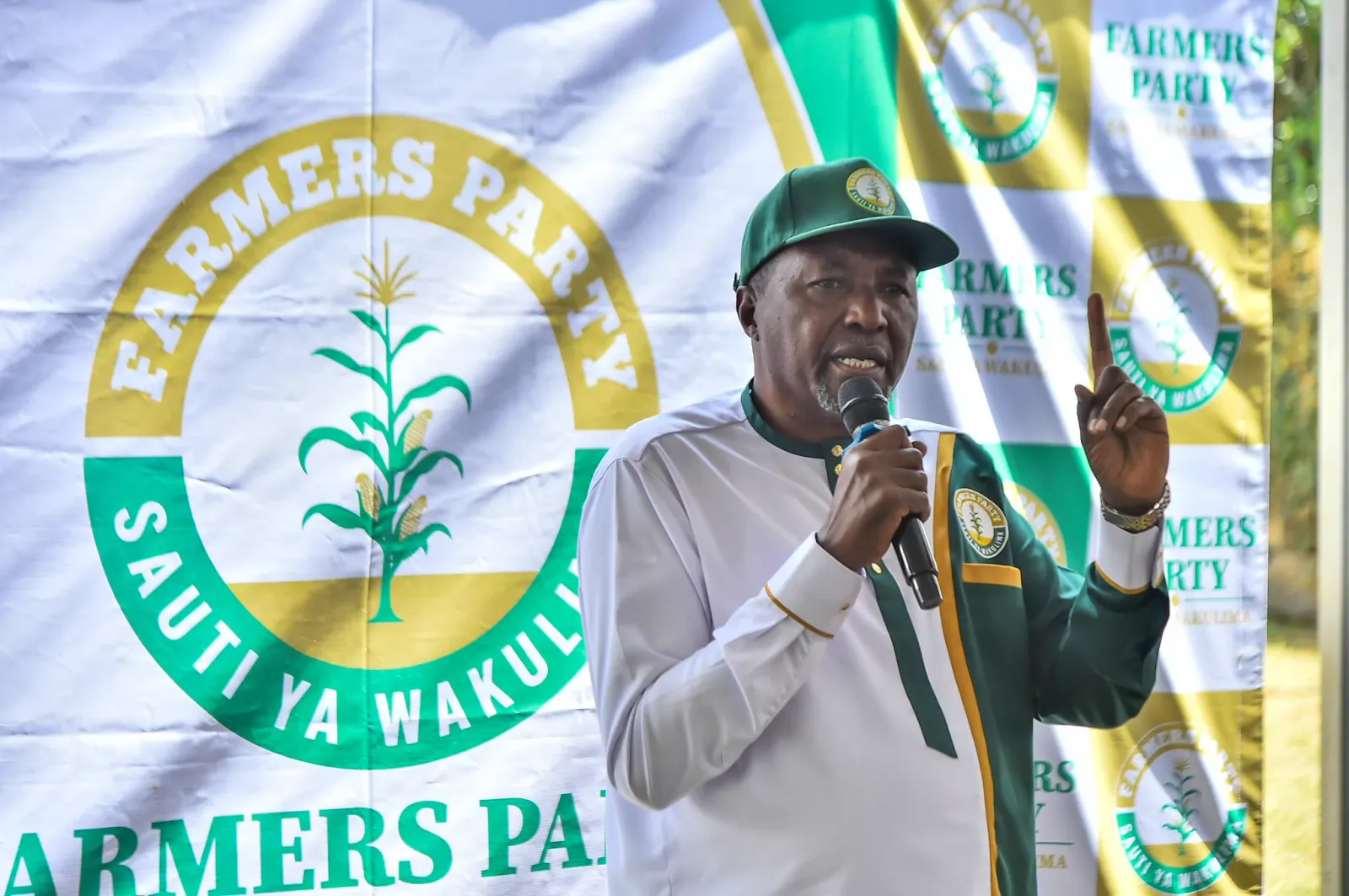
The politics of Kenya's 2027 General Election could increasingly be shaped by a question that has often been buried beneath the noise of rallies, personalities and political alliances: what has politics done for the farmer?
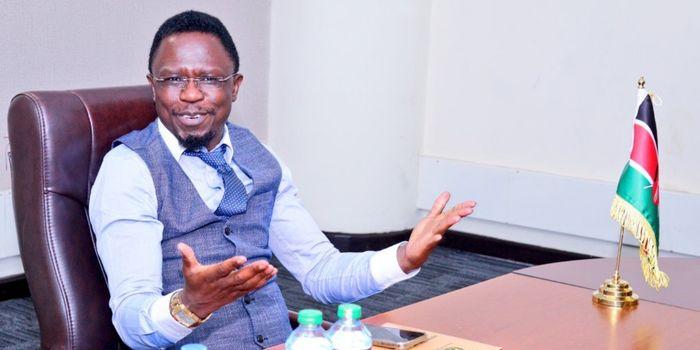
That was the central message delivered by Farmers Party Busia County Chairman and Coordinator Xavier Lugaga at the official launch of the party in Nakuru, where he arrived from Busia accompanied by farmers and party members.
Lugaga, a former cooperative officer, journalist and political leader, used the occasion to frame agriculture not simply as a development issue but as a question of economic power, social stability and political accountability.
His message was blunt: Kenyan farmers have heard enough promises. “They are remembered when politicians need votes, crowds and photographs,” Lugaga said, arguing that too many farmers are subsequently left struggling with expensive inputs, weak markets, inadequate storage, limited bargaining power and unpredictable incomes.
His intervention placed the farmer at the centre of the Farmers Party's emerging political narrative ahead of the 2027 elections.
‘You cannot build peace on empty stomachs’
Drawing on the legacy of agricultural scientist Norman Borlaug and the Green Revolution, Lugaga invoked the widely cited warning that “you can’t build peace on empty stomachs.”
For him, the statement goes beyond food production. Food, he argued, is simultaneously a matter of security, dignity, economic opportunity and political stability.
A country may construct roads, offices and cities, he said, but development remains incomplete if the people producing its food cannot earn a sustainable income from their labour. That argument places agriculture at the intersection of Kenya's economic and political debate.
Lugaga's message was that the farmer should not be treated as a beneficiary waiting for government assistance, but as an economic actor whose production creates wealth across the wider economy.
From programmes to measurable results
The Busia politician acknowledged that governments have introduced agricultural programmes, including fertiliser distribution, mechanisation initiatives, cooperative support and other interventions.
But he drew a distinction between announcing programmes and producing measurable economic transformation.
The questions, he said, should be straightforward. Can farmers produce competitively? Can they access affordable finance and inputs? Can they store and process their produce? Can they market collectively?Can they negotiate better prices?
And, ultimately, can a farming family educate its children and improve its standard of living from farming income?
For Lugaga, those questions constitute the farmer's real “report card” for political leadership. “If the answer remains largely no,” he said, “then our political leadership must style up.”
A challenge to Nairobi and Busia
Lugaga extended the challenge beyond the national government to the political leadership of Busia County.
His argument was that Busia possesses considerable agricultural potential through its land, water resources, livestock, fisheries, youthful population and proximity to regional markets, yet many ordinary farmers remain economically vulnerable.
The problem, he suggested, is not simply how much farmers produce but how much economic value they retain after production.
His description was stark: The farmer grows. The middleman negotiates. The trader transports. The processor adds value. The market makes money. And the farmer asks: “Where is my profit?”
That imbalance, he said, requires a fundamental rethink of agricultural policy. “Farmers do not plant press releases,” Lugaga declared. “They plant seed.”
What they need, he argued, are timely inputs, extension services, machinery, water, storage, affordable finance and reliable markets.
Cooperatives as the missing economic muscle
Lugaga's cooperative background featured prominently in his address. He argued that an individual farmer has limited bargaining power, while thousands of organised farmers can collectively purchase inputs, produce, borrow, store, process and market their commodities.
That, he said, is where cooperatives become a source of economic power rather than merely administrative institutions. But he also warned that cooperatives require professional governance, transparency and accountability.
Referring to difficulties affecting cooperative institutions, including KUSCCO, Lugaga said the answer should be to reform, strengthen and protect cooperatives, rather than weaken the institutions through which ordinary farmers can build collective economic power.
His position was that political interference and poor governance should not be allowed to destroy institutions designed to give small producers a stronger voice in the market.
Changing the questions before 2027
Perhaps the most political part of Lugaga's address was his call for farmers to change the questions they ask candidates as the 2027 elections approach.
Instead of asking who is drawing the largest crowds, he urged farmers to examine what political programmes actually offer them. Instead of judging leaders by convoys and rallies, he said voters should demand credible agricultural plans. And instead of accepting campaign promises at face value, farmers should ask:
Where is the budget? Where is the implementation plan? Who will deliver it? When will it be delivered? How will farmers measure the results? That approach, he said, would move political debate from personalities towards performance.
The farmer as an economic citizen
At the heart of Lugaga's address was a rejection of the idea that farmers should primarily be viewed as a voting bloc. “The farmer is not a vote to be collected,” he said. “The farmer is an economic citizen who deserves a return on his or her labour.”
It was a message aimed squarely at the political class as Kenya begins positioning itself for another election cycle. The Farmers Party, he said, wants to place production, enterprise, cooperatives, youth, women, value addition and agricultural accountability at the centre of its political conversation.
Its proposed farmer-first agenda includes affordable inputs, professional extension services, agricultural credit, stronger cooperatives, aggregation and storage centres, value addition, reliable markets, transparent pricing and modern agricultural technology.
The underlying proposition is simple: agricultural policy should be judged by its effect on farmer incomes and wealth creation.
A political bargain with the farmer
Lugaga ended his Nakuru address by calling for what he described as a new political bargain with farmers.
He framed it as a shift: From promises to performance. From handouts to enterprise. From individual struggle to cooperative power. From raw produce to value addition. From political rhetoric to measurable results.
The broader message was that agriculture should occupy a more central place in Kenya's political economy—not merely during election campaigns but throughout the life of a government.
As the 2027 election approaches, the Farmers Party appears intent on making the farmer the principal audience of its political message.
For Lugaga, the ultimate test of leadership is therefore not the size of a political rally or the number of promises made, but whether the people who produce Kenya's food can turn their labour into sustainable livelihoods.
His final question was directed at political leaders across the country: “What have you done for our farms, our cooperatives, our markets and our incomes?”
And his answer to where the farmer should stand in Kenya's political economy was unequivocal: At the centre.
Start writing your story…
No comments yet. Be the first to share your thoughts.