
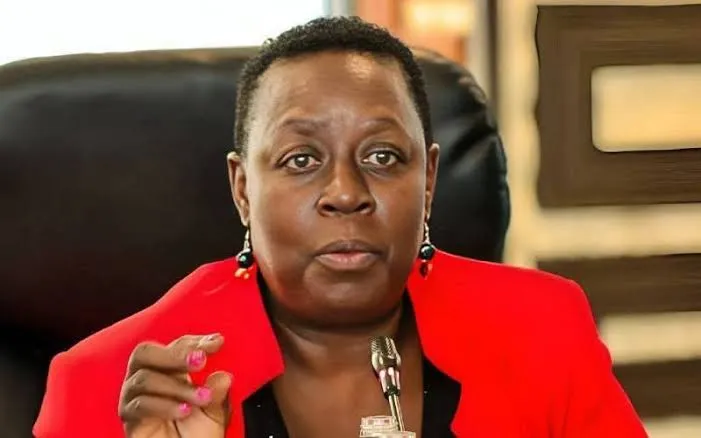
KISUMU—In a declaration that could add a new dimension to the political tensions surrounding the Orange Democratic Movement (ODM), Kisumu County Woman Representative Ruth Odinga has vowed to leave the party if that becomes necessary to defend justice, democracy, and the rights of Kenyans.
Speaking during the first-anniversary memorial of her late brother, former Prime Minister Raila Odinga, at Migwena Grounds in Bondo, Siaya County, Ruth delivered a pointed message: her commitment to justice transcends party loyalty.
“If I have to move to another party to ensure that justice prevails in Kenya, I will do so,” she declared, signalling that she would not allow political allegiance to stand in the way of her principles.
Her remarks carried particular emotional weight at an event commemorating Raila, whose political career was closely associated with the struggle for multiparty democracy, constitutional reforms, and civil liberties.
Ruth made it clear that her loyalty was not confined to a political organization but extended to the people and the principles she believes should guide Kenya's leadership.
“If standing with ODM means sacrificing everything to protect justice, then so be it,” she said.
The declaration raises questions about the direction of ODM and the place of principle, political identity, and party loyalty in the evolving political landscape following Raila's death. However, Ruth did not announce an immediate departure from the party; she framed her position as a willingness to leave if circumstances demanded it.
Stones, Tension, and a Memorial That Went On
The political undertones of the memorial were further heightened by an incident Ruth described involving individuals allegedly carrying stones and attempting to disrupt the gathering.
According to the lawmaker, the attempted disruption did not derail the program, which continued as planned.
She dismissed the intimidation attempt, saying those behind it had failed to achieve their objective.
“Those who came with stones to disrupt the meeting are ashamed because the meeting continued as planned,” she said.
The incident added a tense dimension to an occasion intended to honor the memory of a towering figure in Kenya's political history.
Raila's Legacy and the Question of ODM's Future
Ruth's declaration places the question of political principle at the center of the debate over ODM's future. It also highlights the challenge facing leaders who must reconcile party allegiance with their interpretation of justice, democratic accountability, and the interests of the public.
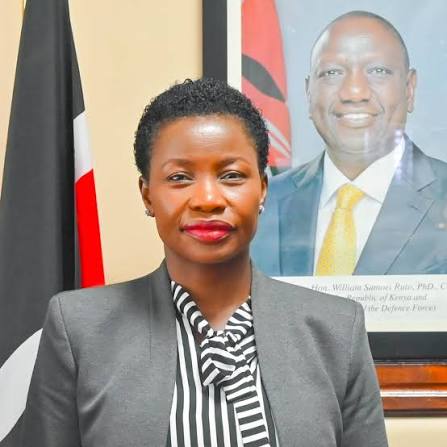
Her willingness to contemplate leaving ODM is significant because it was expressed during a memorial for a brother whose political legacy remains deeply connected to the party and Kenya's democratic struggle.
Yet her statement should not be mistaken for a formal resignation. It was a warning that party membership, in her view, cannot be an unconditional commitment when questions of justice and democratic rights arise.
For ODM, the broader question is whether the ideals associated with Raila's political journey will continue to shape the party's decisions and internal debates.
For Ruth, the message was direct: political loyalty has limits when justice is at stake.
As Kenya's political landscape continues to evolve after Raila's passing, her remarks are likely to draw attention to the competing demands of party unity, democratic accountability, and individual conscience.
No comments yet. Be the first to share your thoughts.