
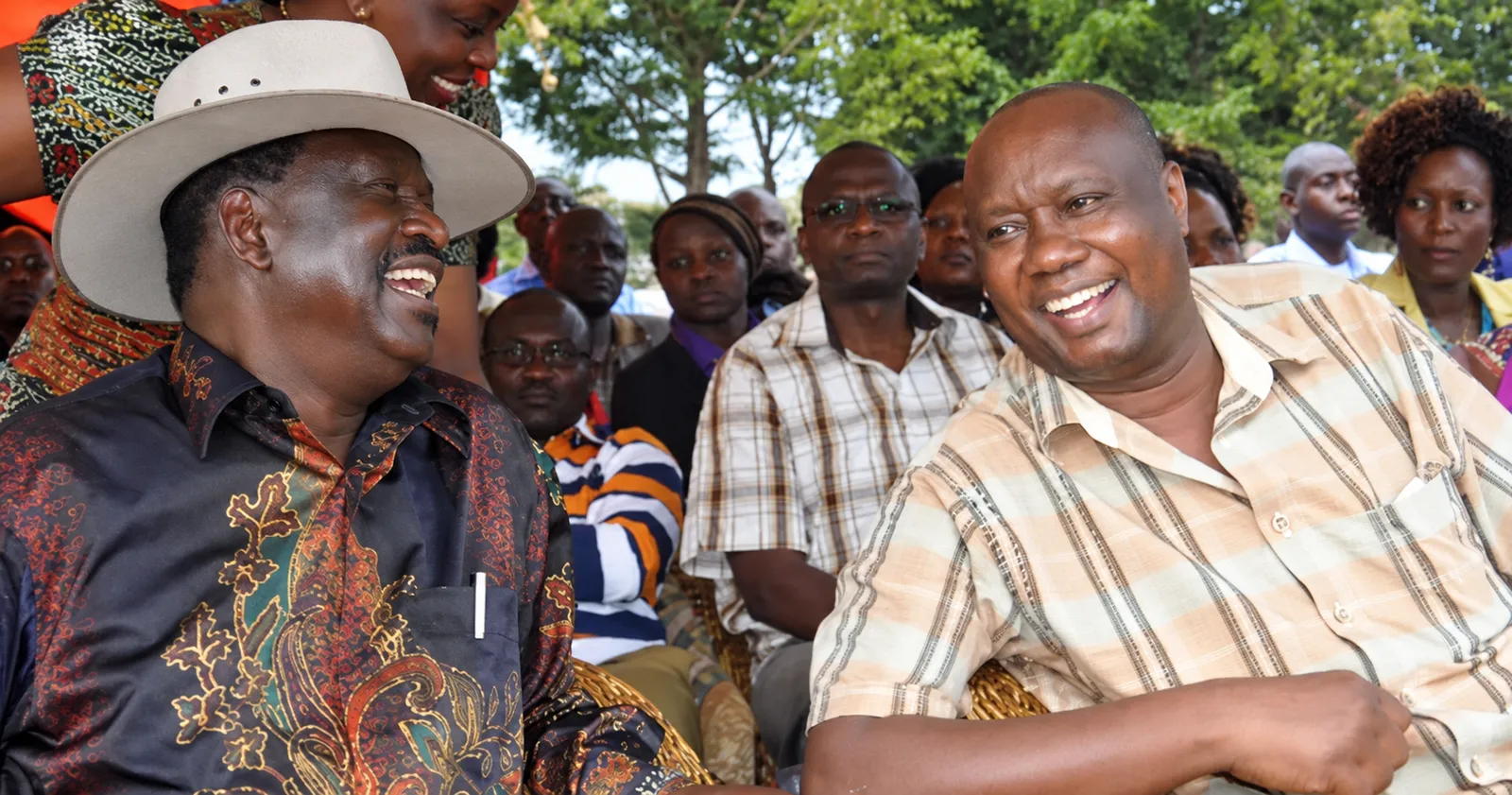
The political message is blunt, emotional, and calculated to strike a nerve with voters: Busia, enough is enough.
It invokes the story of a man born into a humble family in Otimong Village, Chakol, Teso South, in 1963, who reportedly began his professional journey as an untrained teacher before rising through school administration, parliamentary politics, and the corridors of national power to become Busia County's first governor.
His name is Sospeter Odeke Ojaamong, a former Member of Parliament for Amagoro, former aide to the late opposition leader Raila Odinga, and governor of Busia from 2013 to 2022.
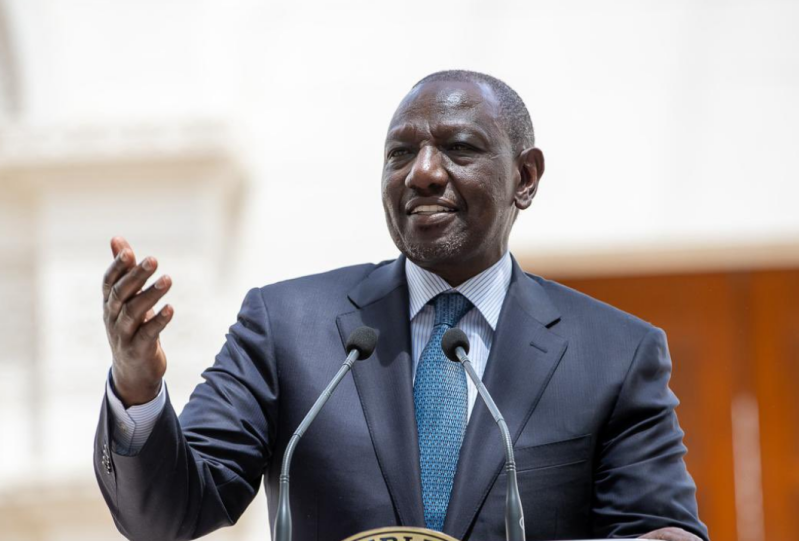
Now, his supporters are invoking that record as they make a case for his reported ambition to become Busia's senator in the 2027 General Election.
Their argument is straightforward: a man who has occupied the governor's office, understood the machinery of government, and navigated national politics should be equipped to scrutinize county spending and defend the interests of Busia residents.
But beneath the emotional appeal lies a larger question about the politics of experience, the accountability of public officials, and the difference between holding power and effectively overseeing it.
Can a former governor who once managed county resources become the watchdog expected to scrutinize the management of those same resources?
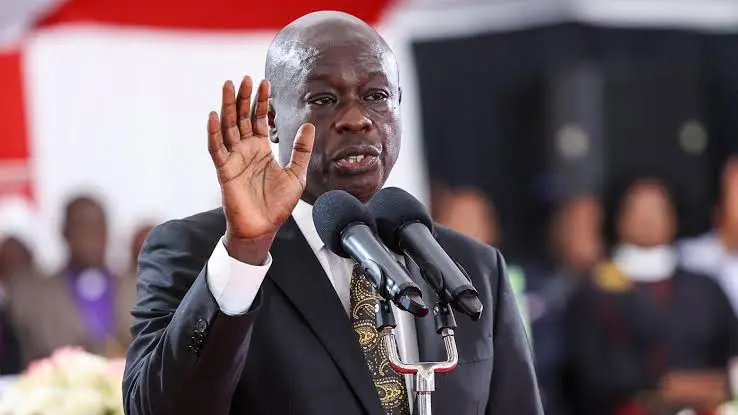
The question is not an accusation against Ojaamong. It is a legitimate test of the responsibilities attached to the Senate seat he is being urged to seek.
FROM THE CLASSROOM TO THE GOVERNOR'S OFFICE
Ojaamong's political narrative begins far from the grandeur of public office.
According to the biographical account circulated by his supporters, he was born in 1963 in Otimong Village, Chakol, in Teso South Constituency.
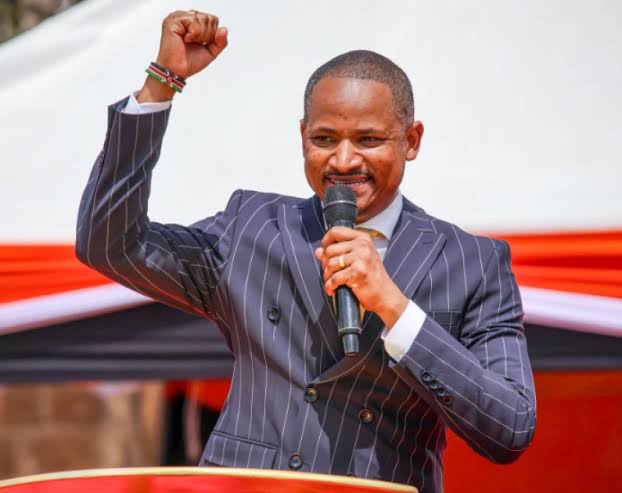
His early professional life reportedly included teaching at Obucuun Primary School before becoming deputy principal of Moding High School.
He subsequently entered electoral politics, representing Amagoro Constituency in Parliament, and served as a personal assistant to Raila Odinga for eight years, according to the same account.
In 2013, he made history by becoming Busia's first governor following the introduction of devolved government under the 2010 Constitution. He served two terms, leaving office in 2022.
His supporters describe this journey as a combination of determination, political experience, and public trust.
For them, his story demonstrates that leadership can emerge from modest beginnings rather than wealth or privileged connections.
Yet a political biography, however compelling, is only one part of the leadership equation.
Experience establishes familiarity with public institutions. It does not automatically establish the quality of decisions made within them, the effectiveness of oversight, or the outcomes experienced by ordinary citizens.
For voters considering his Senate bid, the more important question is what Ojaamong learned from his years in public office and how he would apply those lessons to the different responsibilities of a senator.
THE SENATE IS NOT A COUNTY GOVERNMENT.
The campaign message supporting Ojaamong argues that Busia needs a senator who can protect public money rather than merely generate political noise.
The argument touches on a fundamental constitutional responsibility.
Under Article 96 of Kenya's Constitution, the Senate represents counties and serves to protect their interests. It participates in lawmaking on matters concerning counties, determines the allocation of nationally raised revenue among counties, and exercises oversight over national revenue allocated to county governments.
The Senate also participates in determining the basis for allocating revenue among counties and exercises oversight over national revenue allocated to county governments.
This makes the senator's role particularly important in a devolved system where counties depend on public allocations to finance essential services.
However, the constitutional division of responsibilities matters.
The Senate does not directly manage Busia's hospitals, employ county health workers, construct county roads, or run local water projects. Those responsibilities fall primarily under county government, subject to the Constitution and applicable laws.
The senator's responsibility is to represent the county, participate in legislation, defend its interests in national fiscal decisions, and scrutinize the use of public resources within the scope of the Senate's constitutional mandate.
The distinction is important because political campaigns can easily blur the line between what a senator can influence and what a governor must deliver.
A candidate promising to protect county funds should therefore explain the practical mechanisms through which that protection would be achieved.
Would the candidate scrutinize county expenditure reports, raise concerns about unexplained spending, push for the implementation of audit recommendations, and demand accountability from responsible institutions?
Would the candidate champion fair revenue allocations, defend the interests of marginalized communities, and ensure that national decisions do not disadvantage Busia?
These are the questions that turn a slogan about guarding public money into a meaningful program of public accountability.
ARE BUSIA'S DEVELOPMENT CHALLENGES A FAILURE OF OVERSIGHT?
The message circulating in support of Ojaamong paints a troubling picture of Busia, citing alleged shortages of medicine, youth unemployment, and concerns about the use of public funds.
These claims reflect issues that deserve public scrutiny. However, their extent and causes must be established through county budget documents, health-sector records, audit reports, and employment data rather than campaign rhetoric alone.
A shortage of medicine, for example, may involve procurement delays, inadequate allocations, supply chain failures, poor stock management, or weaknesses in implementation.
Similarly, youth unemployment cannot be attributed to one office or institution. It involves economic conditions, investment, skills development, access to finance, and the capacity of both national and county governments to create an enabling environment.
Questions about county expenditure require evidence identifying the relevant budget, expenditure, responsible institution, and any documented irregularities.
The claim that Busia's devolution money is disappearing in Nairobi boardrooms is particularly serious. Without supporting evidence, it should be treated as political rhetoric rather than an established finding of financial misconduct.
Nevertheless, the underlying concern is legitimate: residents deserve to know whether public resources are translating into better services and whether institutions responsible for accountability are performing their duties.
If the allegation is that Busia has lacked effective Senate oversight, the next step is to examine the record of the incumbent senator and the Senate's documented interventions concerning the county.
How frequently have county interests been raised in parliamentary proceedings? What concerns have been documented? What action followed? Which matters remain unresolved?
Such an examination would establish whether the problem lies in inadequate oversight, weaknesses in county administration, insufficient funding, or a combination of factors.
Without that evidence, blaming the Senate for every development shortfall risks confusing oversight with implementation.
CAN A FORMER GOVERNOR BECOME THE COUNTY'S WATCHDOG?
Ojaamong's greatest political asset may also become one of the central questions of his Senate campaign.
As a former governor, he has firsthand experience with the financial, administrative, and political demands of running a county government.
He would also be seeking an office expected to scrutinize county expenditure and protect the interests of residents.
This creates an obvious question: how would he distinguish the lessons of his own administration from the standards he would apply to the administration of his successor?
The question is neither unusual nor unfair.
Former governors who seek Senate seats bring valuable institutional knowledge. They may understand the difficulties of implementing budgets, coordinating national and county responsibilities and managing competing demands on limited resources.
That experience can strengthen oversight if it enables them to ask informed questions and identify weaknesses in public administration.
But effective oversight also requires independence, transparency, and a willingness to demand answers even when the issues involve political allies or decisions made during one's own tenure.
Ojaamong's supporters describe him as a leader who cannot be intimidated or bought.
Those are political claims that must ultimately be tested through conduct, public disclosures, and the consistency with which a senator performs oversight duties.
A credible candidate should be prepared to explain not only what others ought to do differently but also what their own record reveals about successes, shortcomings, and lessons learned.
The real test of a watchdog is not how loudly it barks at its opponents, but whether it scrutinizes public expenditure consistently, regardless of who is responsible.
EXPERIENCE, LEGACY, AND THE QUESTION OF ACCOUNTABILITY
Ojaamong's two terms as governor form an unavoidable part of the debate surrounding his reported Senate ambition.
Between 2013 and 2022, his administration operated during the formative years of devolution in Busia. That period provides a substantial record against which his supporters and critics can assess his leadership.
What projects were initiated and completed? How were county resources allocated? What improvements were achieved in healthcare, agriculture, infrastructure, and other devolved functions? Which promises remained unfulfilled?
These questions should be answered through verifiable records rather than political loyalty or hostility.
A fair assessment would consider the county's financial allocations, expenditure reports, completed projects, development plans, audit findings and the circumstances under which particular programmes succeeded or failed.
It would also distinguish between matters directly controlled by the governor and those requiring cooperation with the national government or other institutions.
The purpose is not to dismiss experience but to place it in context.
If Ojaamong is asking voters to trust his experience, they are entitled to examine that experience. If his opponents challenge his record, they should substantiate their criticism.
Accountability must operate in both directions.
The same scrutiny should apply to every candidate seeking to represent Busia in the Senate.
THE 2027 CONTEST: BEYOND POLITICAL NOSTALGIA
Elections often revive memories of former leaders, particularly those associated with major transitions in a county's political history.
Ojaamong's supporters are presenting his journey from teaching to Parliament and then the governor's office as evidence of resilience and accumulated political knowledge.
But the 2027 contest will require more than an appeal to biography.
Busia residents need to understand what each candidate proposes to do with the authority of the Senate.
A serious Senate agenda should address equitable revenue allocation, county financial accountability, legislative scrutiny, intergovernmental relations and the protection of Busia's interests in national policymaking.
It should also explain how the senator would engage residents, communicate parliamentary decisions and follow up on issues raised by communities across the county.
For farmers, this may include advocating policies that support agricultural productivity, market access and fairer returns for producers.
For young people, the concern is whether national and county policies can create an environment that supports enterprise, investment and employment.
For patients and families, the issue is whether county governments receive and responsibly use the resources required to deliver essential services.
A senator cannot personally solve every local problem. But the office carries responsibilities that can influence the policy, funding and accountability frameworks within which county governments operate.
Candidates should explain those responsibilities honestly rather than promise projects that fall outside their direct mandate.
BUSIA NEEDS RESULTS, NOT JUST A BULLDOG
The campaign slogan calling for a political bulldog to guard public money seeks to project strength, fearlessness and determination.
But effective oversight requires more than aggression.
It requires evidence, knowledge of the law, persistence in parliamentary proceedings, respect for constitutional institutions and the ability to turn scrutiny into corrective action.
A senator who exposes a problem but fails to pursue a response may generate headlines without improving accountability.
Equally, a senator who works quietly through legislative committees, budget processes and formal oversight mechanisms may deliver results without dramatic public confrontations.
The appropriate measure is therefore not the volume of political noise but the quality and consequences of the work performed.
Busia residents should demand a clear account of what Ojaamong intends to achieve if elected, how he would measure progress and how the public would assess his performance.
They should also ask other aspirants to explain their qualifications, priorities and plans for exercising the Senate's constitutional mandate.
That would turn the election into a contest of ideas and records rather than a competition in political branding.
THE FINAL QUESTION: WHO WILL GUARD THE PUBLIC INTEREST?
The appeal for Ojaamong's return to public office raises a broader question about the relationship between political experience and public accountability.
His supporters believe his background as a teacher, legislator, presidential aide and former governor equips him to represent Busia in the Senate.
Whether that experience translates into effective oversight is a question voters must assess against his documented record and the commitments he makes for the future.
At the same time, allegations about missing development, inadequate services or the disappearance of public money must be investigated and supported by evidence. Political slogans cannot substitute for financial audits, procurement records or documented findings.
The stakes are significant because devolution was intended to bring government closer to the people, improve service delivery and give communities a stronger voice in decisions affecting their lives.
Residents should therefore judge political leadership by the extent to which public institutions fulfil those objectives.
The question is not simply whether Ojaamong has been tested before. It is what that experience demonstrates, what lessons he has drawn from it and how he proposes to use the Senate's powers to serve Busia.
Nor is the choice simply between a bulldog and a puppy, as the campaign rhetoric suggests. Voters have the right to compare candidates without accepting labels designed to elevate one aspirant and diminish others.
In 2027, Busia's voters will have an opportunity to decide who should represent their county in the Senate. That decision should rest on evidence, constitutional understanding, integrity, a credible oversight agenda and a demonstrable commitment to the public interest.
After all, public money belongs to the people. The responsibility of every elected leader is to ensure that it is protected, accounted for and used for the purposes for which it was allocated.
No comments yet. Be the first to share your thoughts.