
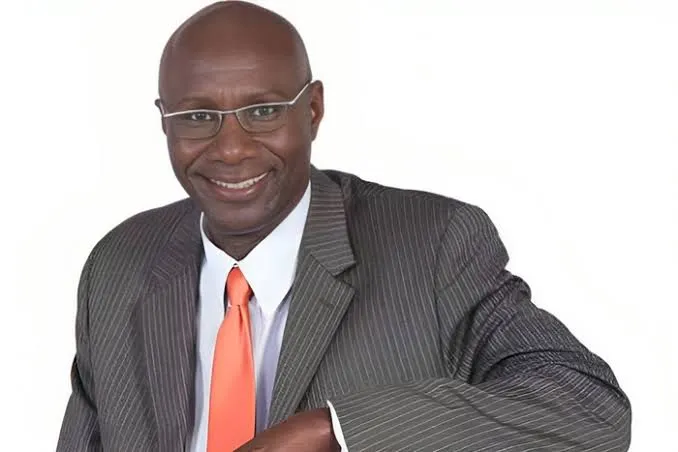
Fifty years in journalism deserved a standing ovation, a moment of reflection, and a celebration of a man whose voice has become part of Kenya’s broadcasting history.
But at veteran journalist Fred Obachi Machoka’s golden jubilee celebration, the spotlight reportedly shifted from his remarkable career to an unexpected family confrontation.
The drama unfolded when former nominated Senator Gloria Orwoba, Machoka’s niece, allegedly attempted to introduce politics into an occasion that had been explicitly designated as a celebration of the veteran broadcaster’s five decades in journalism.
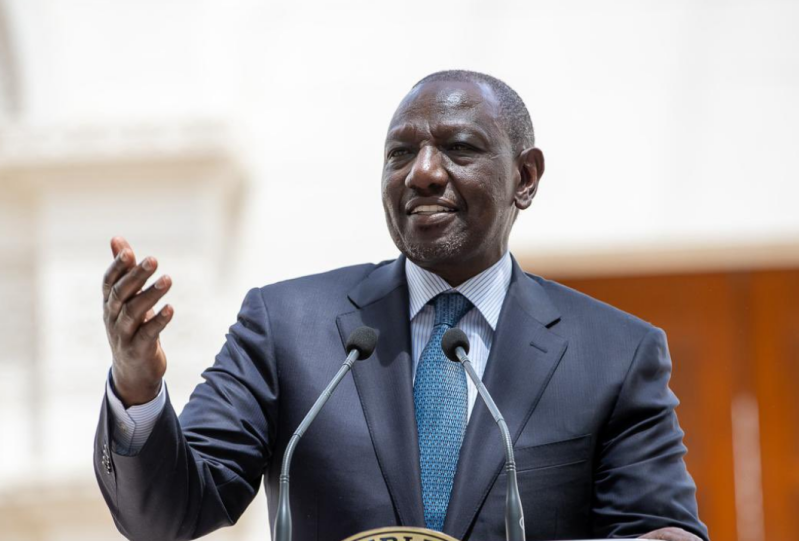
What followed was an apparent collision between family ties, political enthusiasm, and one veteran journalist’s determination to protect the dignity of his own event.
Machoka reportedly directed security personnel to escort Orwoba out after she took the microphone and attempted to initiate “Wantam” chants, despite an earlier insistence that politics would have no place at the celebration.
If the incident unfolded as described, the message was unmistakable: this was not a political rally, and the golden jubilee was not up for grabs.
WHEN THE MIC BECAME A POLITICAL BATTLEGROUND
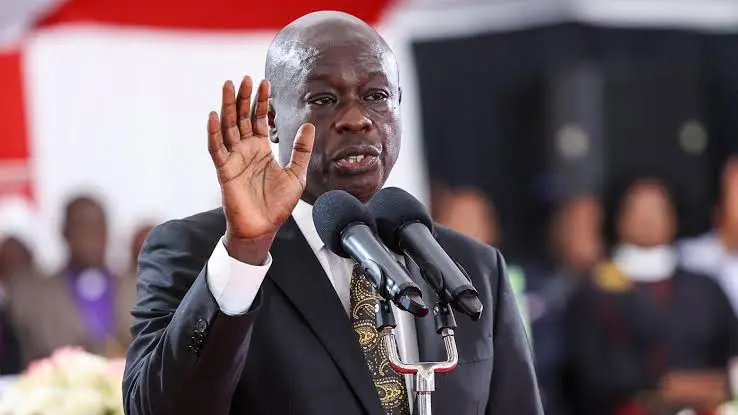
The microphone can be a powerful instrument.
In the hands of a journalist, it informs, questions authority and records history. In the hands of a politician, it can mobilize supporters, shape public opinion, and propel a political message.
But at Machoka’s celebration, the question was not simply who had the microphone. It was whether the person holding it was respecting the purpose of the occasion.
The event had been organized to honor five decades of journalism, a milestone that called for tributes to professional dedication, broadcasting excellence, and the power of the spoken word.

According to the account of the incident, Machoka had made his position clear from the outset: politics would not be entertained.
Yet Orwoba reportedly took the microphone and attempted to introduce “Wantam” chants, threatening to shift the atmosphere from professional celebration to political mobilization.
For Machoka, that was apparently a line that could not be crossed.
His reported response was swift: security was instructed to escort his niece out.
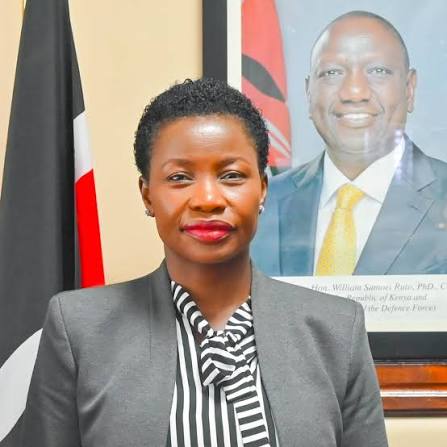
It was a dramatic intervention, but one that underlined a principle familiar to anyone who has organized a formal event: the occasion belongs to its purpose, not necessarily to whoever manages to seize the microphone.
UNCLE FRED DRAWS THE LINE.
There is something particularly striking about a family dispute playing out at an event intended to celebrate a lifetime of professional achievement.
Ordinarily, family relationships are expected to encourage patience, accommodation, and the occasional indulgence.

But Machoka reportedly chose a different path.
His position, as described, was that the rules applied to everyone, regardless of their relationship with the host.
In that sense, the confrontation became more than an awkward moment between an uncle and his niece. It became a public test of whether an event organizer could enforce the boundaries established for an occasion.
Should a family member receive special treatment when other guests are expected to respect the program?
Should a celebration of journalism be converted into a platform for political slogans simply because a politician has an opportunity to address the audience?
And should the host be expected to remain silent when the original purpose of the event appears to be changing?
These are the questions at the heart of the drama.
Machoka's reported response suggests that, in his view, family affection did not confer permission to disregard the ground rules.
Blood may create family bonds, but it does not automatically grant anyone ownership of another person's platform.
FROM THE GSU TO THE BROADCASTING BOOTH
Machoka's reported firmness carries an additional layer of interest because of his earlier career.
Before becoming one of Kenya's most recognizable radio personalities, the veteran broadcaster served in the General Service Unit (GSU), according to the information provided.
That chapter of his life offers a striking contrast with the broadcasting career for which he is widely known.
The GSU is associated with specialized security duties, operational discipline, and demanding assignments. Broadcasting, by contrast, requires communication, audience engagement, and the ability to hold public attention through words.
The two careers are different, but both operate within environments where discipline, preparation, and adherence to established procedures matter.
It would be speculative to conclude that Machoka's reported decision to have Orwoba escorted out was a direct consequence of his former security service.
Nevertheless, the episode offers an irresistible image: a veteran broadcaster who spent decades commanding attention through his voice reportedly refusing to surrender control of his own celebration.
The man who made a career out of holding the microphone was not prepared to let the microphone take control of the occasion.
THE POLITICS OF “WANTAM”
The reported attempt to introduce “Wantam” chants raises a broader question about Kenya's increasingly politicized public spaces.
Political slogans can energize supporters, communicate grievances, and provide a shorthand for a political movement's ambitions.
But context matters.
A political rally is organized to advance political messages. A campaign meeting is intended to mobilize support. A professional anniversary, however, has a different purpose.
When political messaging enters an occasion designed to celebrate an individual's achievements, the host and organizers face a delicate choice: allow the political moment to take over or intervene to preserve the event's original character.
Machoka reportedly chose the latter.
His decision, if accurately described, sends a message to politicians and public figures who may assume that every gathering offers an opportunity to advance their political agendas.
Not every microphone is a campaign instrument. Not every audience is a political constituency. And not every celebration needs to be converted into a referendum on the country's political future.
There is a time for politics, and there is a time to allow people to celebrate achievement without being recruited into a political chorus.
That distinction is particularly important in a country where political competition often spills into professional, cultural, religious, and social gatherings.
WAS THE EJECTION NECESSARY?
While the host has a legitimate interest in maintaining the purpose and order of an event, the manner in which disagreements are handled also matters.
If Orwoba disregarded an explicit request to keep politics out of the celebration, the organizers had grounds to intervene to restore the program.
However, the available account does not independently establish every detail of the exchange, including the precise words spoken, the circumstances surrounding the alleged chants, or whether Orwoba was given an opportunity to explain herself.
Those details matter when assessing the proportionality of the response.
The incident should therefore not be reduced to a simple contest between a strict uncle and an unruly niece without considering the full circumstances.
Still, the central principle remains sound: guests should respect the purpose of an event, and hosts should be able to enforce reasonable ground rules.
Family relationships should not automatically exempt anyone from those expectations.
A LESSON BEYOND THE FAMILY DRAMA
The reported confrontation at Machoka's golden jubilee offers a lesson that extends beyond one family and one political slogan.
Kenya's public life increasingly blurs the boundaries between professional recognition and political mobilization. Politicians attend funerals, weddings, fundraising events, and public celebrations, sometimes turning these gatherings into opportunities to address supporters or launch political messages.
There is nothing inherently wrong with politicians participating in public life. The problem arises when participation becomes an attempt to commandeer an occasion whose organizers have established a different purpose.
A celebration of journalism should principally honor journalism.
A memorial should remember the departed.
A wedding should celebrate a union.
And a political rally should provide space for political mobilization.
Respecting those distinctions is not hostility towards politics. It is recognition that public life contains different occasions, each deserving its own identity.
THE FINAL WORD: EVEN FAMILY MUST RESPECT THE PLATFORM.
Fred Obachi Machoka's 50-year journalism milestone was meant to celebrate endurance, professional contribution, and a remarkable journey through Kenya's broadcasting landscape.
Instead, according to the account of the incident, the occasion acquired an unexpected subplot involving his niece, former nominated Senator Gloria Orwoba, and an attempted political intervention that reportedly ended with security being instructed to escort her out.
The irony is difficult to miss.
A veteran journalist celebrated for his command of the microphone reportedly found himself having to defend that microphone from an intrusion into the program he had organized.
For Machoka, the principle appears to have been simple: the golden jubilee was about journalism, not political slogans.
Whether one considers the reported ejection justified or unnecessarily dramatic, the episode raises a question that every public figure should consider before taking the microphone at someone else's event.
Are you there to honor the occasion or to use the occasion to promote yourself?
At Uncle Fred's golden jubilee, that question reportedly produced a dramatic answer.
And the enduring lesson is that family connections may open doors, but they do not automatically confer the right to hijack the program.
No comments yet. Be the first to share your thoughts.