
Kenyan politics has a cruel way of turning yesterday’s allies into today’s enemies. Those who once benefited from a powerful political patron can become his harshest critics when the patron dies, his family demands respect, or the distribution of political power changes.
The unfolding controversy surrounding the Odinga family illustrates this political contradiction.
For decades, Jaramogi Oginga Odinga and his son, Raila Amolo Odinga, occupied a commanding position in Kenya’s political imagination. Their names became synonymous with opposition politics, resistance, political sacrifice and the struggle to reshape the country’s democratic institutions.
But following Raila’s death, the family finds itself confronting an uncomfortable reality: some of the people who benefited from his political influence are now questioning, attacking or distancing themselves from the very legacy that helped elevate them.
At the same time, a different group of critics is asking whether the Odinga family’s long dominance of Luo politics delivered sufficient economic benefits to the community that sustained it.
These are two sides of the same political crisis.
Did Raila’s political allies betray the family that helped elevate them, or did Luo Nyanza become too invested in one political dynasty to demand better returns on its loyalty?
The answer may lie somewhere between political ingratitude, unfulfilled expectations and a political culture that has too often confused loyalty to individuals with accountability to the people.
IDA ODINGA: WHEN A WIDOW’S GRIEF BECOMES A POLITICAL BATTLEGROUND
The latest controversy has placed Mama Dr Canon Ida Odinga at the centre of an increasingly bitter debate over Raila’s legacy.
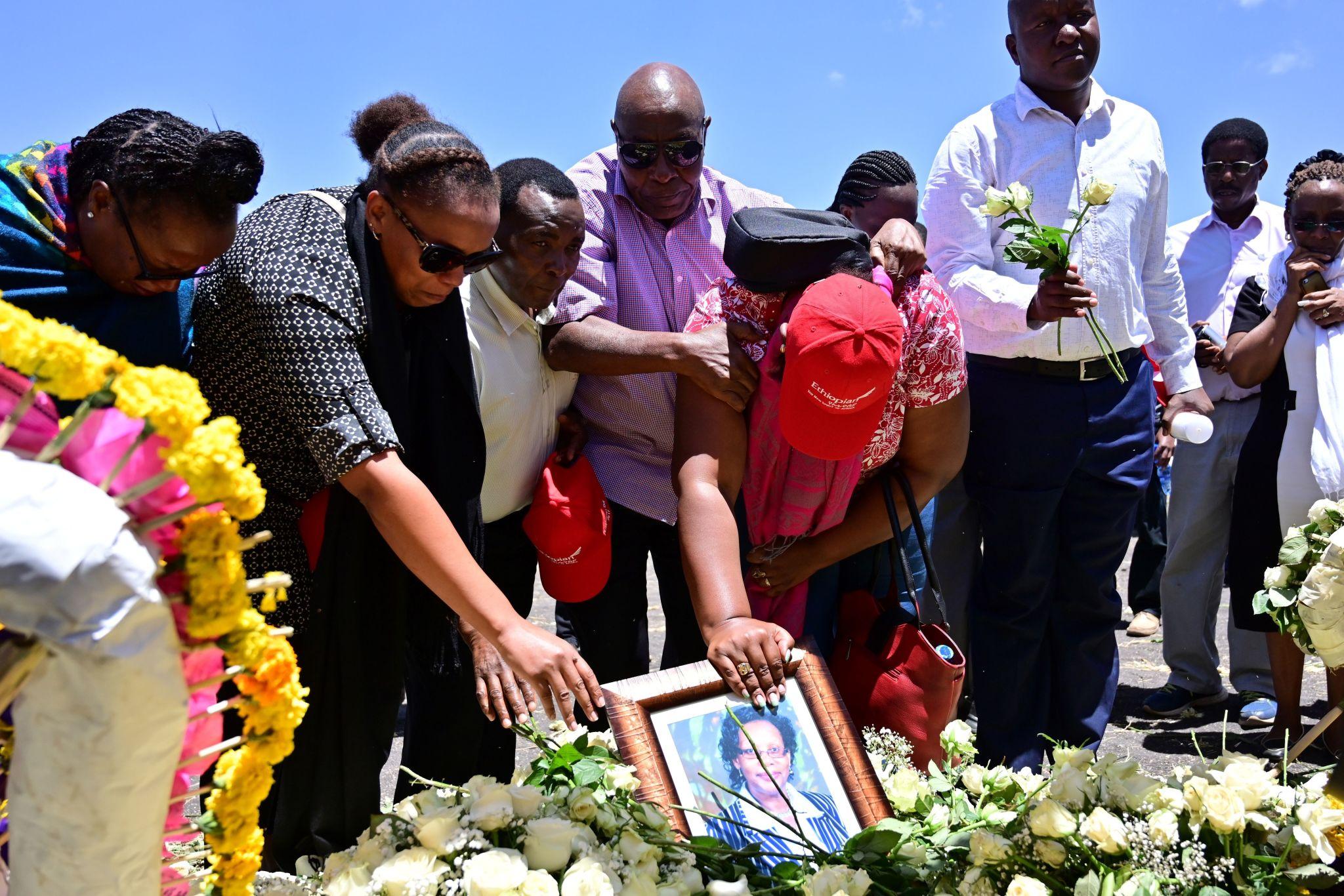
Her reported emotional declaration that she gave her husband to Kenyans alive and received him back in a coffin captured the pain of a widow confronting an irreversible loss.
Yet, rather than allowing grief its dignity, political arguments surrounding the family have turned her words into ammunition in a wider contest over influence, loyalty and succession.
The reported online attacks against Ida raise serious questions about the standards of political decency in a country where powerful individuals routinely invoke national unity but struggle to extend basic compassion to those experiencing personal tragedy.
Ida is entitled to mourn her husband without being subjected to a political loyalty test.
She is also entitled to her own opinions, including disagreements with people who previously worked with Raila.
A state funeral, national recognition or an international appointment does not purchase a widow’s political silence.
However, the family’s historical contribution cannot automatically place every political statement or decision beyond public scrutiny.
The principle must be consistent: Ida deserves dignity, while the Odinga family, like every other influential political family, remains accountable for its public conduct.
Criticism of political decisions is legitimate. Personal humiliation designed to exploit a widow’s grief is something else entirely.
THE BENEFICIARIES WHO NOW QUESTION THE ODINGA LEGACY
Perhaps the most revealing aspect of the controversy is the apparent hostility between the Odinga family and some political figures whose careers were advanced within Raila’s political orbit.
Among those mentioned in the public debate are National Treasury Cabinet Secretary John Mbadi, Energy Cabinet Secretary Opiyo Wandayi, National Assembly Minority Leader Junet Mohamed and other figures associated with the Orange Democratic Movement.
Critics have questioned the conduct of some of these leaders and their attitudes towards the Odinga family following Raila’s death.
Allegations that political figures financed, organised or transported supporters to disrupt memorial events are serious and should not be treated as established facts without independent evidence.
Those making such claims should produce verifiable information. The individuals implicated should also have an opportunity to respond.
Nevertheless, the broader political question remains unavoidable.
What happens when a political movement’s leading beneficiaries begin to behave as though the patron who helped build their careers has become an inconvenience?
Raila’s political influence helped create opportunities for numerous politicians. Some rose through ODM’s organisational structures, gained parliamentary seats, acquired senior party positions or entered government through political negotiations associated with the movement.
But political advancement does not create hereditary ownership of a party, nor does it give a political patron permanent control over those he has helped.
The reverse is equally true: benefiting from a leader does not entitle that leader’s family to unquestioned obedience after his death.
The real test is whether political actors can demonstrate that their present positions are being used to serve citizens rather than merely protect their own interests.
If former allies have abandoned the principles they once professed, they should be challenged on their records. If the Odinga family expects continued political allegiance, it must demonstrate why that allegiance remains justified.
Political gratitude is admirable. Political dependency is dangerous.
JARAMOGI’S HISTORICAL DILEMMA: PRINCIPLE WITHOUT POWER?
The controversy cannot be understood without revisiting the political choices of Jaramogi Oginga Odinga.
As Kenya’s first Vice-President, Jaramogi occupied one of the highest offices in the newly independent state. His subsequent falling-out with President Jomo Kenyatta became a defining moment in the country’s post-independence political history.
Jaramogi’s departure from government and the marginalisation that followed helped establish a pattern in which political disagreements at the national level had consequences for leaders and communities outside the centres of power.
To his admirers, Jaramogi was a principled nationalist who refused to abandon his convictions for political comfort.
To his critics, his confrontation with the Kenyatta establishment raised questions about whether political accommodation might have secured greater opportunities for his supporters.
Both perspectives deserve examination.
But blaming Jaramogi alone for Luo Nyanza’s subsequent development challenges would be historically simplistic. Government policy, the concentration of national resources, political exclusion, successive administrations and local leadership failures all require scrutiny.
The deeper problem was a political system in which communities could come to believe that access to development depended on their leaders maintaining good relations with the president.
That system encouraged political bargaining at the expense of institutional fairness.
It also created a dangerous expectation that a community must follow one leader regardless of the economic consequences.
Jaramogi’s legacy therefore presents an important lesson: political principle matters, but the institutions of a democratic state must ensure that ordinary citizens do not pay for disagreements between political elites.
RAILA ODINGA: A NATIONAL HERO, BUT WAS HIS REGIONAL MANDATE FULFILLED?
Raila Odinga’s place in Kenya’s political history is secure. His contribution to opposition politics, multiparty democracy and the national debate over constitutional reform cannot be erased by disagreements over his later political decisions.
His supporters viewed him as a symbol of resistance against concentrated power. His critics questioned his shifting alliances, political negotiations and repeated participation in arrangements that disappointed sections of his support base.
His career contained both moments of confrontation and periods of cooperation with former adversaries.
That complexity is precisely why his legacy deserves serious examination rather than unquestioning praise or wholesale condemnation.
For many Luo voters, Raila represented more than an individual presidential candidate. He embodied the hope that a community which had experienced political marginalisation could secure a stronger voice in national affairs.
Consequently, every election became an opportunity to pursue both national political change and regional economic advancement.
But political expectations do not automatically become economic outcomes.
After years of supporting Raila and his political movement, citizens are entitled to ask difficult questions about employment, industrial investment, agricultural markets, infrastructure, education and access to public opportunities.
Did the political influence accumulated by the movement translate into sufficient and measurable benefits for Luo Nyanza?
Did successive political agreements improve the community’s economic position?
Were local leaders held accountable for development failures, or were they protected because of their loyalty to the movement?
These questions demand evidence, budgets, employment figures, project records and comparisons with other regions.
They cannot be answered responsibly by claiming that Raila achieved nothing, nor by insisting that his historical sacrifices exempt him from scrutiny.
A leader can make a significant contribution to national democracy and still leave important regional development expectations unfulfilled. The two realities are not mutually exclusive.
THE FISH FACTORY QUESTION: WHY SHOULD LAKE VICTORIA’S WEALTH TRAVEL ELSEWHERE?
One of the sharpest criticisms raised by Raila’s detractors concerns the apparent gap between Lake Victoria’s fishing potential and the industrial opportunities available to communities living along its shores.
The argument is straightforward: why should fishing communities continue to struggle with market access, processing capacity, storage and value addition when the lake provides a substantial economic resource?
Why should fishermen remain vulnerable to middlemen and fluctuating prices when investment in processing, cold storage, transport and export infrastructure could create jobs and strengthen local incomes?
These are legitimate development questions.
But the claim that Raila never lobbied for a single factory in Luo Nyanza requires documentary verification before it can be published as fact. Industrial development involves national government policy, private investment, county planning, infrastructure and decisions by successive administrations.
The same scrutiny should apply to elected leaders who have represented the region in Parliament, county government and the Cabinet.
If industrialisation failed to match the region’s potential, who made the relevant investment decisions? Which projects were proposed, funded, delayed or abandoned? What did the national government provide, and what did local leadership fail to secure or implement?
These are the questions that separate investigative journalism from political propaganda.
The objective should not be to find one individual to blame for every development failure. It should be to establish who was responsible for specific decisions and whether public resources and political influence were used effectively.
Lake Victoria cannot vote, but the people who depend on it have voted for decades. They deserve to know why its economic potential has not translated into enough local prosperity.
ODM: A DEMOCRATIC MOVEMENT OR A POLITICAL MARKETPLACE?
Another difficult question concerns the internal organisation of the Orange Democratic Movement.
Critics have alleged that party tickets and leadership opportunities sometimes favoured wealthy aspirants or politically connected individuals at the expense of grassroots members.
Such claims should be examined through nomination records, party rules, complaints, electoral disputes and evidence from affected candidates.
A party that claims to champion democratic reform must demonstrate democracy within its own structures.
Transparent nominations, credible internal elections, financial accountability and meaningful participation by ordinary members are not optional extras. They are central to political legitimacy.
However, ODM should not be dismissed as merely a family business without examining its wider membership, institutional structures and record of political participation.
The more useful question is whether its internal systems have consistently allowed ordinary members to influence decisions and choose leaders freely.
If political loyalty to a particular individual becomes the principal qualification for advancement, the party risks weakening its own democratic foundations.
If wealthy aspirants can secure nominations through financial influence rather than public support, the people risk being reduced to spectators in a process that should belong to them.
And if dissenting members are treated as enemies, a movement built around political reform risks reproducing the very exclusion it once opposed.
These questions apply not only to ODM but to political parties across Kenya.
DID LUO NYANZA BECOME TOO DEPENDENT ON ONE FAMILY?
This is the question many supporters may find uncomfortable, but discomfort is not a reason to avoid it.
For decades, the Odinga name has exerted extraordinary influence over Luo politics. That influence has helped mobilise voters, shape national debates and give the region a recognisable political voice.
Yet the dominance of a single family can also narrow political competition when alternative leaders struggle to emerge independently.
The danger is not that a political family remains influential across generations. Political influence can legitimately be inherited through reputation, networks and public trust.
The danger arises when historical loyalty becomes an obligation, dissent is interpreted as betrayal, and political succession is treated as an inheritance rather than a democratic contest.
Luo Nyanza is not a political possession.
Its people include farmers, traders, fishermen, teachers, professionals, workers, entrepreneurs and young graduates with different priorities.
A farmer in Siaya needs reliable markets, affordable inputs and access to credit. A young graduate in Kisumu needs employment. A fisherman in Homa Bay needs better prices, storage facilities and protection against exploitative market arrangements. A trader needs infrastructure, purchasing power and a stable business environment.
None of these needs can be satisfied merely by defending a political surname.
The community must be free to support an Odinga, reject an Odinga, support another leader or demand a new political direction without being accused of betraying its history.
That is the essence of democratic freedom.
Luo Nyanza does not have to abandon the Odinga legacy to escape political dependency. It has to reclaim the right to judge that legacy on its actual results.
MBADI, WANDAYI AND THE POLITICS OF SUCCESSION
The reported criticism of the Odinga family by politicians associated with the movement raises another issue: are disagreements about Raila’s legacy really about principle, or are they part of a struggle over who controls the political space he left behind?
That question cannot be answered simply by attributing motives to individual leaders.
John Mbadi, Opiyo Wandayi, Junet Mohamed and other prominent political figures have their own political interests, constituencies and ambitions. Their records should be examined individually rather than treating them as a single bloc.
If any leader is preparing for a future presidential campaign, that ambition should be assessed on its merits, policies and public support. Claims that a candidate intends to mobilise voters against a particular community must be supported by specific statements or other credible evidence.
Kenya has suffered enough from politics that turns ethnic identity into a weapon.
The real test for every aspirant is whether they can offer an inclusive national programme that addresses economic inequality without scapegoating other communities.
At the same time, politicians who benefited from Raila’s political influence should explain their own records.
What did they achieve in the constituencies and institutions they represented? What policies did they advance? What opportunities did they secure for ordinary citizens?
Their political legitimacy cannot rest entirely on the positions they hold today.
Equally, the Odinga family cannot claim a permanent veto over the political choices of former allies.
The battle over succession must ultimately be settled through democratic processes, credible programmes and public confidence.
THE OBURU QUESTION: CAN POLITICAL LEGACY BE INHERITED?
Raila’s death inevitably raises questions about the future of ODM and the wider political movement associated with him.
Oburu Oginga and other figures linked to the party and the Odinga family may play important roles in determining its direction.
But the fact that someone belongs to a prominent political family does not automatically make that person the rightful custodian of a community’s future.
Political inheritance may provide name recognition, established networks and access to supporters. It cannot replace the need for leadership, organisational competence and a credible policy agenda.
The next generation must answer questions that cannot be settled by invoking Raila’s name.
How will they create jobs? How will they strengthen party democracy? How will they attract investment? How will they improve education, healthcare and agricultural productivity? How will they ensure that political agreements deliver measurable benefits rather than merely redistribute positions among elites?
If the succession contest becomes a struggle over control of party structures, the public risks being forgotten.
The future of Luo politics must not be reduced to the question of which individual inherits Raila’s political machinery.
It should be about what that machinery can deliver for citizens.
UHURU, HANDSHAKES AND THE PRICE OF POLITICAL COMPROMISE
Raila’s political alliances with former adversaries also deserve examination.
His cooperation with President Uhuru Kenyatta after their 2018 handshake was a defining moment in Kenya’s political history. Supporters saw the agreement as an opportunity to reduce political hostility and promote national cohesion. Critics questioned its political costs and whether it delivered the reforms and economic benefits they expected.
The agreement demonstrated Raila’s capacity to negotiate across political divisions, but it also raised broader questions about the relationship between elite bargains and grassroots expectations.
When political rivals reconcile, citizens are entitled to ask what the reconciliation achieves.
Does it reduce violence? Does it advance constitutional reform? Does it strengthen institutions? Does it create economic opportunities? Does it improve public services?
Or does it mainly give political leaders access to new positions and influence?
These questions should be asked of every handshake, coalition and political pact.
However, claims that Raila personally profited from the deaths of his supporters or deliberately exchanged their lives for financial rewards are grave accusations that require compelling evidence. They should not be presented as established facts merely because political critics repeat them.
Raila’s record can be criticised without making unsupported allegations about his motives.
The same standard must apply to every politician who negotiated with him or benefited from the resulting political arrangements.
THE GOVERNMENT MUST NOT TURN NATIONAL HONOURS INTO POLITICAL LEVERAGE
The controversy over Ida Odinga also exposes a broader weakness in Kenya’s political culture.
National honours, state funerals and official appointments should be governed by established procedures and public interest, not used as instruments to enforce personal loyalty.
If the government accorded Raila a state funeral, that recognition should be understood in the context of his national political significance.
It should not become a demand that his widow or family agree with every government decision.
Likewise, the family’s historical contribution should not be used to silence legitimate questions about political leadership, party governance or succession.
The government must not demand gratitude as the price of dignity. The family must not demand immunity as the price of respect.
A mature democracy can honour a departed leader while allowing a robust debate about his legacy.
It can respect a widow without treating her political views as unquestionable.
And it can criticise a political dynasty without seeking to humiliate its members or punish them for exercising their constitutional rights.
THE REAL BETRAYAL WOULD BE TO LEAVE THE PEOPLE BEHIND
The competing narratives surrounding the Odinga family reveal a deeper problem in Kenyan politics.
One side argues that former beneficiaries have forgotten the man who helped elevate them. The other argues that the community gave decades of loyalty without receiving sufficient development in return.
Both arguments raise questions about accountability.
But the public should not be forced to choose between blind loyalty and blanket condemnation.
Jaramogi’s contribution to Kenya’s independence and political history deserves recognition, even as his decisions are examined.
Raila’s role in opposition politics and democratic reform deserves serious consideration, even as his alliances, negotiations and regional development record are scrutinised.
Ida Odinga deserves dignity in her grief, even as public statements attributed to her remain open to political debate.
Oburu and other potential successors deserve the opportunity to compete for leadership, but no one should inherit a community’s loyalty automatically.
And former allies have the right to chart their own political paths, but they must be judged by their actions and public records rather than by the offices they occupy.
The Luo community, like every other Kenyan community, deserves leaders who can convert political influence into practical opportunities.
That requires independent institutions, competitive political parties, transparent nominations, accountable county and national governments, and citizens willing to question leaders regardless of their names.
THE ODINGAS MAY RISE AGAIN—BUT WILL LUO NYANZA RISE WITH THEM?
The declaration that the Odingas will always rise expresses confidence in a family whose history is deeply woven into Kenya’s political story.
But history alone cannot guarantee the future.
The family’s continued influence will depend on its ability to respond to changing political realities, respect internal democracy and demonstrate that its legacy remains relevant to the needs of ordinary citizens.
Its supporters must recognise that defending history does not require silencing criticism.
Its critics must recognise that exposing political failures does not justify cruelty towards a grieving family or the invention of allegations.
And Luo Nyanza must confront the possibility that its future prosperity depends less on finding another political saviour than on building institutions capable of holding every leader accountable.
The region does not have to reject the Odingas to demand more from them. Nor must it support them indefinitely to prove its historical loyalty.
It can honour Jaramogi without ignoring the limitations of his political choices. It can celebrate Raila’s democratic contribution while questioning whether his political influence delivered sufficient regional economic transformation. It can respect Ida’s grief without surrendering the right to debate the family’s political future.
Ultimately, the question is not whether the Odingas will rise again.
It is whether Luo Nyanza will continue to measure political success by the survival of a dynasty—or by jobs created, industries established, institutions strengthened and opportunities delivered to ordinary people.
If the Odingas rise and the community rises with them, their legacy will acquire renewed meaning.
If the family retains political prominence while ordinary citizens remain trapped in unemployment, economic insecurity and unfulfilled promises, the question of political accountability will return with even greater force.
The same standard should apply to every other political dynasty in Kenya.
No family owns a community. No politician owns the people’s loyalty. And no historical sacrifice grants anyone a permanent licence to rule.
The Odingas may rise again. But this time, the people must rise above political worship.
No comments yet. Be the first to share your thoughts.