
Kenya's 2022 presidential election has refused to die. Four years after the ballot, and more than a year after the death of Raila Odinga, an old political wound has been reopened by an extraordinary claim from former President Uhuru Kenyatta: Raila won the 2022 presidential election.
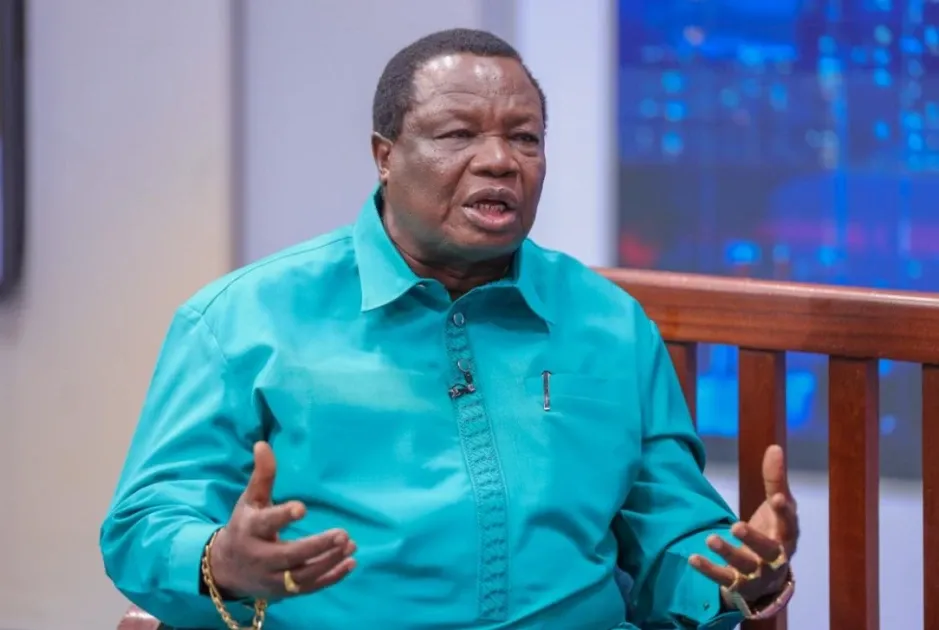
Now Central Organisation of Trade Unions (COTU) Secretary-General Francis Atwoli wants Uhuru arrested and compelled to explain what he knows.
The demand, made on Tuesday in Khwisero, Kakamega County, dramatically raises the stakes around a statement that has already unsettled Kenya's political establishment.
Atwoli argues that Uhuru, as the president who presided over the country when the election was held, had taken an oath to protect the Constitution and preserve state secrets. He wants him to account for what he now appears to suggest was hidden from the Kenyan public.
But beneath Atwoli's demand lies a much larger question: What exactly does Uhuru know about the 2022 election that Kenyans do not know?
And if he knew that Raila had won, why did he accept the transition of power to William Ruto?
Uhuru made the explosive declaration on September 22 during a Jubilee Party meeting in Nairobi. He said he remained convinced that Raila had won the votes and suggested that those who knew what happened should tell the truth.
The statement is significant because Uhuru was not an ordinary political spectator. He was the sitting President in 2022. He had publicly supported Raila's presidential campaign after years of political rivalry with his then deputy, Ruto.
His present claim therefore carries a different political weight from that of an ordinary voter or opposition politician.
Yet the claim collides directly with the official record. The Independent Electoral and Boundaries Commission declared Ruto the winner with 7,176,141 votes, representing 50.49 per cent, against Raila's 6,942,930 votes, or 48.85 per cent. Raila challenged the outcome before the Supreme Court.
The Supreme Court unanimously dismissed the presidential election petitions and upheld Ruto's election.
That judicial determination remains part of Kenya's constitutional record. This is where Uhuru's latest intervention becomes more complicated. He is not merely saying that he preferred Raila.
He is saying he knows Raila won. That assertion demands a distinction between political belief and demonstrable evidence. If Uhuru possesses information showing that the declared presidential result was wrong, the public-interest question is obvious:
What is the evidence? Where are the figures? Which tally was allegedly altered? At what stage did the alleged manipulation occur?
Who was responsible? Were electoral officials involved? Did state agencies know? Did Uhuru, as Commander-in-Chief and Head of State, receive reports supporting such a conclusion?
And, perhaps most importantly, why did he hand over power if he knew the person declared president had not actually won?
The answers could potentially transform the debate from political rhetoric into a matter requiring serious institutional scrutiny.
But without evidence, the assertion remains just that—an assertion. Atwoli's call for arrest therefore introduces another difficult question: what specific offence is Uhuru alleged to have committed? Calling for an arrest is politically dramatic. Establishing criminal liability is something else. An investigation would require identifiable facts, applicable law, evidence and due process—not merely disagreement over an election narrative. There is also an uncomfortable political irony. Atwoli himself has long been associated with Raila's political camp. Africa Check has previously described him as a close ally of Raila. That history does not by itself invalidate his current argument. But it makes the public debate even more politically charged. The danger is that the central question—what actually happened in 2022?—could disappear beneath competing political loyalties.
There is another question that cannot easily be ignored. If the former president genuinely possesses information capable of overturning the accepted narrative of the 2022 election, why reveal it four years later? Why now?
Is this simply a political intervention ahead of another election cycle? Is Uhuru settling old political scores?
Is he responding to accusations that his administration failed to deliver the presidency to Raila?
Or does he possess information that has never previously been placed before the public?
Those questions should not be answered through speculation. They require evidence.
Uhuru himself reportedly said that after the Supreme Court ruled, he accepted the decision and handed over power to Ruto without disputing it. That makes his latest declaration particularly consequential. For four years, the constitutional and judicial record has stood. Now a former president who was at the centre of the political contest is effectively asking Kenyans to reconsider what they thought they knew. Atwoli, meanwhile, wants him to account for that knowledge. The arrest demand may generate headlines, but the bigger issue is not whether Uhuru should be arrested. It is whether the former president is prepared to substantiate his extraordinary claim.
Because if he has evidence, Kenya deserves to see it. If he does not, then the country risks entering another cycle in which political assertions are mistaken for established facts.
And that is perhaps the most troubling legacy of the 2022 election: four years later, Kenya is still arguing not merely about who won, but about who knew what, when they knew it, and what they did with that knowledge. The ballot may have been cast in 2022. But politically, the counting may not yet be over.
POLITICS
Atwoli Wants Uhuru Arrested Over 2022 Elections Claims
Four years later, a former president’s explosive assertion has reopened the question of what really happened behind the scenes
Comments
Have a view about this story? Join the conversation.
No comments yet. Be the first to share your thoughts.