
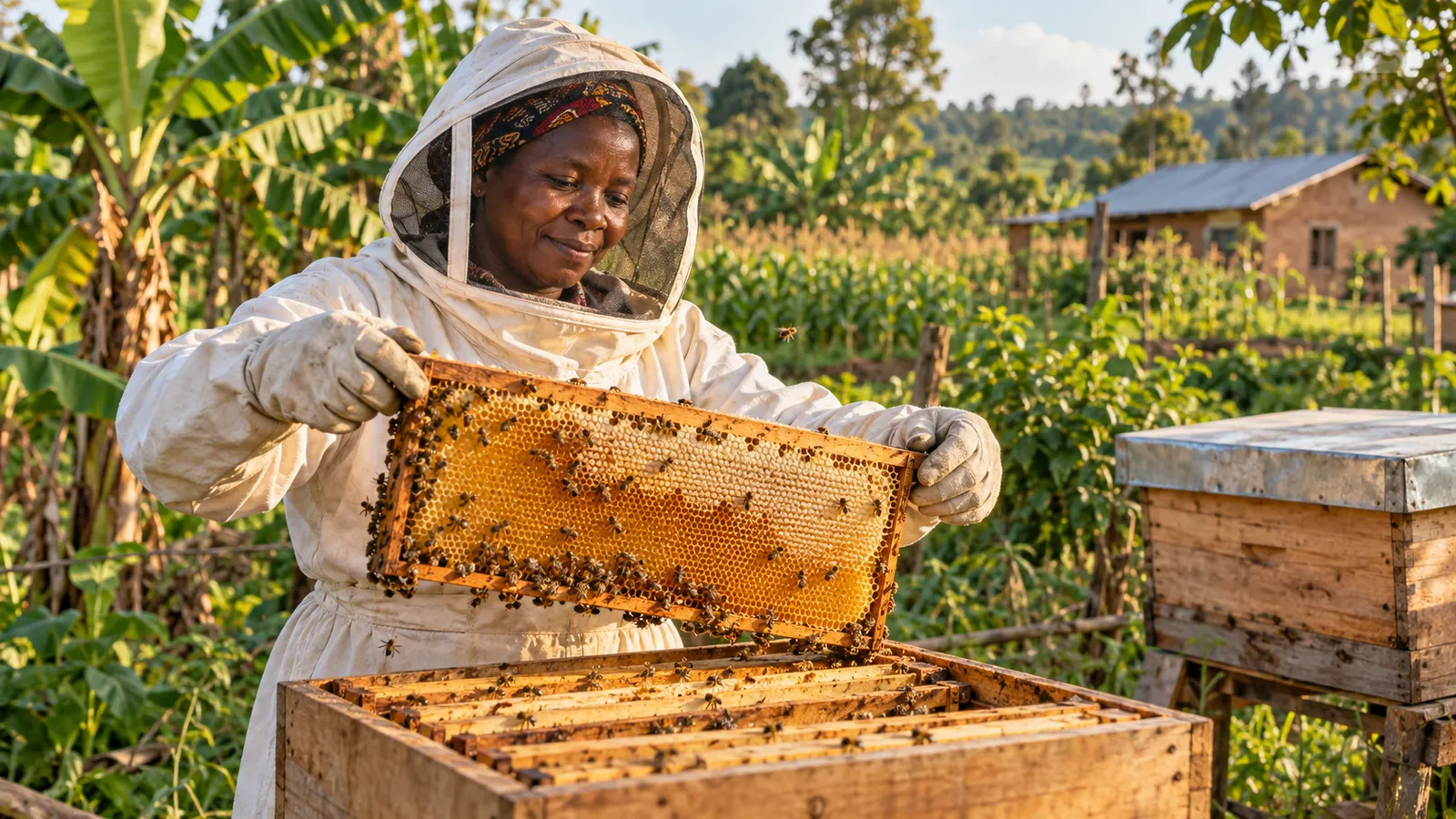
At first, there is only a faint buzzing.
Then another.
Soon the air around the flowering trees comes alive with the unmistakable sound of thousands of bees moving from flower to flower, carrying with them something more valuable than many farmers realise.
For generations, the bee has been treated largely as a source of honey. But the bee is much more than that.
It is a farmer's silent partner.
It works without demanding wages, occupies very little space and can turn nectar from flowers into honey, beeswax and other products while simultaneously helping pollinate crops.
That is why beekeeping, or apiculture, could become an important component of the Farmers Party's proposed agricultural development agenda in Busia County if the party gains the opportunity to lead the county.
The idea is simple: instead of looking at agriculture only through maize, sugarcane, cassava, vegetables, livestock and other conventional enterprises, farmers could also be encouraged to keep bees as an additional source of income.
The farmer and the bee
Imagine a smallholder farmer in Busia. He has a modest piece of land. His crops occupy most of the available space. There is little room for another major agricultural enterprise.
But at the edge of his farm stands a row of beehives. The farmer does not need to cultivate another large field.
He does not need to feed the bees every morning like cattle. Instead, the bees fly into surrounding vegetation, visiting flowering plants before returning to their hives.
At harvest time, the farmer collects honey. That honey can be consumed at home, sold locally or processed and packaged for wider markets. The story does not end with honey.
Beeswax can also be processed into products such as candles and other value-added goods. The wider apiculture value chain can create opportunities for hive makers, honey processors, protective-equipment suppliers, trainers and other service providers.
A farming enterprise with a difference
Kenya's agricultural research institutions have identified apiculture as an enterprise that can diversify rural incomes and be practised with relatively modest infrastructure and capital compared with many other agricultural activities. KALRO also identifies opportunities for employment and income generation along the beekeeping value chain. For Busia, that presents an interesting possibility.
The county could develop beekeeping clusters through farmer groups and cooperatives.
Farmers could receive training on hive management, bee health, safe harvesting, honey handling and marketing.
Youth groups could be supported to manufacture modern hives and protective equipment.
Women could participate in honey processing, packaging and value addition.
Cooperatives could aggregate honey from individual farmers, improve quality control and negotiate better markets.
The objective would not simply be to give farmers beehives and leave them alone. The objective would be to build an entire honey value chain.
The bee that feeds the farm
There is another reason the bee matters. It is the work it performs before the farmer ever collects a jar of honey. Bees are pollinators.
FAO notes that pollinators play a fundamental role in agricultural production, food security and ecosystems, with approximately 75 per cent of global food crops benefiting from pollination.
This means the economic value of bees cannot be measured only by the price of honey.
A bee flying from flower to flower is also helping the agricultural system reproduce.
That creates an important connection between beekeeping and crop farming.
The farmer who keeps bees is therefore potentially contributing to both a honey enterprise and a healthier agricultural ecosystem.
From hive to market
For the proposed Farmers Party programme, the critical question would be what happens after the honey leaves the hive.
That is where cooperatives could become important. Rather than hundreds of farmers selling small quantities individually.
No comments yet. Be the first to share your thoughts.