
The sky was changing.
Somewhere above Zimbabwe’s Mashonaland East countryside, two helicopters were making their way back toward Harare.
Below them lay farms, roads and fading daylight.
Inside one helicopter was Wicknell Chivayo, the flamboyant businessman whose life had unfolded at the intersection of money, power, politics and controversy.
Beside him was his wife, Lucy Muteke.
Another helicopter was flying nearby, carrying members of his security team.
For a while, everything appeared routine.
Then the weather began to close in.
And somewhere in that changing sky, a radio conversation began that may now become one of the most important clues in understanding how six lives were lost.
The helicopter would never reach Harare.
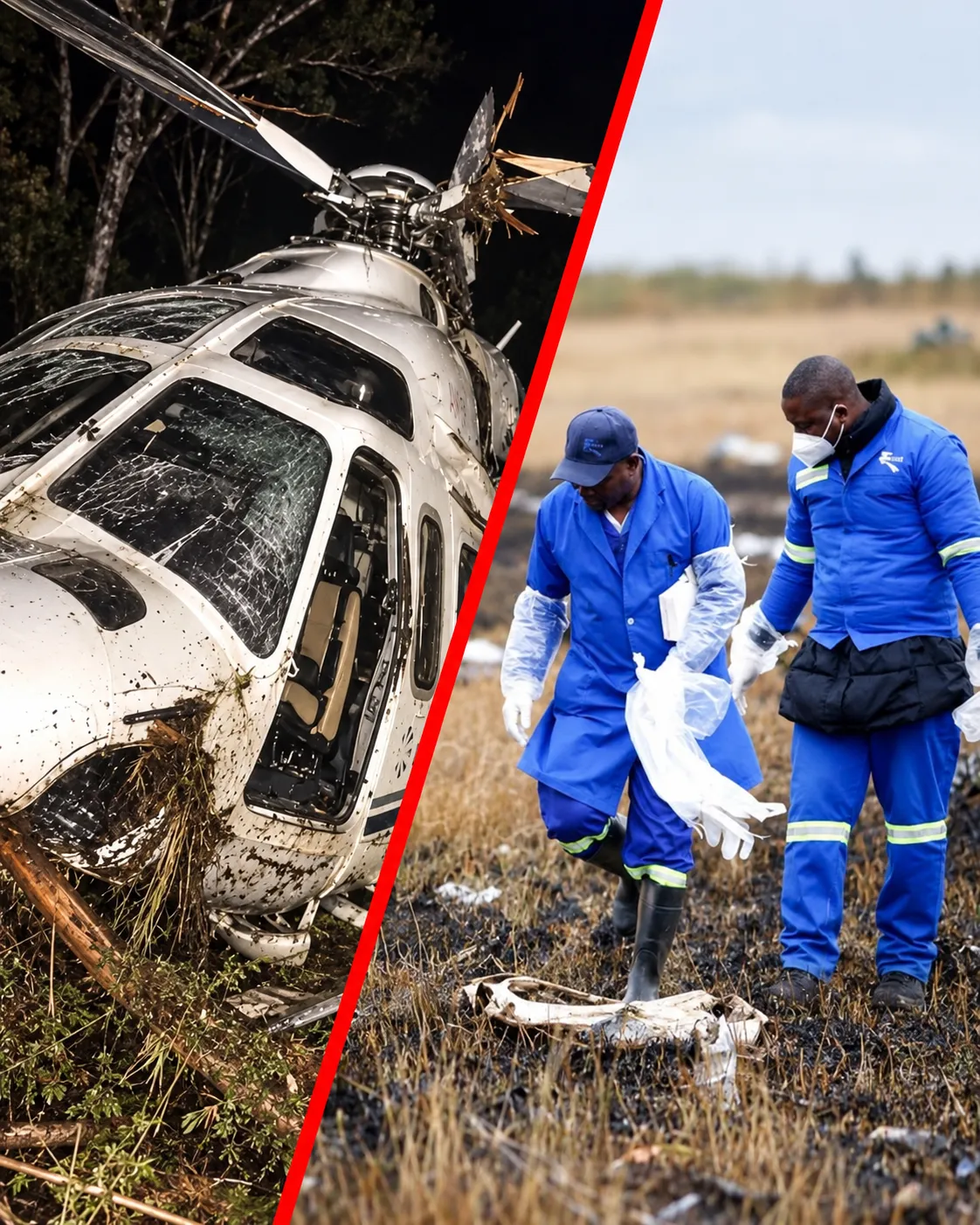
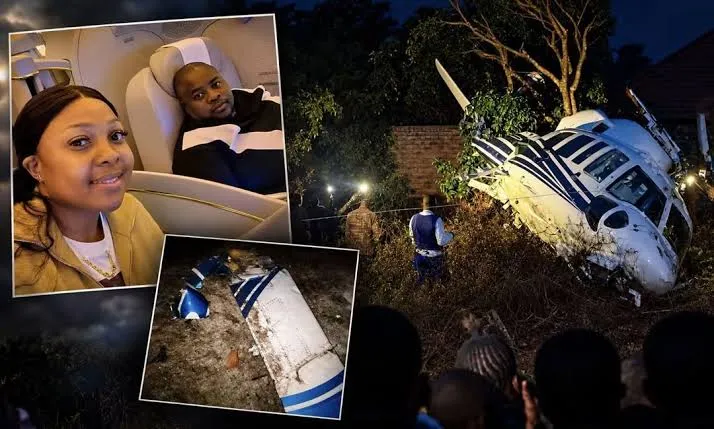
It crashed at Kudenga Farm in rural Marondera at about 5 p.m. on September 30, 2026, roughly 40 minutes after leaving Gandami, where Chivayo and his wife had been overseeing construction of their rural home.
There were no survivors.
But the final minutes remain unfinished business.
THE OTHER HELICOPTER
Froster Chisi was not aboard Chivayo's helicopter.
Dangote Lamu refinery: Kenya’s sh2.2 trillion industrial bet opens a new industrial chapter
He was in the accompanying aircraft.
That distinction matters.
Because Chisi's account is not the cockpit voice recording. It is not yet an aviation-investigation finding.
It is the recollection of a man flying nearby who says he was among the last people to communicate with Chivayo's aircraft.
According to Chisi, the two helicopters had travelled from Harare to Gandami and later began the return journey.
Then the weather deteriorated.
Chisi says the pilot of his helicopter considered changing the route, reportedly opting to pass through Bromley.
The other helicopter, he says, was encountering increasingly difficult conditions.
Then came the words that now hang over the investigation:
“I'm in bad weather. I haven't exited the cloud.”
If accurately reported, that was more than an observation about the weather.
It was a warning.
But investigators must still establish exactly what was happening inside the cockpit at that moment.
Was the aircraft entering cloud unexpectedly?
Was visibility collapsing?
Was the pilot attempting to regain visual reference?
Was the aircraft following its intended route?
Or was something else already wrong?
Those answers cannot be supplied by drama.
They must come from evidence.
“WHICH DESTINATION?”
Then came another radio exchange.
According to Chisi's account, the aircraft carrying Chivayo was somewhere around Surrey.
The accompanying pilot reportedly indicated that they were about ten minutes from their destination.
Then the pilot of Chivayo's helicopter allegedly asked:
“Which destination?”
The answer:
“Marondera.”
And then—
silence.
No reply.
No further conversation.
No reassuring voice coming back through the radio.
Only the empty frequency.
The second helicopter eventually landed.
The people aboard waited.
They expected the other aircraft to arrive.
It did not.
THE WAIT BECOMES A SEARCH
At first, there was apparently no certainty that disaster had struck.
The aircraft might have diverted.
It might have landed somewhere because of the weather.
It might have lost communications.
Then the minutes became an hour.
Telephone calls were made.
There was no answer.
The silence became frightening.
Eventually, the truth emerged.
The helicopter had crashed.
And the people who had been speaking over the radio were gone.
THE CRASH SITE
The countryside then became a crime-scene-like forensic landscape—not because a crime had been established, but because every fragment of wreckage could contain evidence.
The helicopter had struck the ground.
Fuel spilled.
Fire followed.
CAAZ Director-General George Mashababe said preliminary observations indicated that fuel spilled when the aircraft impacted the ground and subsequently ignited.
But he made the crucial distinction investigators must preserve:
the cause of the crash had not yet been established.
That distinction separates investigation from speculation.
The fire may explain what happened after impact.
It does not explain why the helicopter impacted the ground.
That is the central question.
THE BLACK BOX
And then investigators found something potentially invaluable.
An intact black box was recovered from the wreckage.
That device could become the silent witness to the final flight.
It does not tell stories.
It records them.
Depending on the equipment fitted to the aircraft, investigators may be able to extract information capable of reconstructing crucial elements of the flight.
The investigators will want to establish the aircraft's movements, communications and operational circumstances and compare them with independent evidence.
Radar.
Weather records.
Flight planning.
Aircraft maintenance history.
Pilot qualifications and experience.
Radio communications.
Wreckage distribution.
And the precise location and condition of the helicopter when it struck the earth.
Piece by piece, the final minutes can potentially be reconstructed.
THE WEATHER QUESTION
Weather is already emerging as a central thread.
But weather can become a dangerous investigative shortcut.
It is easy to say:
Bad weather caused the crash.
It is much harder to prove.
Investigators must ask a more precise question:
What exactly did the weather do to the aircraft and its pilot?
Did visibility suddenly deteriorate?
Was the helicopter inside cloud?
What were the reported cloud base, visibility, wind and precipitation conditions?
Was the aircraft operating within the pilot's planned limits?
Was the route changed?
Did the aircraft deviate from its intended track?
Did the pilot become spatially disoriented?
Or did an entirely different mechanical or operational problem develop?
Until those questions are answered, weather remains a possible factor—not a verdict.
THE DESTINATION QUESTION
And then there is that strange reported exchange:
“Which destination?”
On its own, the question proves almost nothing.
A pilot could ask it for perfectly ordinary reasons.
Radio communications can be misunderstood.
Names can be unclear.
Routes can change.
Pilots can confirm destinations even during routine flights.
But when the exchange is placed alongside a reported struggle with cloud and deteriorating weather, investigators will naturally want to establish its context.
Was it merely routine confirmation?
Was there confusion over the route?
Was the aircraft somewhere other than where the crew believed it was?
Or was the question unrelated to the eventual crash?
Only the evidence can answer that.
THE OCCUPANT MYSTERY
There is another detail investigators will have to settle.
The early reports were inconsistent about the number and composition of people aboard.
Zimbabwean police said six occupants.
Government communications also produced differing early descriptions.
The Associated Press reported four passengers and two crew members.
ZBC later reported that Chisi's account put five people aboard Chivayo's helicopter, while police maintained that six occupants were aboard.
Such discrepancies can occur during the chaotic first hours following a disaster.
But eventually, there must be one authoritative answer.
Who boarded?
Where were they seated?
Who were the pilots?
What was the aircraft's manifest?
What were the passengers' identities?
The forensic identification process is particularly important because the impact and fire severely damaged the remains.
THE LAST IMAGE
There is another haunting piece of evidence.
A video reportedly recorded by Chivayo during the flight has emerged.
In it, he appears inside the helicopter, filming himself and the aircraft flying nearby.
There is something unsettling about such footage.
The person holding the camera does not know he is recording the final chapter of his life.
The sky looks ordinary.
The journey appears ordinary.
The other helicopter is visible.
And somewhere beyond the frame lies the weather corridor through which the aircraft would soon disappear.
The footage could become more than a final personal record.
If its timestamp, location, direction of travel and surrounding visual conditions can be independently established, investigators may be able to compare it with the aircraft's recorded flight path and weather conditions.
A seemingly ordinary video can sometimes become a forensic timestamp.
WHAT HAPPENED BETWEEN THE LAST WORD AND THE GROUND?
That is the real mystery.
Not the celebrity.
Not the wealth.
Not the political connections.
Not the controversies surrounding Chivayo's life.
The investigation has one immediate responsibility:
Reconstruct the flight.
From take-off.
To the changing weather.
To the last known position.
To the final radio communication.
To the disappearance from contact.
To the descent.
To impact.
To fire.
Every second matters.
Every fragment matters.
Every radio transmission matters.
Every discrepancy matters.
And every assumption must be tested against evidence.
THE SILENCE
There is a peculiar brutality to aviation disasters.
One moment, voices fill a cockpit.
Pilots communicate.
Passengers talk.
Engines turn.
Rotors beat against the air.
Then, suddenly, nothing.
The radio becomes silent.
The aircraft becomes a wreck.
And investigators are left trying to reconstruct a sequence that lasted perhaps only seconds.
That is where the black box, wreckage, weather records and communications become more important than eyewitness impressions.
Froster Chisi has provided investigators with a potentially significant human account.
But his account is the beginning of a line of inquiry—not the end of it.
The final radio call may tell investigators where to look.
The wreckage may tell them what happened.
The black box may tell them what the aircraft was doing.
The weather records may tell them what the pilot was facing.
And the convergence of all four may eventually reveal the missing sequence.
For now, one fact stands above the speculation:
Six people entered the sky over Zimbabwe. None came back.
Somewhere between Gandami and Marondera, the flight ceased to be a journey and became an investigation.
The radio went silent.
The rotor stopped.
The fire consumed the machine.
And the countryside kept the secret.
Until the evidence speaks.
No comments yet. Be the first to share your thoughts.