
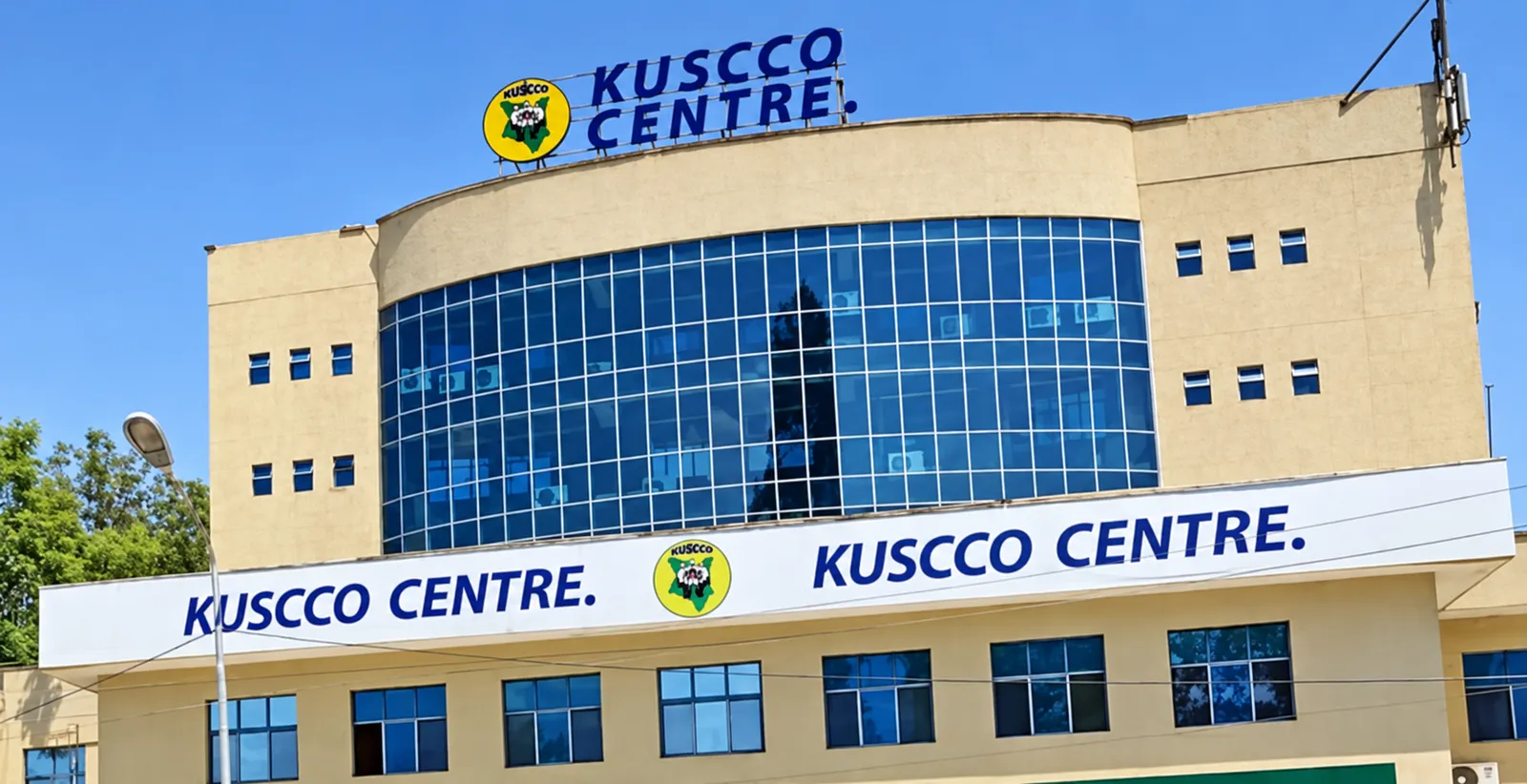
There are moments in the history of a financial institution when the question is no longer whether an organisation is in trouble, but whether the medicine prescribed for the sickness might itself create another crisis.
The liquidation of the Kenya Union of Savings and Credit Co-operative Societies (KUSCCO) has brought Kenya's cooperative movement to precisely such a crossroads.
KUSCCO, established in 1973, was not an ordinary cooperative. For decades, it operated as a national umbrella body for SACCOs, providing advocacy, training, financial and advisory services and representing the interests of a movement that has become one of the most important vehicles for household savings and financial inclusion in Kenya.
Its collapse therefore raises questions that go far beyond one organisation.
What happens to the SACCO movement when its apex institution collapses?
What safeguards exist when a SACCO entrusts billions of shillings to an institution that subsequently becomes insolvent?
And perhaps the most uncomfortable question:

How much power should one public official have over the life and death of a cooperative society?
The KUSCCO numbers are frightening
The financial picture presented to KUSCCO members was devastating.
Reports presented during the special general meeting indicated liabilities of roughly Sh17 billion, against known assets of about Sh5.4 billion. KUSCCO was also facing hundreds of court cases from creditors and SACCOs seeking recovery of their money.

Business Daily reported that SACCO members could face a potential shortfall of about Sh11.6 billion, based on the difference between liabilities and known assets. It also reported findings from forensic reviews pointing to alleged manipulation of financial records, unexplained withdrawals, irregular transactions and other forms of alleged mismanagement. These are serious allegations, and individual responsibility must ultimately be determined through the appropriate legal processes rather than assumed from the financial collapse itself.
That distinction is important.
An institution can be insolvent without every person associated with it being guilty of wrongdoing.
Conversely, financial collapse should not become a shield against investigation where evidence points to fraud, negligence, breach of fiduciary duty or other offences.

That is where liquidation becomes much more than an accounting exercise.
It becomes a question of justice.
The decision to liquidate
On August 28, 2026, representatives of about 250 affiliated SACCOs voted to dissolve KUSCCO. The decision followed years of financial difficulties and unsuccessful efforts to revive the organisation.
The Commissioner for Co-operative Development subsequently gazetted the cancellation of KUSCCO's registration and ordered its liquidation.
The Gazette Notice cited Section 62(1)(c) of the Co-operative Societies Act, which permits the Commissioner to cancel registration where a cooperative has failed to achieve its objects. The law provides an avenue of appeal against such an order within 30 days.
The legal architecture is therefore clear in one respect: the Commissioner has significant statutory powers.
But the existence of statutory power does not end the public-interest debate.

It begins it.
THE POWER OF THE COMMISSIONER: PROTECTION OR CONCENTRATION OF POWER?
Under the Cooperative Societies Act, cancellation of registration has profound consequences.
Once registration is cancelled, the society ceases to exist as a corporate body. Its property vests in the liquidator, and the liquidator assumes responsibility for the winding-up process.
The liquidator can take possession of books and assets, sell property, pursue claims, recover debts and distribute assets according to the applicable liquidation framework. The Commissioner's powers do not end with the appointment: the Act gives the Commissioner supervisory and control powers over the liquidator, including the ability to vary orders, remove a liquidator, call for documents and oversee aspects of distribution.
This is enormous authority.
The question for policymakers and cooperative members is not necessarily whether the Commissioner should have such powers.
It is whether those powers contain sufficient independent checks and balances when the institution being liquidated holds billions belonging indirectly to thousands or millions of ordinary members.
A SACCO member may never have met a Commissioner.
They may never have attended a KUSCCO board meeting.
They may simply have deposited money in their SACCO every month believing that the cooperative system was designed to protect their savings.
If that money is subsequently invested with an apex body and the apex body collapses, the member can suddenly find themselves exposed to decisions made several organisational levels above them.
That is the structural danger.
GUILTY OR NOT GUILTY?
This is perhaps the most sensitive part of the KUSCCO story.
There is a temptation whenever a large financial institution collapses to speak collectively about "management", "officials" or "the board".
But justice does not operate through collective suspicion.
If individuals stole money, falsified documents, manipulated accounts, authorised unlawful transactions or deliberately concealed financial problems, those individuals should face appropriate investigation and, where evidence meets the legal threshold, prosecution.
But if another official made a poor commercial decision without criminal intent, that is a different question.
If a board member failed through negligence, that is another question.
If an employee followed instructions believing them to be lawful, that is another question.
If an auditor failed to detect irregularities, that is another question.
Liquidation should not become a substitute for criminal investigation.
Nor should criminal investigation be used as a substitute for evidence.
The public therefore needs two processes running alongside each other:
Asset recovery and accountability.
The first asks:
Where is the money?
The second asks:
Who was responsible, and what exactly did they do?
Those questions are related, but they are not identical.
THE DANGER OF USING LIQUIDATION AS A BLANKET SOLUTION
Liquidation can be necessary.
Sometimes an institution has reached the point where continuing operations simply consumes the little value that remains.
In KUSCCO's case, auditors and advisers reportedly told members that enormous fresh capital would be required to revive the institution, while creditors were already owed billions. Continuing to operate could have consumed further resources through legal, administrative and operating costs.
Liquidation can therefore be a mechanism for stopping the bleeding.
But liquidation also has dangers.
First: destruction of institutional capacity
When an apex body disappears, the cooperative movement loses institutional memory, infrastructure, personnel and networks built over decades.
KUSCCO was more than a balance sheet.
It was an advocacy institution.
It was a training institution.
It was a representative institution.
It was a link between SACCOs and government and international cooperative organisations.
Replacing such an institution is not simply a matter of registering another organisation.
Second: the race for assets
When creditors believe an institution is collapsing, everyone starts running for whatever asset they can reach first.
That danger was visible in KUSCCO's hundreds of court cases.
Business Daily reported that SACCOs were obtaining court orders in attempts to recover their money, creating what KUSCCO described as a scramble for assets.
A properly managed liquidation can theoretically replace that scramble with an orderly process.
But an improperly managed liquidation could simply transfer the scramble from private creditors to an administrator-controlled process.
That is why transparency is critical.
Third: ordinary SACCO members may carry the loss
A SACCO does not possess money belonging to abstract institutions.
Ultimately, the money belongs to members.
A SACCO that loses hundreds of millions through an investment in an apex institution may have to make provisions, restructure its finances or absorb losses.
The person who suffers may therefore be the teacher saving for retirement.
The police officer contributing every month.
The farmer depositing money after selling maize.
The nurse saving for a child's education.
The boda boda operator building a home.
The small trader trying to accumulate enough capital to expand a shop.
The KUSCCO crisis is therefore not merely a corporate story.
It is a household story.
THE PRECEDENT SHOULD WORRY THE COOPERATIVE MOVEMENT
The most important lesson may not be that KUSCCO was liquidated.
It may be how easily a cooperative society can move from regulatory intervention to cancellation and liquidation under the existing legal framework.
The law gives the Commissioner significant authority.
But Kenya's cooperative movement has become too financially important for such authority to operate without robust institutional safeguards.
A regulator must regulate.
But the regulator must also be seen to be independent, procedurally fair and accountable.
That concern is not theoretical.
In a 2025 High Court judgment concerning KUSCCO, the court found that the Commissioner had exceeded his statutory authority by directing former KUSCCO board members to cease being officials in their primary SACCOs. The court held that decisions affecting primary SACCO leadership must arise from the societies' own structures or clear statutory authority, and described the blanket directive as procedurally irregular and ultra vires.
Kenya Law
That judgment does not mean the Commissioner lacks regulatory authority.
Rather, it demonstrates something fundamental:
Regulatory power has legal boundaries.
And those boundaries matter particularly when billions of shillings and thousands of members are involved.
THE RUPSA SACCO CASE ADDS ANOTHER LAYER
The KUSCCO liquidation has already entered another legal chapter.
RUPSA SACCO, which says KUSCCO owes it Sh108.8 million, challenged the State-appointed liquidation arrangement and sought an independent insolvency practitioner. The High Court temporarily suspended the gazette notice while considering jurisdictional issues.
Then, on September 30, the High Court rejected RUPSA's separate attempt to liquidate KUSCCO through a creditor's petition under the Insolvency Act, holding that a cooperative society is subject to the cooperative statutory framework and that it cannot be wound up through that route.
That development is significant.
It reinforces the special legal status of cooperative societies.
It also illustrates the complicated legal environment surrounding KUSCCO.
Different creditors have different interests.
Some want their money immediately.
Others want an equitable distribution.
Some may want particular assets preserved.
Government has a regulatory responsibility.
Members have ownership rights.
Courts have a constitutional responsibility to determine disputes.
Liquidators have duties to creditors and the estate.
That is why liquidation cannot be treated as simply "close the doors and sell everything."
WHAT SHOULD HAPPEN TO THE MONEY?
The cooperative movement now needs an exceptionally transparent recovery process.
Every major KUSCCO asset should be accounted for.
Every significant liability should be documented.
Every debtor should be identified.
Every recovery should be published.
Every asset sale should be subjected to transparent valuation and procurement procedures.
Every creditor should know where they stand.
And where allegations of criminal conduct exist, the investigative trail should continue even after liquidation.
The public should not hear that billions disappeared and then watch the story end with liquidation.
Liquidation answers the question of what happens to the institution. It does not necessarily answer the question of what happened to the money.
That distinction must never be lost.
THE SACCO MOVEMENT NEEDS A NEW SAFETY CULTURE
The KUSCCO crisis should force SACCOs to reconsider how they invest their reserves.
Why should a SACCO put enormous sums into one institution?
What concentration limits should exist?
Should there be independent investment committees?
Should large placements require approval beyond management?
Should members receive detailed disclosure of major institutional investments?
Should there be mandatory stress tests?
Should SACCOs be required to conduct independent due diligence before placing members' money with an apex institution?
These are questions the cooperative movement must confront.
The collapse of an apex institution exposes weaknesses not only in the apex institution but also in the ecosystem surrounding it.
AND WHAT ABOUT THE NEW APEX BODY?
KUSCCO's members have agreed to establish a successor umbrella organisation, the Kenya Federation of Savings and Credit Co-operatives (KEFESCCO).
That may provide the cooperative movement with an opportunity to start afresh.
But a new name alone will not solve the old problems.
The new institution must have stronger governance.
Independent financial oversight.
Clear conflict-of-interest rules.
Transparent procurement.
Professional investment management.
Regular forensic audits.
Strong whistleblower protection.
Effective board accountability.
And, critically, mechanisms that ensure that SACCO members—not merely senior officials—can see how their money is being managed.
THE BIGGER QUESTION: CAN COOPERATIVE AUTONOMY SURVIVE?
There is an uncomfortable tension at the centre of this debate.
Cooperatives are member-owned organisations.
Government has a legitimate role in regulation and protection of the public interest.
But excessive administrative intervention can undermine the principle of member ownership.
Too little regulation, on the other hand, can expose members to abuse, mismanagement and financial loss.
The challenge is therefore not to choose between government control and cooperative freedom in simplistic terms.
The challenge is to build a regulatory system where:
Government regulates.
Members govern.
Professionals manage.
Auditors independently verify.
Courts adjudicate.
Investigators investigate.
And nobody becomes simultaneously the regulator, investigator, administrator and ultimate decision-maker without meaningful checks.
KUSCCO'S COLLAPSE SHOULD NOT BECOME THE DEATH OF THE COOPERATIVE IDEA
The cooperative movement should not be judged solely by the failure of one institution.
Kenya's SACCO sector remains an important mechanism through which ordinary citizens save, borrow, invest and build economic resilience.
But KUSCCO has exposed the vulnerability of a system in which enormous amounts of members' money can become concentrated in institutions whose failure can transmit losses throughout the movement.
The lesson should therefore not simply be: "KUSCCO failed."
The deeper lesson is: "What safeguards failed before KUSCCO failed?"
That is the question policymakers, SACCO leaders, auditors, regulators and members must answer.
Because if the only response to institutional failure is liquidation, Kenya may eventually become very good at burying failed cooperatives without becoming better at preventing them from failing.
And there is an even bigger constitutional and governance question.
When the Commissioner possesses the legal power to cancel registration, trigger liquidation and exercise substantial control over the liquidation process, what independent mechanisms guarantee that the power is exercised fairly, transparently and proportionately?
The answer cannot simply be:
"Because the law says so."
The law must also be examined through the principles of due process, accountability, transparency, natural justice and the right of affected parties to challenge administrative decisions.
The KUSCCO story is therefore bigger than KUSCCO.
It is a test of Kenya's cooperative governance architecture.
It is a test of whether members' savings can be protected without destroying member ownership.
It is a test of whether regulators can wield extraordinary powers while remaining accountable.
And above all, it is a test of whether Kenya can distinguish between liquidating an institution and delivering justice.
For the SACCO member staring at a statement and wondering whether years of deductions and deposits are safe, those two things are not the same.
The institution may be dead.
But the questions surrounding its death are very much alive.Start writing your story…
No comments yet. Be the first to share your thoughts.