

By Xavier Lugaga
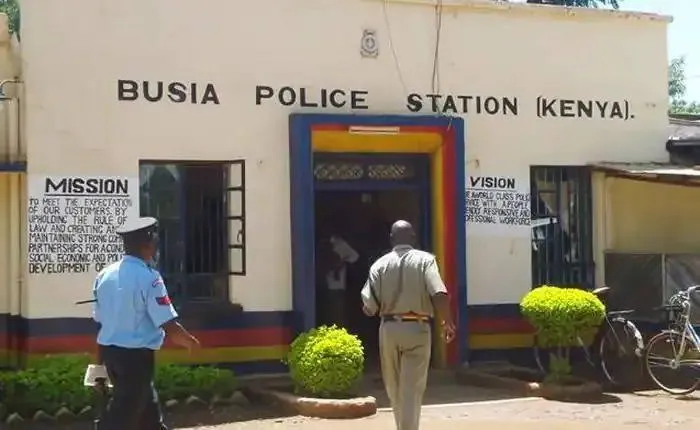
BUTULA, BUSIA COUNTY — What began as a police operation targeting suspected smuggled goods at Oloo’s Wholesale in Butula Town reportedly ended in a frightening spectacle: a businesswoman collapsing and being rushed to hospital, a police officer seriously injured, and the Officer Commanding Station (OCS) reportedly being rescued from an angry crowd.
Between the initial suspicions of illegal trade and the dramatic confrontation that followed lies a sequence of events that investigators must now reconstruct, one piece of evidence at a time.
At the centre of the unfolding controversy are allegations of a bribe demand, questions surrounding the deployment of tear gas inside or near a commercial establishment, and the circumstances that transformed a routine-looking enforcement operation into a volatile confrontation between the police and members of the public.
The incident, which reportedly unfolded this evening, has sent shockwaves through Butula, raising uncomfortable questions about the conduct of the operation, the safety of civilians and whether the actions of those involved complied with the law.
But the most important question is not how dramatically the confrontation ended.

It is what happened before the chaos began.
THE OPERATION THAT SPIRALED OUT OF CONTROL
According to preliminary accounts, police officers visited Oloo’s Wholesale to investigate suspicions that goods believed to have been smuggled were being sold at the premises.
Combating smuggling and enforcing trade laws are legitimate responsibilities of the relevant authorities. However, the legality of an operation cannot be judged solely by its stated objective. The methods employed, the conduct of the officers and the treatment of people encountered during the operation are equally important.
Preliminary reports allege that a disagreement erupted after officers purportedly demanded a bribe from the shop owner.
The allegation is serious, but it remains unverified. The amount allegedly demanded, the precise words exchanged and the circumstances preceding the confrontation have yet to be independently established.
Did the disagreement arise from a lawful inspection, a dispute over the handling of suspected goods, an alleged demand for an unlawful payment, or a combination of circumstances?
At this stage, no definitive conclusion can responsibly be drawn.
The shop owner’s account, statements from the officers involved, testimony from independent witnesses and any available CCTV or mobile-phone recordings could prove critical in determining what actually happened.
The officers must also be given an opportunity to explain their actions.
Nevertheless, the allegation of bribery cannot simply be brushed aside. If evidence establishes that an officer solicited an unlawful payment, the matter would go beyond a disagreement at a wholesale shop and raise a fundamental question about the integrity of law enforcement.
An operation intended to uphold the law must itself remain within the law.
TEAR GAS, A COLLAPSED BUSINESSWOMAN AND A RACE AGAINST TIME
The confrontation reportedly escalated when tear gas was deployed, affecting the female proprietor of the wholesale business.
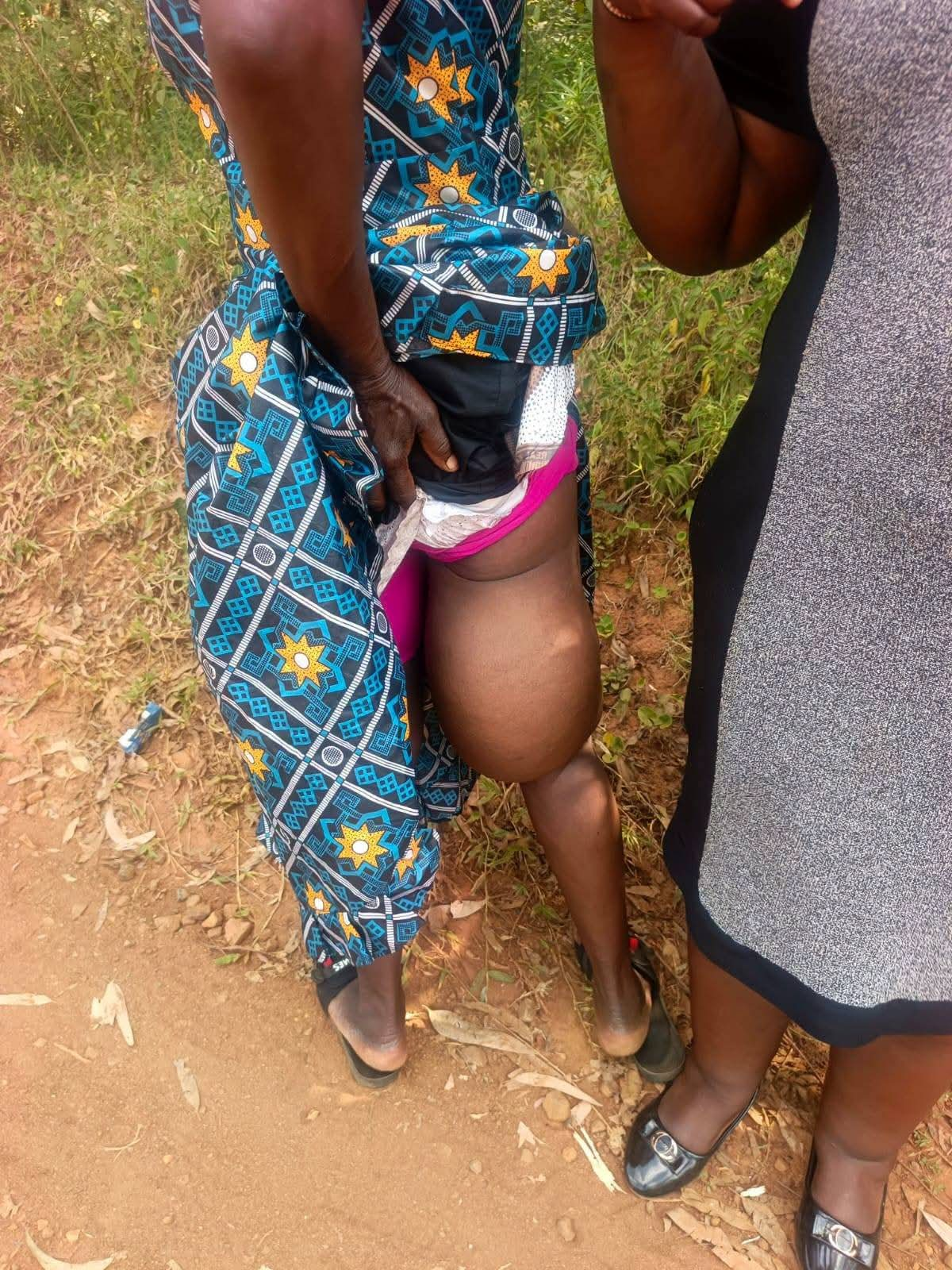
According to preliminary accounts, the woman subsequently collapsed and became unresponsive, triggering an emergency rush to hospital.
She was reportedly resuscitated, while medical personnel were said to be working to stabilise her blood pressure.

Her current medical condition has not been independently confirmed.
Behind these reports is a deeply troubling human question: what happened to the woman during the confrontation, and what circumstances preceded her collapse?
Was she directly exposed to tear gas? Did she have an underlying medical condition? Was the gas deployed inside the premises or in an adjoining public area? What immediate assistance was provided when she became unresponsive?
These questions require medical evidence, witness accounts and, where available, video footage.
Tear gas is a crowd-control agent, but its deployment is not a substitute for judgment. The circumstances, the threat faced by officers, the presence of civilians and the availability of safer alternatives are all relevant to assessing whether its use was justified.
Investigators must establish who deployed the gas, the circumstances in which it was used and whether the force applied was necessary and proportionate.
If civilians were exposed to avoidable danger, the public deserves to know how that happened.
If the officers faced a genuine and immediate threat, that account must equally be examined against the available evidence.
The objective must be the truth, not a predetermined verdict.
ANGRY RESIDENTS, AN INJURED OFFICER AND AN OCS IN DISTRESS
As news of the businesswoman’s collapse reportedly spread, anger among members of the public intensified.
The confrontation allegedly escalated to the point that a police officer sustained serious injuries, while the OCS reportedly had to be rescued from an angry crowd.
In one of the most striking details emerging from preliminary accounts, some members of the public reportedly poured milk on the OCS during the confrontation.
The circumstances surrounding the act remain unclear, including what prompted it and whether the officer sustained additional injuries.
The episode paints a disturbing picture of a police operation that reportedly ended with both civilians and officers exposed to danger.
Yet the sequence of events must be established carefully. It remains unclear how the confrontation developed, what role individual participants played and whether any specific actions triggered the escalation.
Why did the encounter deteriorate so rapidly? What happened between the initial disagreement and the reported rescue of the OCS? Were attempts made to de-escalate the confrontation? Was reinforcement requested, and how was the injured officer assisted?
These questions matter because the answers could reveal whether the incident was driven by individual misconduct, a breakdown in communication, an excessive response, a violent public reaction or several interacting factors.
One principle, however, must remain beyond dispute: public anger does not justify mob violence, just as the authority of a police uniform does not place an officer above the law.
The injured officer deserves medical attention and protection. Civilians deserve lawful treatment and accountability where misconduct is established. The OCS, like every other person, is entitled to protection from unlawful violence.
Justice cannot be achieved by replacing one alleged violation with another.
THE BRIBERY ALLEGATION: A QUESTION THAT CANNOT BE SWEPT UNDER THE CARPET
The reported demand for a bribe is among the most consequential allegations arising from the incident.
If substantiated, it would raise serious questions about the purpose and integrity of the operation.
Investigators should establish whether any payment was solicited, whether the shop owner or witnesses heard the alleged demand, and whether there are communications, recordings or other evidence capable of confirming or disproving the claim.
They should also determine whether any goods were inspected, seized or documented and whether the officers followed the applicable procedures.
The distinction is important.
An allegation is not proof of corruption. Equally, the absence of an immediate formal finding does not justify ignoring a credible complaint.
The proper response is an impartial investigation that protects evidence, gives all parties an opportunity to be heard and establishes responsibility on the basis of facts.
If wrongdoing is proved, appropriate legal and disciplinary action should follow. If the allegation is disproved, the findings should be communicated fairly.
Anything less risks deepening public suspicion and undermining confidence in the institutions responsible for protecting the public.
FIVE CRITICAL QUESTIONS FOR THE AUTHORITIES
The Butula incident now presents a series of questions that the police leadership and relevant oversight authorities should address.
1. What was the precise objective of the operation?
Authorities should identify the suspected goods, the basis for the operation and the legal procedures followed during the inspection.
2. Was a bribe demanded?
The alleged demand must be investigated through witness statements, available recordings, communications and other admissible evidence.
3. Why was tear gas deployed?
Investigators should establish the circumstances that led to its use, who authorised or deployed it, the threat officers faced and the precautions taken to protect civilians.
4. What caused the businesswoman to collapse?
Her medical condition, the timing of her collapse and the circumstances surrounding her reported resuscitation should be established through appropriate medical evidence and witness accounts.
5. How did the confrontation result in an injured officer and the reported rescue of the OCS?
The sequence of events, the nature of the officer’s injuries, the circumstances surrounding the crowd’s actions and any alleged assaults should be documented and independently assessed.
These are not matters that should be resolved through speculation, political rhetoric or social media accusations.
They require evidence, professional investigation and a clear account of what happened.
WHAT THE CONSTITUTION DEMANDS
Kenya’s Constitution provides a framework for both effective policing and the protection of individual rights.
Article 244 requires the National Police Service to maintain high standards of professionalism and discipline, prevent corruption, comply with constitutional standards of human rights and fundamental freedoms, and foster relationships with the broader society.
Article 28 protects every person’s inherent dignity and the right to have that dignity respected and protected.
Article 29 safeguards individuals against torture and cruel, inhuman or degrading treatment.
Article 47 guarantees administrative action that is lawful, reasonable and procedurally fair.
These provisions do not automatically establish that the officers involved in the Butula incident acted unlawfully. That determination must be made after examining the facts and applicable law.
However, where allegations raise credible concerns about police conduct, the public has a legitimate interest in knowing whether the relevant safeguards were observed.
The National Police Service should provide a factual account of the operation, clarify whether complaints have been recorded and explain what steps are being taken to establish the circumstances surrounding the confrontation.
The Independent Policing Oversight Authority (IPOA) should also consider the incident if the available information brings it within the authority’s statutory mandate.
Where evidence establishes corruption, unlawful use of force or other criminal conduct, the appropriate authorities should take action in accordance with the law.
Where officers acted lawfully and reasonably, a transparent investigation should establish that as well.
Accountability must not be confused with condemnation before investigation.
THE DANGER OF LOSING PUBLIC TRUST
For residents of Butula, the immediate concerns are the businesswoman’s recovery, the injured officer’s condition and the prevention of further violence.
But the wider implications extend beyond one wholesale shop.
Public confidence in law enforcement depends not only on the ability of officers to enforce the law but also on whether people believe that the law is applied fairly, professionally and without corruption.
When an enforcement operation ends in a civilian medical emergency, serious injuries and a confrontation involving the officer in charge of a police station, the circumstances demand more than a routine explanation.
They demand a credible reconstruction of events.
At the same time, the public must resist the temptation to turn unverified allegations into established facts. Witnesses should be encouraged to provide information through lawful channels, while any available footage should be preserved and examined by investigators.
Neither institutional silence nor public speculation can substitute for a properly established account of what happened.
The test for the police leadership is whether it can demonstrate that allegations involving its officers are treated seriously, investigated impartially and resolved transparently.
The test for the public is whether anger can give way to lawful demands for accountability rather than further violence.
THE BIGGER QUESTION: WHO WILL ACCOUNT FOR WHAT HAPPENED?
The reported events at Oloo’s Wholesale have left a troubling trail of unanswered questions.
A police operation targeting suspected smuggled goods reportedly escalated into a confrontation involving allegations of bribery, the deployment of tear gas, a woman’s collapse, an injured officer and the reported rescue of the OCS.
Each development requires independent verification. Together, they provide sufficient grounds for the relevant authorities to establish a clear timeline of events and determine whether any laws or police procedures were breached.
The central issue is not simply what the officers went to investigate.
It is whether the operation was conducted lawfully, what caused the confrontation to escalate, whether the force used was justified and whether any individual acted outside the law.
For now, the allegations of bribery remain unverified, the circumstances surrounding the tear gas deployment require clarification, and the woman’s medical condition and the injured officer’s status await independent confirmation.
Butula deserves the truth—not rumours, not intimidation and not a hurried verdict.
The people deserve answers. The officers deserve a fair process. Anyone whose wrongdoing is established must be held accountable in accordance with the law.
Until the facts are established, the questions surrounding this incident remain open.
And they must not be allowed to disappear into silence.
No comments yet. Be the first to share your thoughts.