
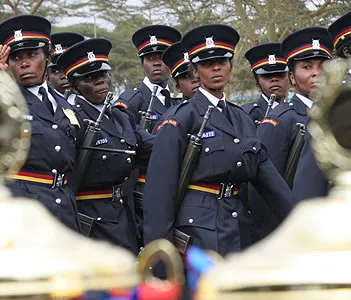
There is a young police officer somewhere in Kenya today wearing a uniform that still feels new.
The boots may still be shining. The cap may still sit perfectly on the head. The training memories are still fresh. The officer remembers the parade ground, the commands, the lectures, the drills and the instructors who prepared them for a career in one of the most demanding institutions in the country.
But now the young officer has left the training college. The classroom is behind them. The real police service has begun. And suddenly, the questions become different.
How do you handle the angry complainant at the station? What do you do when a situation escalates unexpectedly? How do you balance authority with restraint? How do you deal with pressure from colleagues? How do you make the right decision when there is no instructor standing nearby to tell you what to do?
This is where mentorship becomes the difference between merely wearing a uniform and becoming a professional police officer.
Former Police Inspector Xavier Lugaga is asking senior police officers, station commanders, NCOs and officers serving in stations, sub-counties, counties, regions, units and formations to remember one thing: every experienced officer was once a recruit.
And every recruit once needed somebody to show them the way.
The forgotten responsibility
In an open letter to police officers, Lugaga argues that one of the most overlooked stages in the development of a police officer is the transition from training institution to operational service.
He describes mentorship as a missing bridge between what an officer learns in college and what the officer encounters in the field.
“Training alone without the right mentorship can never produce a professional, disciplined and committed officer. Training plus mentorship does,” Lugaga says.
His message is not simply about procedures.
It is about people.
Behind every new uniform is a young person carrying hopes, fears, ambitions and expectations. Some have travelled from villages and small towns to join a profession they believe will give them an opportunity to serve their country.
They arrive believing that their seniors will teach them.
What they sometimes encounter instead, Lugaga says, is suspicion, ridicule, stereotyping and an unforgiving attitude that tells them to “learn the hard way.”
When a name becomes a wall
Lugaga is particularly concerned about the language used to describe new officers.
Some are called “Wajuaji.”
Others are branded “Reformists,” “Wasomi,” “Number One Million,” “Watoto wa Wakubwa” and, increasingly, “Gen-Zs.”
To some officers, the names may appear harmless.
But to a young officer trying desperately to find their feet, they can become a wall.
A recruit who should be asking questions may become afraid of appearing ignorant.
An officer who needs guidance may remain silent.
And an inexperienced officer who should be learning from a senior colleague may instead seek advice from another inexperienced colleague.
That, Lugaga warns, can have consequences.
“More often than not we always brand and stereotype new officers,” he says, arguing that such attitudes can create barriers between newly trained officers and those already in the field.
Every veteran was once a recruit
There is a deeply sentimental message running through Lugaga's appeal: do not forget where you came from.
Every senior officer once reported to a station for the first time.
Every NCO once wore a uniform without knowing all the answers.
Every experienced commander once stood before someone older and more experienced, waiting for instructions.
The difference, Lugaga suggests, is that somebody probably took the time to teach them. That tradition must not be allowed to disappear. A new officer should be corrected when they make a mistake. But correction should be accompanied by explanation. They should be disciplined where necessary.
BREAKING-NEWS
Before You Call Them “Wajuaji”, Teach Them: Lugaga’s Emotional Appeal for Police Mentorship
Theory and practice are two different things. The two environment poses different challenges
Comments
Have a view about this story? Join the conversation.
No comments yet. Be the first to share your thoughts.